| Author |
 Replies: 19 / Views: 804 Replies: 19 / Views: 804 |
Page 2 of 2
|
|
|
|
Pillar of the Community
United States
3535 Posts |
Never seen that on a proof coin before, very strange.  Lasers out of adjustment , certainly could be. |
|
Moderator
 United States
196880 Posts |
I do not believe those are roller lines. They are from the lasers used to etch the die for the frosting.
|
|
Valued Member
 United States
282 Posts |
Here's a couple more shots... 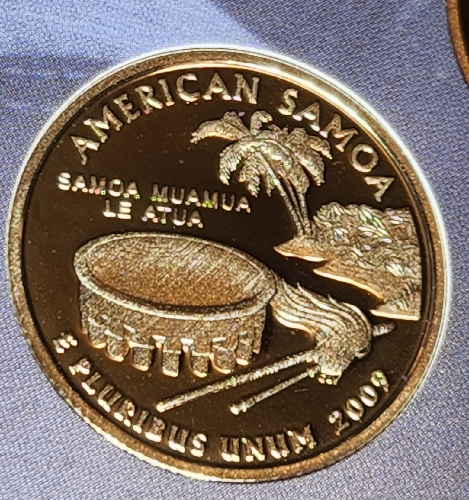  |
|
Valued Member
United States
282 Posts |
Would this be considered a error?
|
|
Moderator
United States
108636 Posts |
That isa good question, it 'could' be considered an error, albeit a minor one. it certainly is interesting looking - But seeing how it is in a lot of your coin it may be more common than we think.
I'll have to go back and check my set now...
|
|
Moderator
United States
196880 Posts |
Quote:
Would this be considered a error? I do not believe so. It is a normal part of the process now. |
|
Pillar of the Community
United States
6924 Posts |
Just the other day, I posted a 1987-S proof nickel with what I believed to be roller lines. As Dearborn said, it is basically impossible for the planchets to have lined up on all your quarters.
I can't tell from your pictures, are you shooting images through the plastic case? It might be that the optical properties of the plastic are creating the appearance of lines.
Edit: if you zoom in really far, you can see distortion on the blue background that is running in the same direction as the lines on the quarters.
Edited by Brandmeister
05/02/2024 10:54 am
|
|
Valued Member
United States
282 Posts |
Quote:
I can't tell from your pictures, are you shooting images through the plastic case? Not shooting through the plastic. I opened these up. Quote:
I'll have to go back and check my set now.. You can not see these when you look at the coin straight on. It's when you have light on the side of the coin and they just light up. I'll post a couple of pics to maybe better understand. Thank you for all the shared knowledge. This forum rules.  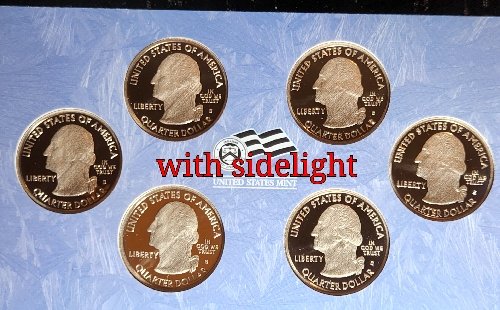  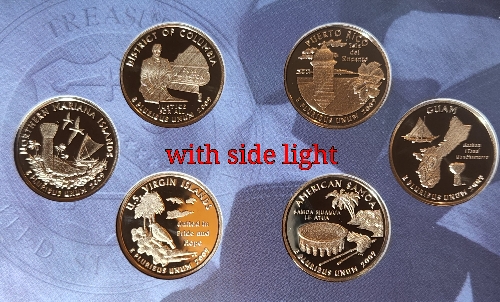 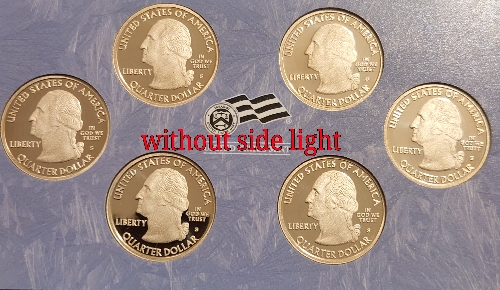 |
|
Pillar of the Community
United States
6924 Posts |
I propose an experiment. Keep the light position the same, the camera position the same, and rotate the case 90 degrees.
|
|
Valued Member
United States
282 Posts |
Quote:
I propose an experiment We love experiments.... Quote:
Keep the light position the same, the camera position the same, and rotate the case 90 degrees. 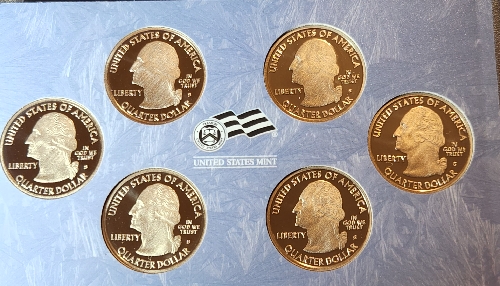 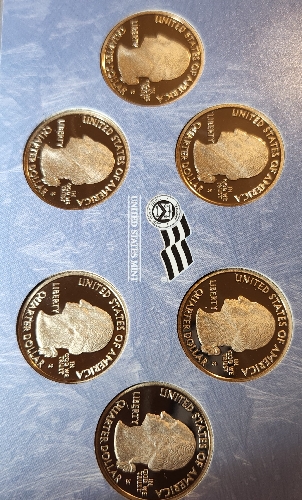 |
|
Valued Member
United States
282 Posts |
Ohhhh....is that 90° or 45°?
|
|
Moderator
United States
108636 Posts |
that is 90°. Quote:
You can not see these when you look at the coin straight on. It's when you have light on the side of the coin and they just light up thanks for that tip..  Edited by Dearborn
05/02/2024 2:03 pm
|
|
Moderator
United States
196880 Posts |
|
|
Moderator
United States
196880 Posts |
|
|
Pillar of the Community
United States
6924 Posts |
Jbuck, that makes sense.
I asked about the rotation to eliminate the light-camera interaction as a possibility. Digital camera sensors are much more complex machines than old school film cameras. The semiconductors themselves can have all sorts of unusual properties, not to mention the layers of optics and filters atop them, and the post-processing that happens at the chip, CPU, and software levels.
LED lights can also have some weird polarization and coherence properties because of the way that a solid state light emitting diode produces the photons.
Since the phenomenon still appears regardless of light angle, we could have concluded it was on the coin surface and not due to lighting, camera, or their interaction.
|
|
Page 2 of 2
|
Replies: 19 / Views: 804 |
Page 2 of 2
|




 First Page


 Posted 05/01/2024 5:00 pm





