| Author |
 Replies: 22 / Views: 4,236 Replies: 22 / Views: 4,236 |
Page 2 of 2
|
|
|
|
Pillar of the Community
 United States
5362 Posts |
jfransch That is an excellent project and one we should ALL DO periodically. I recall going back over my own collection about 10 years after I began training in Counterfeit Detection. I discovered more than one forgery in my own collection of originals. I hope everyone undertakes this project and that any counterfeits that are located can be shown to other members so that we can all gain knowledge.
|
|
Valued Member
United States
74 Posts |
I have a Cap and Ray One Peso 1908 MoGV that I will be checking soon to validate if it is authentic. At 39.46mm, and 27.02g the coin so far passes the authenticity test.
|
|
Pillar of the Community
United States
5362 Posts |
Rayhaldo Just remember that when dealing with the Pesos of the era 1898 to 1909 that you are dealing with a coin made differently than the 8 Reale coin. The Peso was struck in a closed coining chamber with a collar that applied the reeds simultaneously with the strike. So while overlaps MUST occur on an 8R they must NEVER occur on a Peso. The Peso will also be subject to different forms of Die Deterioration than the 8R. The collar retains the striking pressure while the open sided press allows it to escape at the perimeter. The result is a difference in silver flow, die wear and die cracking. The Peso series being less popular in circulation than the older 8R was targeted for forgery in far fewer cases. There are counterfeit Pesos but they date to a different era - use different technologies and were made with different metals than most 8Rs. Most Peso forgeries will be underweight base metal casts or strikes from Transfer Image dies or molds. An engraved die or mold is scarce in the Peso series and commands a higher price. True Sheffield Plate copies are essentially unknown in the Peso series. Most off metal core castings were plated in some form with silver or some other white metal surface. Period forgeries of the Mo Pesos are far more common than the other mints and in general are more plentiful than any of the early Republican (pre-1850) forgeries. Hope this helps. BTW if the coin is magnetic it is POST WWII and is essentially worthless.
|
|
Valued Member
United States
74 Posts |
I just finished a detailed inspection of my 1908 MoGV Cap and Ray Un Peso XF+. The fields were consistent with an authentic coin - no roughness and no 'pores', and all letters and numbers are nicely struck.
There are two very small die breaks emanating from the bottom of the right side of cap. They flow in a south west direction. The detail of the die breaks are consistent with the beginning of an authentic die breaking - the detail is sharp and obviously not a reproduction.
The edge design is correct and without flaws.
It was really a pleasure admiring this coin up close again. The obverse eagle is a very beautiful design.
|
|
Valued Member
United States
74 Posts |
Two more details; The edge has no overlaps and is nicely/uniformly struck all around. The coin is not magnetic.  |
|
Pillar of the Community
United States
5362 Posts |
It sounds as if your coin is real. I am not aware of a Numismatic grade forgery of the date either.
|
|
New Member
United States
33 Posts |
Quote:
There is a very narrow range 26.5 to about 27.1 that is normal Hey swamperbob, I pulled that quote from a old thread that you had commented on regarding weight. I have a 1833 Pi 8R which weighs 26.4. It is worn in several parts like the eagle and cap but the date, initials part is very readable. It passes the magnet test and the rim although very worn in places looks legit. Is this still a "safe" weight? Edited by 8 R€ÅL€Š™
08/11/2010 3:24 pm
|
|
Pillar of the Community
United States
5362 Posts |
I don't recall the thread so I don't know which year was the subject of the thread. But a 26.4 gram 8R should be rather well worn even for an 1833 Pi. Was the thread discussing weights of 8Rs in general or as issued? or possibly was it regarding coins issued in the Late Republican era? At times, I take shortcuts in discussion (to save space and time). The answers for one date like 1833 at Potosi would be different than 1893 at the same mint or for 1833 at Zacatecas. Perhaps being so close to the subject, I tend to micro-focus on one issue forgetting that not all collectors understand the complexity of the series and the fact that there really are NO UNIVERSAL standard figures.
At about 25.9 grams most 8Rs are difficult to read at all with the lettering about gone. So 26.4g should be worn well into the VG range with the rim approaching the letters. The better the state of preservation the lower the issue weight was.
The range quoted sounds like a range of acceptability for circulation. The US government typically did not accept 8Rs for use in circulation that fell below 26.4 grams. Coins were purchased in bulk from the Mexican government or from mine operators and they were weighed individually when received. Lightweight coins were rejected. Banks used a lower weight to pull coins from circulation to allow for a degree of actual use. A high grade 26.4 gram coin - even MS - might never have seen circulation in the US because it started too light. The receiving agent would have rejected it. Banks after removing light weight coins from circulation forwarded them to the mint for reclamation. Bank standards varied according to the available monetary supply. During the Hard Times - terribly worn coins actually circulated because hard money was in short supply. Perhaps in that time frame an underweight coin might have been accepted better than in 1829.
That said, in 1833 at San Luis Potosi a lightweight coin is a distinct possibility. The mint was still being run by the State government of San Luis Potosi at that time. There were quality issues in the 1830-1832 time frame (The worst is 1831). In 1835 the central government of Mexico took over operating the mint and quality and quantity both improved.
The earlier coins tended to have the widest range of weights because of the crude machinery used to make planchets. This varied by mint and varied as well by mint operators. In leased mints or State run facilities - the operators often brought in their own equipment so that a roller coaster of quality resulted.
For another example, the mid 1830s were great for quality at Guanajuato when Manning and Marshall ran the facility completely but that changed in 1842 when the Casa de Moneda took over the "control" of the operation and Manning and Marshall simply operated the facility. The die standards and the operation in general lost ground under the new arrangement. Change was not always for the better in the early days.
There are quite a few 1833 8R forgeries in general but I record NO forgeries of that date from Potosi either contemporary or Modern. It is in fact one date that I am searching for all the time.
So chances are very low that your coin is a fake, but I would love to see it anyway just to be sure. It could be the 1833 Pi forgery I have been hunting for for years.
|
|
New Member
United States
33 Posts |
Hello swamperbob, I couldn't locate the thread this time around but I had saved a copy & paste of that portion for future reference regarding weights. I think that thread dealt with the Zacatecas 1842 8R or something like that. Here are the pics of the 1833 Pi that weighs 26.4    |
|
Pillar of the Community
United States
5362 Posts |
The 1833 Pi is real - it may have been shaved a bit around the edge to remove some silver at one time. There are clear file lines on the edge and the edge is rounded.
The 1842 Zs comes in two varieties - made by different authorities. The first type with the round tail was a Government of Mexico issue made to high standards. The second type square tail was made by Anglo-Americana de Casas de Monedas (Manning and Marshall) and used equally high standards. They were an export manufacturer serving US interests.
So the range quoted is for the 1842 Zs a HIGH STANDARD issue.
|
|
New Member
United States
33 Posts |
Thanks!
I wonder why someone would want to remove such a miniscule amount of silver from the edge? I remember reading something about people who "mined" coins for silver, maybe this could be one of those.
Edited by 8 R€ÅL€Š™
08/12/2010 12:24 am
|
|
Pillar of the Community
United States
5362 Posts |
That is exactly what I am thinking. If you do one coin that is not much but if you are a merchant with access to 100s of coins and you take 0.25 grams from every coin you handle you end up with the silver from ONE COIN for every 100 you do. Good side job for a kid. A dollar (8 Reales) was a weeks salary for the typical worker in 1833.
|
|
Valued Member
United States
74 Posts |
This issue is exactly why I find collecting 8 Reales and other coins fascinating. They are always rich with history and stories. You are actually holding a piece of history in your hand.  |
|
Valued Member
United States
426 Posts |
Quote:
There are quite a few 1833 8R forgeries in general but I record NO forgeries of that date from Potosi either contemporary or Modern. It is in fact one date that I am searching for all the time. SWAMPERBOB ! Sorry to resurrect an old thread but I seriously think I may have located the 1833 8R San Luis Potosi contemporary counterfeit that you have been looking for! I hope you caught this one in time before the auction ran out! http://www.ebay.com/itm/27082288461....m1423.l2648Looks like two periods before the assayer's initials and most telling of all, the eagles tail is too round to be a original, I spent a good time looking at this one before coming to the conclusion that it is a contemp counterfeit not listed in Ridell's book and I don't think it is a unknown original variety. What do you think Swamperbob? 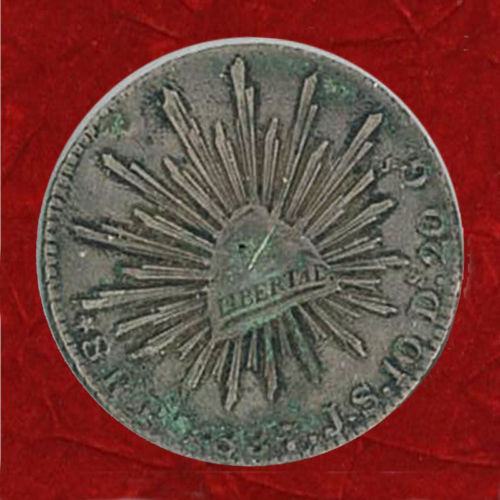 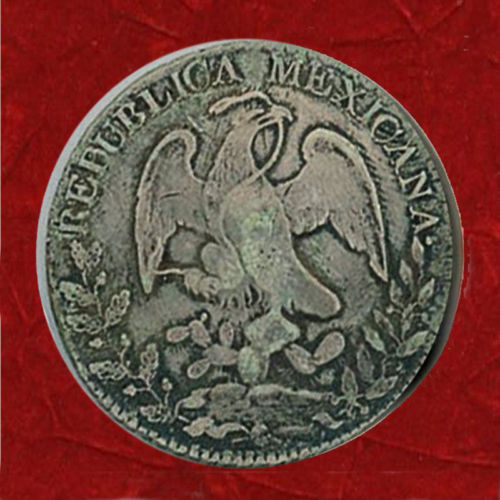 Edited by RealPeso
10/01/2011 2:50 pm
|
|
Pillar of the Community
United States
5362 Posts |
Well - I agree with you. The coin is a forgery based on numerous counts not least of which are the incomplete appearing dentils. I do not know if it is period or modern however.
I just won the auction so I will know for sure in short time.
|
|
Page 2 of 2
|
Replies: 22 / Views: 4,236 |
Page 2 of 2
|






 First Page


 Posted 08/09/2010 3:16 pm





