| Author |
 Replies: 19 / Views: 4,014 Replies: 19 / Views: 4,014 |
Page 2 of 2
|
|
|
|
Bedrock of the Community
United States
10982 Posts |
I'd weigh it and see if the planchet might be a touch light. Luster breaks over the area of weakness are not apparent, so it certainly looks MS. Another thought is a planchet that was warped a touch. There are many die issues that could lead to this too, so I am shifting gears and focusing elsewhere. Ultimately my guess is worn dies with low strike pressure.
|
|
Pillar of the Community
United States
2373 Posts |
Great and informative post. I too have a weak struck coin(1892-O) that I bought only because they don't come through my friend's store very often. And yes I bought the holder not the coin because I didn't know if the coin was really a mint state coin. It's a PCGS MS62 so there was some comfort in the holder. The hair, ear, chest and legs are lacking of definition. 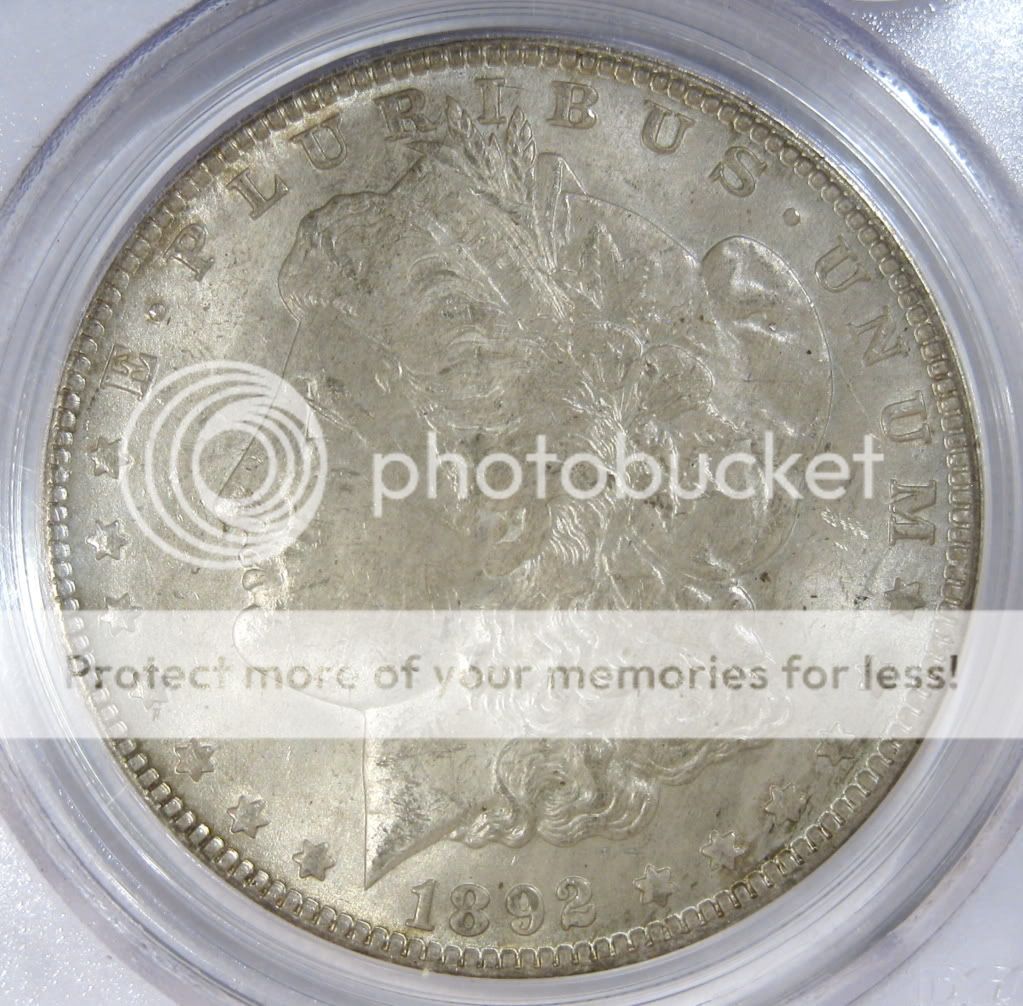 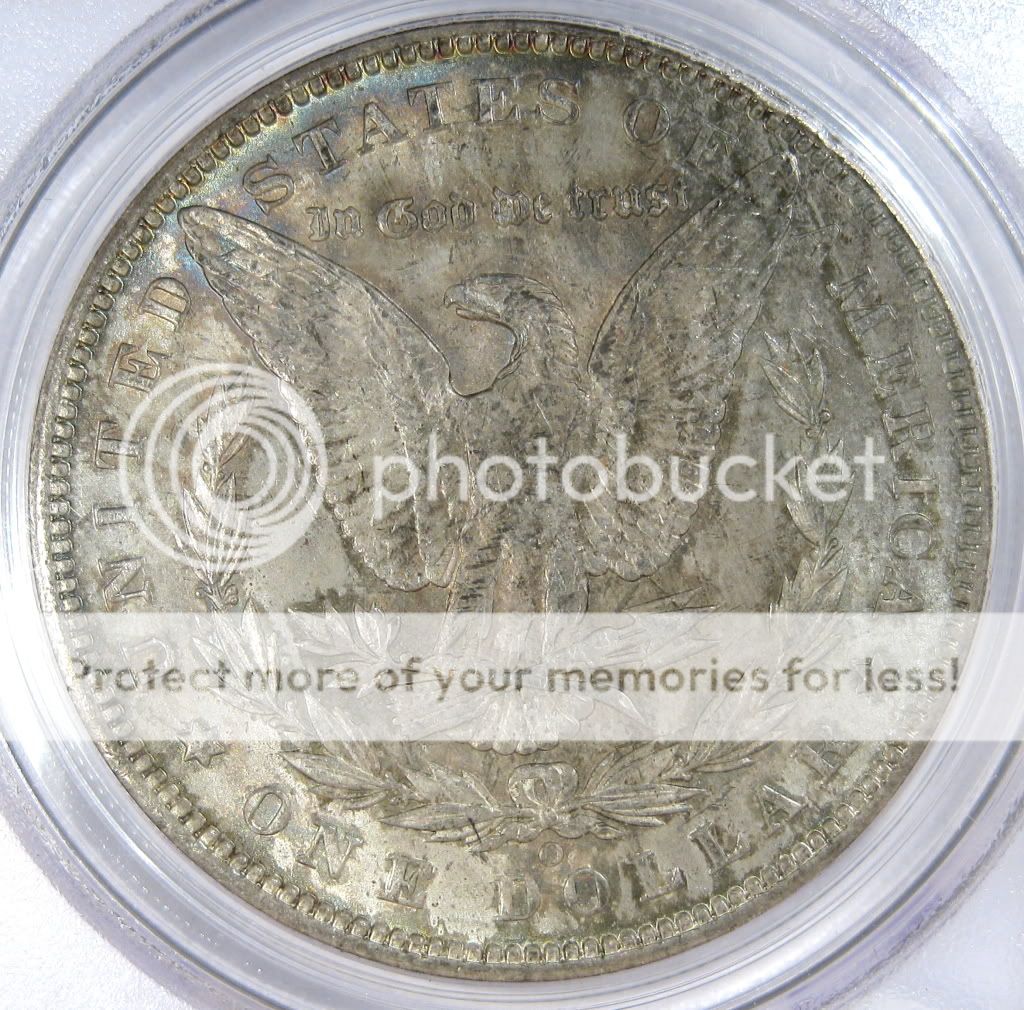 |
|
Pillar of the Community
United States
7123 Posts |
nlp. Your coin is suprisingly close to my coin in the areas That display significant weakness, thanks for posting it, it adds to my data for the O mint coins.
but you know it really should be in the safe with its equal? ;))
|
|
Moderator
  United States
23522 Posts |
Quote:
However, wouldn't the luster remaining unbroken at least hint at the weak strike scenario? Yes, in-hand. I'm mostly concerned with the photographic end, as it applies to coins we see here in the forum. Luster is difficult to represent accurately in photographs - many times all we essentially have to go on is strike, even in better shots. Quote:
I'd weigh it and see if the planchet might be a touch light. 26.68g, a tad light but I have nicely-struck Mint State Morgans which are that weight and lighter. For me, it boils down to how New Orleans chose to run their operation. The dies were all produced in Philadelphia. Per-die average production in New Orleans, although higher than that of San Francisco and Carson City, was considerably lower than that of Philadelphia which had far fewer weak-strike problems. I've just discovered that the National Archives branch in Philadelphia holds the US Mint records. Most of it is accessible to the public. A field trip is in order.  |
|
Pillar of the Community
United States
1388 Posts |
Very informative post... I knew about the weak strikes but WOW!... I had no idea they could be that weak... Great tread! Thanks!  |
|
Pillar of the Community
3660 Posts |
Quote:
Is it possible that these dies were more concave than others? Yes Dave, it most certainly is possible, and coincidentally enough, not 30 minutes ago, I entered this as 'the' probability for heavy die clash marks in the central devices (on CBH) on the PCGS forum. Edit----(Actually, I used the opposite (convex) notion for clashing in central devices).-----Edit Interesting stuff Dave, and I have no doubts about what you say about condition and grading, but maybe I am missing the point somewhere. I don't understand how the comparison of two different die pairings supports a notion of a 'weak strike' theory. I can think of a few other possibilities for the appearance of the first coin pictured. Edited by zeewool
06/12/2010 11:43 pm
|
|
New Member
United States
21 Posts |
My 1902-O   |
|
Moderator
United States
23731 Posts |
With the weakness in the areas that are noted for New Orleans minted Morgans and the amount of luster, I have no doubt that this is a mint state coin. MS-63. Excellent pictures.
|
|
Pillar of the Community
3660 Posts |
Dave, I hope that you did not find my earlier post to be rude, if so, I apologize. I did not intend in any way for it to come across as such. My point was that while your coin and Metalman's coin are definitely not of the same die pairing, your assertion that the cause of the phenomena on the first coin could well be caused by an overly concave die pair is quite plausible, but this would also imply that 'both' dies were in such a state (which is highly coincidental). I might think that the expertise of the N.O. mint workers was not on par with that of the Philly guys, and possibly some crusty crud (maybe of the same nomenclature of strike thru material) was not removed prior to striking. It may be interesting (and more telling) to know if this condition is either VAM or coin specific. I really think that considering the peripheral devices (dentils and lettering), that the notion of 'weak strike' can be dismissed. |
|
Valued Member
United States
381 Posts |
My POS 1892 O Morgan!   Edited by jeffreyice1
06/13/2010 02:12 am
|
|
Moderator
United States
23522 Posts |
Quote:
but this would also imply that 'both' dies were in such a state (which is highly coincidental). First, absolutely no offense taken. Second, I wasn't trying to make such an implication; indeed, the "concave die" theory is discounted by the fact that they all originated in Philadelphia, yet only New Orleans is known for the "weak strike" syndrome. The contrasting coin I presented was to support the idea that it's a function of the people, and how they chose to run the machinery. That, and I'm kinda thinking out loud here, more musing than educating.  The thrust of my upcoming research in Philadelphia is to see if I can find some sort of Mint correspondence which supports one theory or the other. |
|
Pillar of the Community
3660 Posts |
Dave, are you in contact with Roger Burdette? If so, he may already have such documents, or give some advice on how and where to research it (if you are going in cold on this). He is sort of a walking mint archive in my opinion.
|
|
Valued Member
United States
73 Posts |
Philadelphia was supplying the dies but as they wore it was up to the branch to polish and basin the dies was it not? Likewise maintain the presses which ran at breakneck speed. The mechanical aspect of press maintenance must have been continual. Worn and broken parts daily.
A few possibilities:
some branches had far more skilled/dedicated workers
San Fransisco surely had more comfortable working conditions than New Orleans, 70º vs 100º
Perhaps the basining in San Fransisco fell to a very skilled worker who enjoyed rejuvenating a worn die whereas that job in New Orleans fell to a trainee who not only lacked skill but hurried the job as it was done in a particularly hot uncomfortable part of the work room.
Didnt New Orleans have the majority of the overprints? O/CC etc. I always had the impression New Orleans got all the 'hand me down' dies and parts and tools from the other mints.
All conjecture in 2010. I have a lot of O Morgans and oddly most are decently if not very well struck whereas I've got some other mintmarks that are really soggy. I love them all.
|
|
Pillar of the Community
United States
3076 Posts |
some time ago I missed a 1892-0 that was very very nice all over the rims and fields with the exception of the center obverse where the hair was flat, and the Reverse was just as nice but the chest and legs were flat, I got to busy to bid on it, and never heard of the coin mentioned in this thread as to what the TPG's would grade it...going thru some of my coins I stumbled across a very weakly struck coin 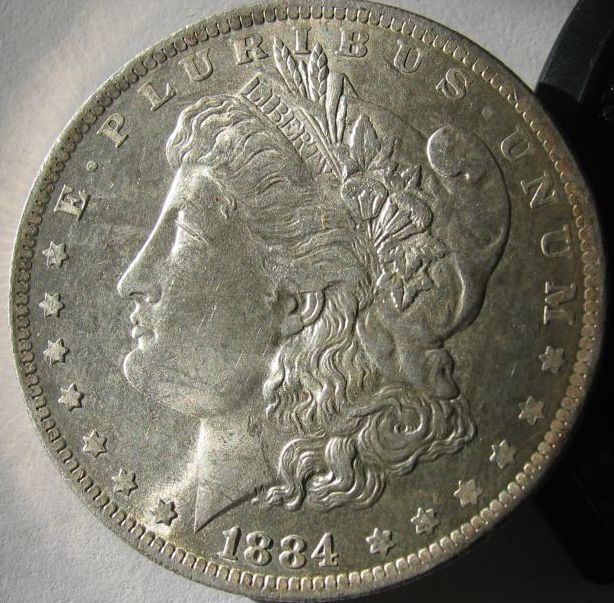 here this 84-0 is weak all around the rim and the center, 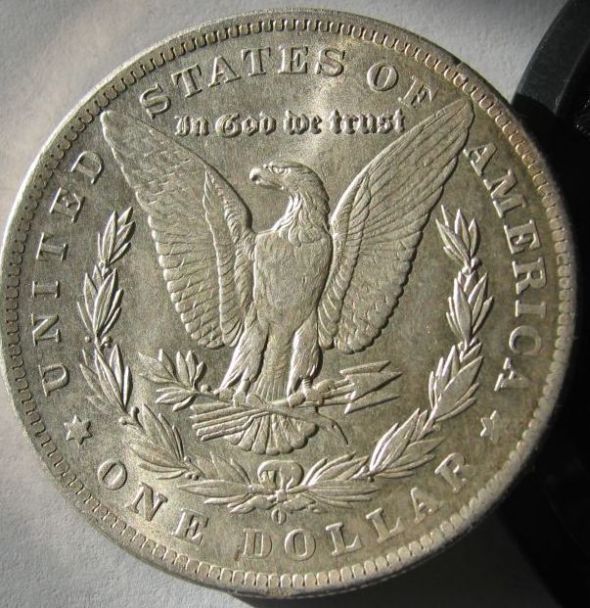 again, weak rims, and center chest and legs look flat...... on both the OBV and REV the lettering looks strong and clean, decent clean fields........how does one grade something like this? are they worth collecting? |
|
Pillar of the Community
3660 Posts |
Your listed possibilities are all good ones goldfinger. I have considered each of them before myself. The notion that I like the best is that possibly the mint workers may have over extended themselves on Bourbon St. at Mardi Gras the prior evening?
|
|
Page 2 of 2
|
Replies: 19 / Views: 4,014 |
Page 2 of 2
|






 First Page


 Posted 06/12/2010 7:41 pm


