| Author |
 Replies: 19 / Views: 7,857 Replies: 19 / Views: 7,857 |
Page 2 of 2
|
|
|
|
Pillar of the Community
United States
7123 Posts |
|
|
Valued Member
United States
420 Posts |
|
|
Pillar of the Community
 United States
1551 Posts |
I will help I just passed on one in AU about an hour ago as I did not kmow what VAM it is |
|
Pillar of the Community
United States
3076 Posts |
there is a 1921 DIE CRACK page on vamworld, but I have lost the link, perhaps Dave can post it for us....
|
|
Pillar of the Community
3660 Posts |
It has been quite a while Gene, but as I recall, the page that you refer to was only for 1921-Denver.
|
|
Pillar of the Community
United States
3076 Posts |
as I am thinking back,,,,,YOU ARE CORRECT.....I do hate 21 coins, there are to many varities.and with 20 mil something mintages makes my eyes water just thinking of it....SUPER DAVE TO THE RESCUE...forget JimDandy....
|
|
Moderator
 United States
23522 Posts |
Quote:
SUPER DAVE TO THE RESCUE...forget JimDandy.... Oh, all right.  Sorry, guys, been kinda distracted the last couple days. Early die state of VAM-51A: http://www.vamworld.com/1921-P+VAM-51AI'm not really sure whether to call it 51 or 51A. There are a number of 1921 VAMs which have subvarieties distinguished by die cracking the original doesn't display. It's a judgment call as to when it stops being "original" and becomes "subvariety." Left to my judgment, the coin presented here is 51A because the cracks are becoming the story, even though the prime-characteristic break at AM isn't fully developed yet. The telltale for me was the triangular break at AR in DOLLAR. Very few 1921 varieties show this, and I think 51 is the only Philadelphia coin with it. 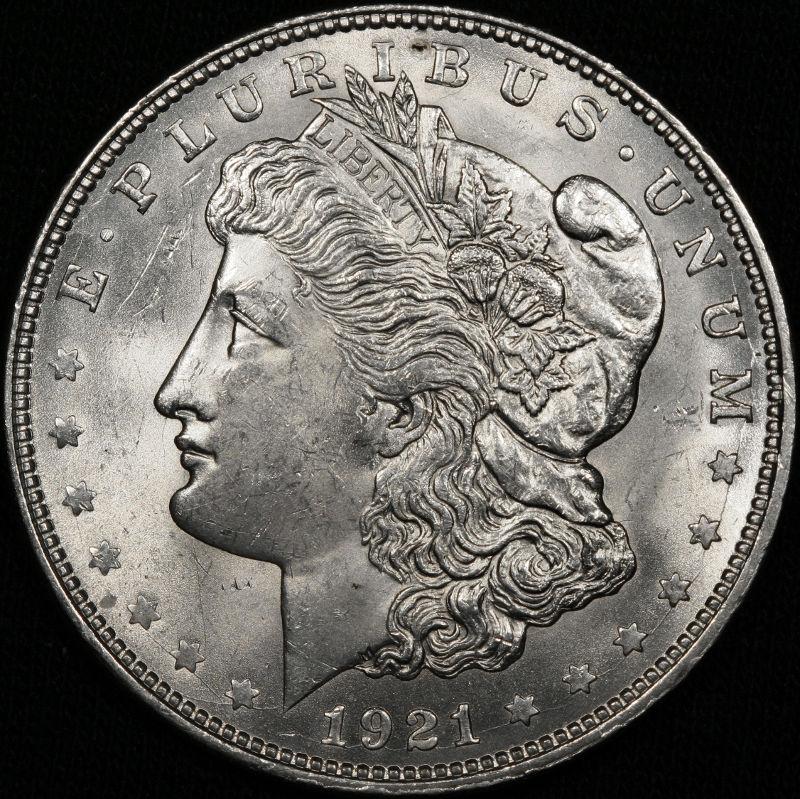 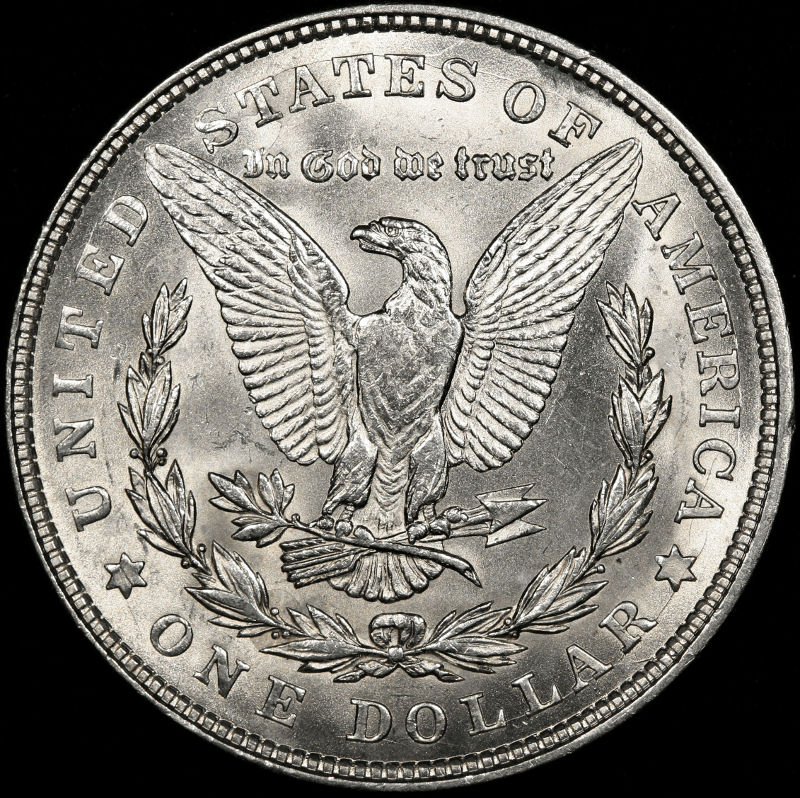 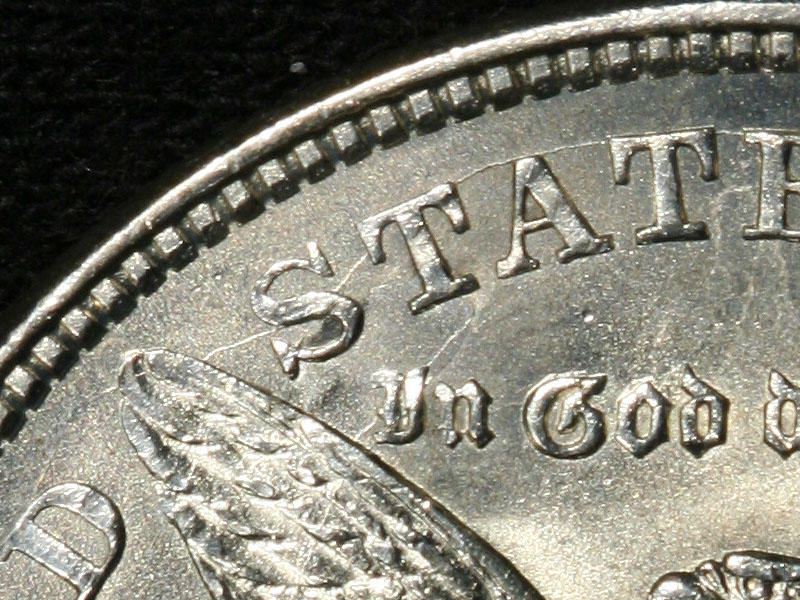 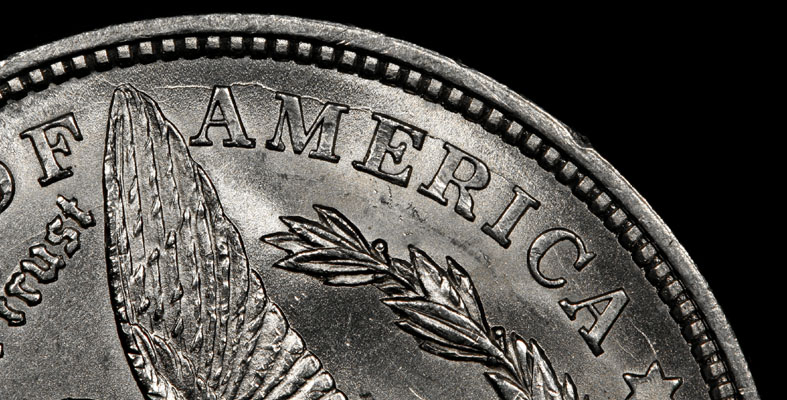 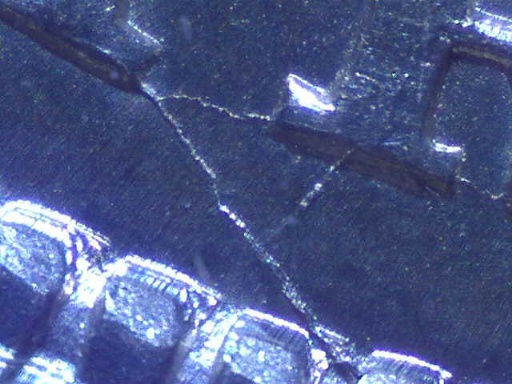 |
|
Pillar of the Community
United States
2764 Posts |
Thank you for your knowledge, SuperDave.
|
|
Valued Member
 United States
91 Posts |
Thank you Dave  |
|
Pillar of the Community
Philippines
1156 Posts |
I never thought that 1921Morgans came out with so many cases of cracks.
Could it be overused dies?
thanks for sharing the pics!
|
|
Pillar of the Community
3660 Posts |
There are many reasons for cracks in dies Nic. Many cracks are caused by improper annealing in which case the die may suffer a crack upon first strike. Sometimes a die clash will cause a crack to form. Some fissures are inherent in a die slightly sub-surface before first strike, unnoticed during inspection. Sometimes, as you say, extended wear will cause die fatigue resulting in cracks. In the case of the 1921 Morgans though, a good many of the cracks take on similar appearances in location, which I believe, is caused by the redesign and re-profiling of the dies (from that of the 1878-1904 design), leading to premature cracks.
Edited by zeewool
06/23/2010 10:35 pm
|
|
Moderator
United States
23522 Posts |
Quote:
In the case of the 1921 Morgans though, a good many of the cracks take on similar appearances in location, which I believe, is caused by the redesign and re-profiling of the dies (from that of the 1878-1904 design), leading to premature cracks. An interesting and very plausible theory. 1921's were not basined; this may be a factor as well. The furious pace at which 1921's were struck must also be a consideration. Only the 1889-P Morgan exceeds any 1921 issue in total mintage, and San Francisco nearly doubled their best previous Morgan dollar output. As an aside, this is why most other 1921 issues are key or semi-key; there was little time in 1921 to mint much besides Morgans. One fact about this year I find striking, though, is the relative scarcity of clashed examples. Only a very few 1921 VAMs are clashed; I can recall only one 1921-D which is. The feeding mechanisms must have been very much refined from earlier years, in which clashing was common. |
|
Pillar of the Community
3660 Posts |
Right you are (as usual), Dave. I wasn't sure who might or might not know what basining is, so I used 'redesign' as a catchall. Yes, the Morgan and Orr press that was used to stamp out the earlier Morgans was also used to strike the Trade dollars that preceded them. The press itself was well tested by the time it struck its first Morgan, and remained the state of the art minting machine well into the first 30-40 years of the 20th century. Steam gave way to electricity, and the press underwent other technological refinements during the industrial revolution of the early 1900s as well. |
|
Pillar of the Community
Philippines
1156 Posts |
thanks SuperDave and zeewool, got lost on that word "basined" meaning redesigned, great to learn another new word. Thanks
May I ask, what the word "clashed" could mean ?
|
|
Pillar of the Community
3660 Posts |
Oh my, Nic....my gross generalization has resulted in miscommunication...'Basining' and 'redesign' are definitely not synonymous.
As far as coin dies go, here is my definition of basining: To me, the word refers to the convex curvature of the die face to facilitate metal flow during strike. For each design engraved (Peace, Morgan, obverse, reverse) on a die, several tests would need to be performed with newly sunk test dies and test polishing plates (or polishing discs) of varying degrees of radial curvature. The curvature is achieved through initial 'polishing' of the die with a slightly concave polishing plate, resulting in a convex die face.
This research was performed at the Philly mint. Polishing plates that were determined to be of the proper concave radius to transfer the correct convex degree of curvature to the dies were sent along with the dies to the branch mints so that when the time came to repolish the dies due to wear, the process could be duplicated and the die would remain at the proper radial curvature.
The result of this basining (or grinding or 'polishing' or whatever a person may call it) is not only a die of the correct curvature to strike up a properly profiled coin in one press strike, but it actually polishes the die to a very bright, hard, relatively non porous surface finish that is complimentary to achieving PL coin surfaces.
When a die is heavily worn, it can be revived using the polishing plate, and begin to produce PL coins once again.
This is just one of many reasons why die stage progression is a very tricky business when armed only with various coin examples of a certain die pairing, but lacking the knowledge of press capabilities and mint SOP. Contrary to the belief of many an 'expert', PL coin surfaces do not necessarily indicate early die state.
The term clashing simply means the there was no planchet or flan between the obverse and reverse dies during strike. A clash is when these two dies contact each other, and often the harder of the two dies will leave a portion of its design impression on the softer die, which is subsequently transferred to each coin that it strikes, until such time as the 'repolishing' (mentioned above) takes place, and then everything is peachie-keen again.
|
|
Page 2 of 2
|
Replies: 19 / Views: 7,857 |
Page 2 of 2
|







 First Page


 Posted 06/16/2010 3:52 pm





