| Author |
 Replies: 23 / Views: 3,398 Replies: 23 / Views: 3,398 |
Page 2 of 2
|
|
|
|
Bedrock of the Community
United States
12437 Posts |
Georgioscoins,
that may be good advice for cleaning crusty ancients but NONE of those techniques should be used on coins of a more recent vintage. Any type of mechanical rubbing will cause hairline scratches, especially with the use of baking soda(an abrasive).
|
|
Valued Member
Greece
70 Posts |
Baking soda is a very mild abrasive...
|
|
Valued Member
Greece
70 Posts |
Biokemist6, the ''NONE of those techniques should be used'' includes the use of velvet cloth and soap with hot water ?
Sometimes a coin with slight scratches is more pleasant to the eye than something that doesn't look like a coin at all.
|
|
Pillar of the Community
United States
3294 Posts |
More pleasant to the eye or not, those slight scratches are going to reduce the value.
|
|
Valued Member
Greece
70 Posts |
As a general rule this is correct but all rules have exceptions. nod2003, have a look at this coin and tell me if it worth more like this or with the green spot under Penny cleaned? 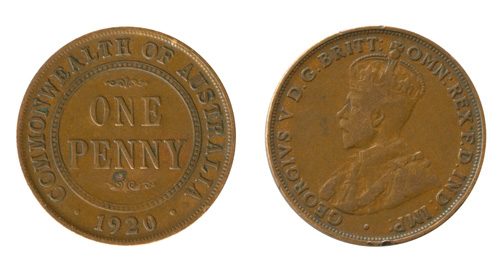 |
|
Bedrock of the Community
United States
12437 Posts |
Yes, a velvet cloth will still leave hairlines as would any other type of physical wiping of the coin. Soaps can also cause problems with a coin and should be avoided. You may consider baking soda to be a very mild abrasive but rubbing it on a coin is not much different than using 100 grit sandpaper. Regarding the 1920 Aussie Penny, that spot can be removed with wet chemical methods that will not harm the coin at all.
Remember that an ugly coin may not always be ugly if it can be treated with proper conservation but a cleaned harshly hairlined coin is damaged for life.
Edited by biokemist6
11/01/2010 5:38 pm
|
|
Pillar of the Community
Philippines
1156 Posts |
I clean my coins only if there is possibility of any baterial infection, moulds or fungi contamination 1. just dip it 5 secs in tepid mineral water and pat dry w/clean cotton cloth 2. then dip for another 10 secs in rubbing alchohol to rid any surface oils and bacteria and pat dry w/cotton cloth 3. repeat step 1 That's about it, a very mild surface metal bacterial cleaning, its a tropical hot place here and bacteria has a way of surviving in any surface  |
|
New Member
Indonesia
2 Posts |
i have old cions ...can you tell me the history of each coins ?
|
|
Bedrock of the Community
Australia
21792 Posts |
Tell us what coins you have, and picture as well.
|
|
Bedrock of the Community
United States
20049 Posts |
I agree 100% with biokemist. For those who are thinking about cleaning their coins, I cannot recommend rubbing with ANY type of cloth or using baking soda or other harsh methods. These classic methods will cause permanent damage to your coin rendering it cleaned for life.
Lincoln Cent Lover!VERDI-CARE™ INVENTOR https://verdi.care/
|
|
Bedrock of the Community
United States
20049 Posts |
Quote:
As a general rule this is correct but all rules have exceptions. nod2003, have a look at this coin and tell me if it worth more like this or with the green spot under Penny cleaned?
If it's cleaned, I'd rather have the verdigris. It'd be better to dehydrate the verdigris with acetone and then store in an Air-Tite to stop the corrosion than to ruin the coin with a harsh cleaning. PS - I know a better way to remove the verdigris using CONSERVATION.  |
|
Valued Member
Greece
70 Posts |
I had a British farthing (bronze) from Victorian era, it was in a big mess; verdigris, dirt and don't remember what else. I soaked it in olive oil and after a couple of days I was very impressed with the results. So did I made a wrong move? Should I have left the coin as it was? It looked more like chiouaoua pooh than a coin. Isn't olive oil safe for bronze/copper coins? Especially if they are in big mess? As far the velvet cloth, I have successfully removed fingerprints from proof coins, ofcourse I only wiped the problematic area very gently.
|
|
Bedrock of the Community
United States
12437 Posts |
Olive oil is generally fine since it is only a wet method with no mechanical manipulation. The oil works as a penetrant to loosen encrustations and it is also mildly acidic. Results are slow(which is a good thing) generally measured in months, not hours or days. The one note of caution is to change the olive oil every few weeks since it can go rancid.
Edited by biokemist6
11/04/2010 1:47 pm
|
|
Bedrock of the Community
United States
20753 Posts |
As noted any type of rubbing with almost any material will create scratches and although small, they are accumulative. The more you rub, the more scratches are created. Sort of like the River that created the Grand Canyon. Slowly, but completely wear away the coins. The problem with using Baking Soda and water is really wrong. Not all Baking sodas are the same and for sure water everywhere is completely different. You must remember that in many homes the tap water is either Fluorinated, Chlorinated, run through a water softener and just full of STUFF. For example most people with house plants know you should not use tap water for plants until it has set for 24 hours to allow those gasses to excape.Well water is even much worse with things that should not come in contact with coins. Spring waters too contain miscellaneous different items. So mixing Baking Soda and water could, may, might, be a real different reaction for some compared to others. May well just use a brass wire wheel and make them all pretty and shinny.  |
|
Pillar of the Community
United States
4333 Posts |
I like to dip some of my Kennedy 90% halves, when I sell them I actually get a premium because they appear BU. I use Connisseur's silver dip. I like my silver to shine! I am a dirtfisherman and crh'er, I know what to clean, and what not to.
When I listen to LED ZEPPELIN...so do my neighbors...
Roll hunting since '77
Dirt fishing since '72
|
|
Page 2 of 2
|
Replies: 23 / Views: 3,398 |
Page 2 of 2
|






 First Page


 Posted 11/01/2010 4:06 pm





