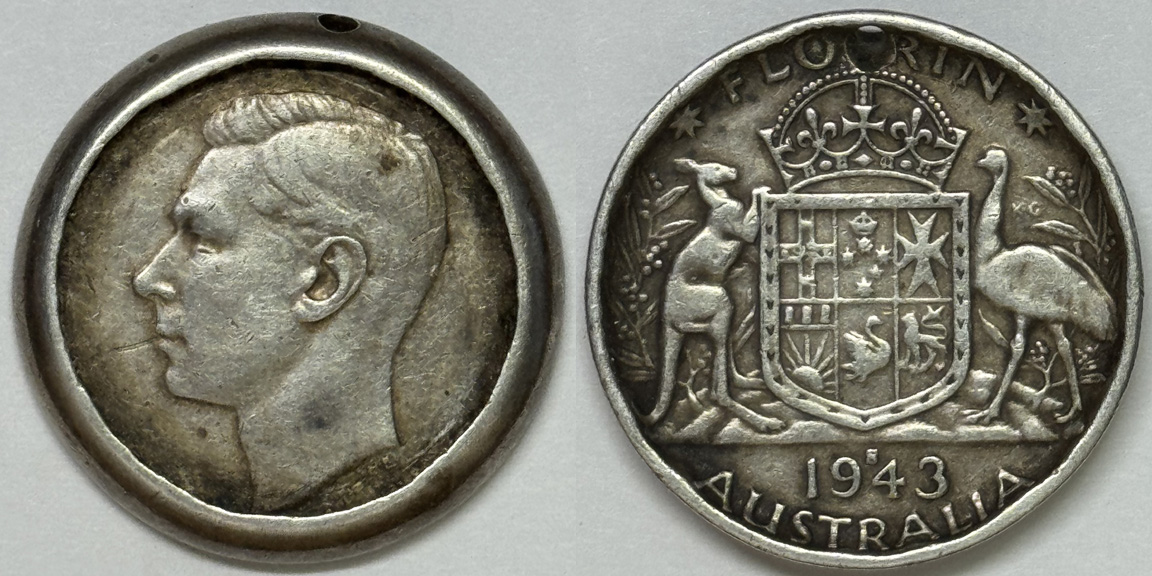
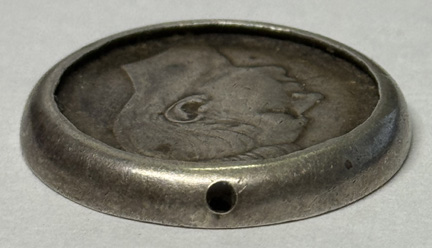
While such items are very often marketed as "trench art" when the raw material is a wartime-era coin, this of course cannot be proved unless the coin is part of a larger artifact, or otherwise has some provenance.
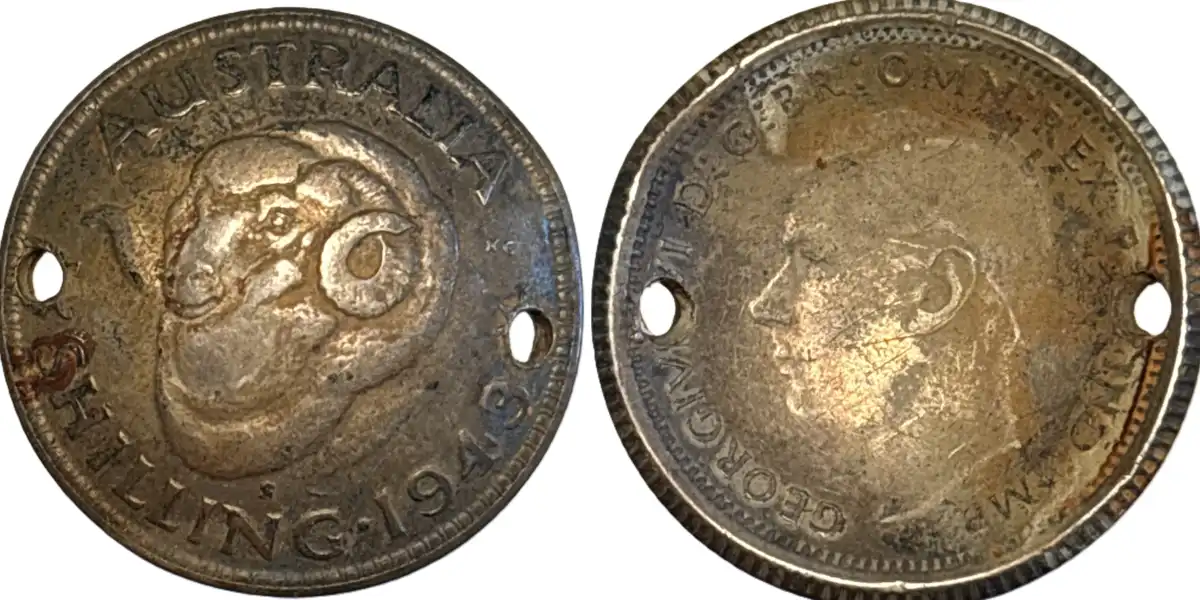
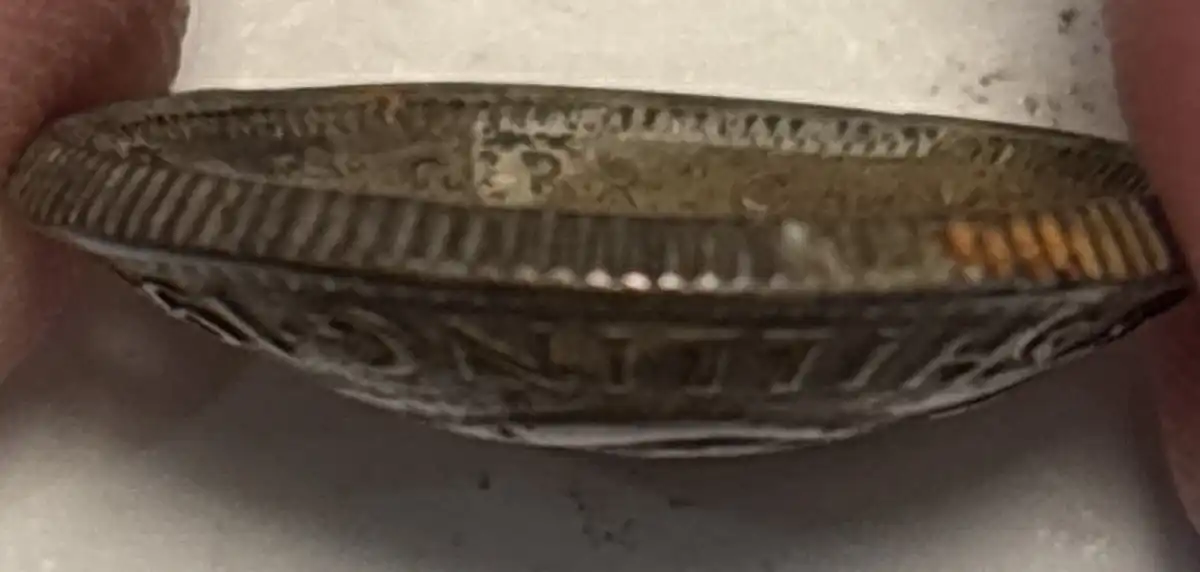
The shilling, with the holes drilled on both sides, is very reminiscent to me of the treatment often given to silver coins by the natives of the Indonesian islands and the nearby Malay peninsula, though the coins in question there are usually either Straits Settlements, Malaya, or Netherlands East Indies. Such coins can often be found with two (or sometimes four) holes drilled in at the 9 and 3 positions, and the coins then strung together with silver chain, for wearing as ornaments. Natives of Papua New Guinea have also been known to use larger holed silver coins in ornamental dress.
Don't say "infinitely" when you mean "very"; otherwise, you'll have no word left when you want to talk about something really infinite. - C. S. Lewis













 Posted 05/31/2026 2:18 pm


