As part of my local CC's National Coin Week (NCW) activities, I gave a talk at a local library. The title of the program was "Native Americans on
US coins and Currency." Along with the "usual suspects" - such as the Indian Princess $1 and $3 gold coins first issued in 1854, the
Indian Head cents that began in 1859, the Indian Head quarter-, half- and full eagle gold coins of 1907-08 and the Indian Head/Buffalo nickel of 1913 to 1938 - I also included a number of half-dollars from the classic series of US commemoratives.
I thought I'd put a postscript on my NCW presentation by posting images of some of the commemorative coins I discussed. Maybe it will spark some collectors who otherwise wouldn't think to collect commemorative coins to pursue a topical set focused on Native American imagery.
One note, I didn't include the 1928 Hawaiian half-dollar as I considered the local chieftain depicted on it to be a different type of "Native American." This year's NCW theme was more focused on Native Americans of the American West and so I included coins aligned with same. I did include modern commemoratives in my presentation, but am limiting this post to the classic series coins.
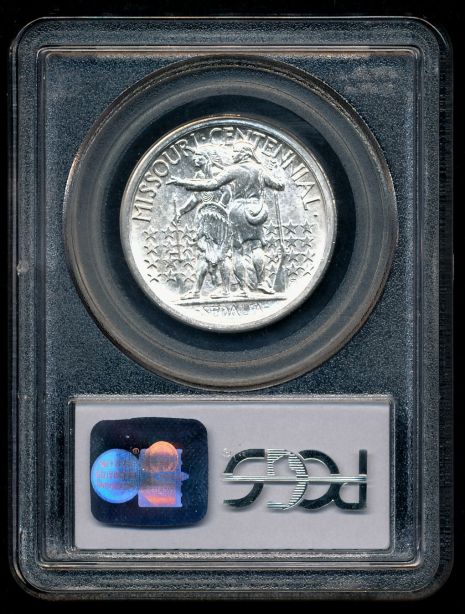
Missouri Statehood Centennial: The reverse of the Missouri depicts a standing Daniel Boone along with a standing, unnamed Native American; both figures are presumably facing west toward the new American frontier. The 24 stars in the background represent Missouri's admission into the Union as the 24th state; ‘Sedalia" is the name of the city in Missouri in which the states Centennial Exposition was held. The design is by Robert Aiken, designer of the notable gold $50 coins of the Panama-Pacific International Exposition.
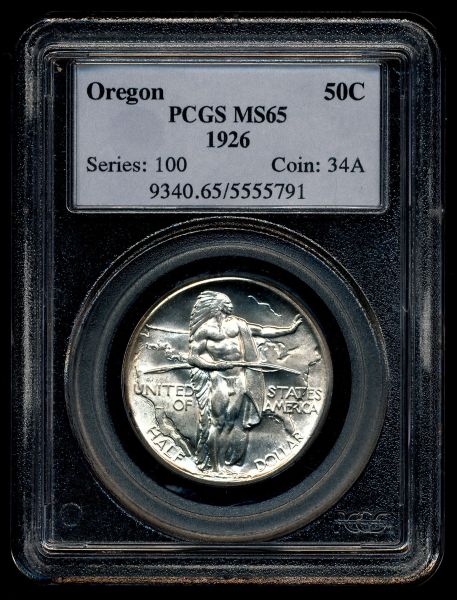
 Oregon Trail Memorial:
 The obverse of the coin features a standing Native American holding a bow, superimposed upon a relief map of the US. He is facing east with an outstretched hand in the same direction. Some collectors believe the figure is symbolically trying to stop the flow of European settlers moving west. It is the work of
Laura Gardin Fraser;
James Earle Fraser, Laura's husband, designed the coin's Conestoga Wagon themed reverse.
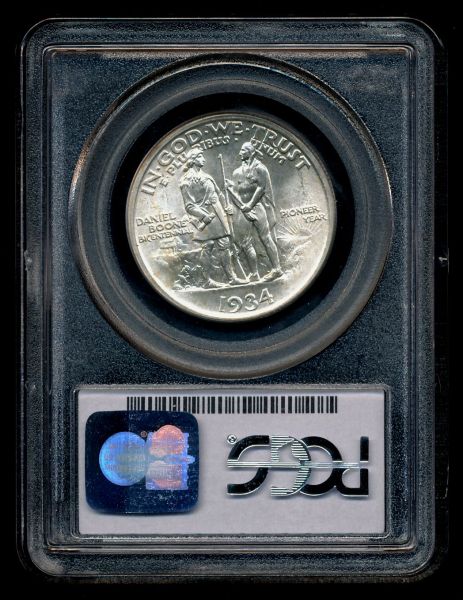
 Daniel Boone Birth Bicentennial:
 The coin's reverse depicts Daniel Boone and Shawnee Chief Black Fish each facing the other and making peace between them; Boone is holding a peace treaty and a musket. The fort/blockhouse at Boonesborough is seen in the background, it was the site of an unsuccessful nine-day siege that was instigated by the British but conducted mostly by Native Americans under Chief Black Fish; Boone helped defend the fort. The coin was designed by Augustus Lukeman.
Trivia note: The Boone half-dollar is the first US coin to depict a real-life, individual Native American. Past coins had used either a composite of several individuals or presented a symbolic representation.
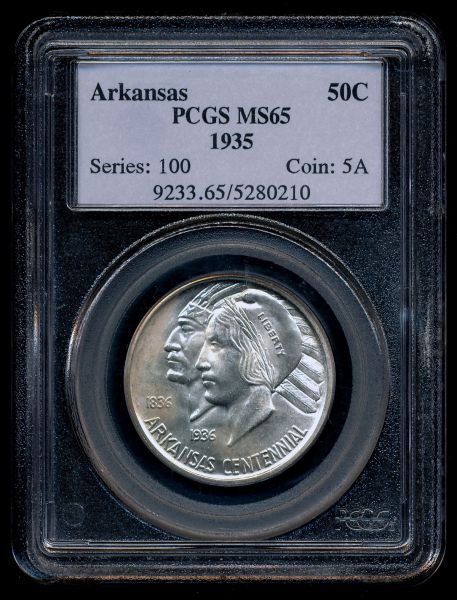
 Arkansas Statehood Centennial:
 The obverse of the coin features conjoined busts of a Quapaw Indian with a feathered headdress and Miss Liberty wearing a Phrygian cap inscribed "LIBERTY." The Quapaw were the area's primary Native American tribe circa 1836 (when Arkansas became a state); the young female Miss Liberty was meant to represent the residents of Arkansas at the time of its centennial in 1936. The design is the work of Edward Burr; the models for the coin were created by Emily Bates.
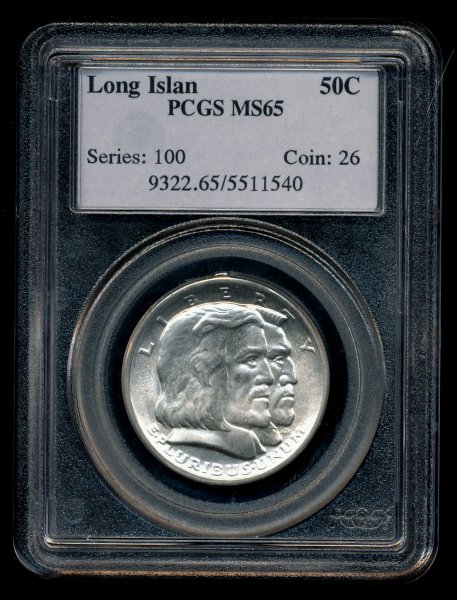
 Long Island Tercentenary:
 A Native American is seen on the obverse of the Long Island half-dollar. Depicted are conjoined portraits of a male Dutch colonist and a stern-faced native Algonquin male. The coin was designed by Howard Kenneth Weinman, son of A.A. Weinman (he of Walking Liberty half-dollar and Winged Liberty dime fame).
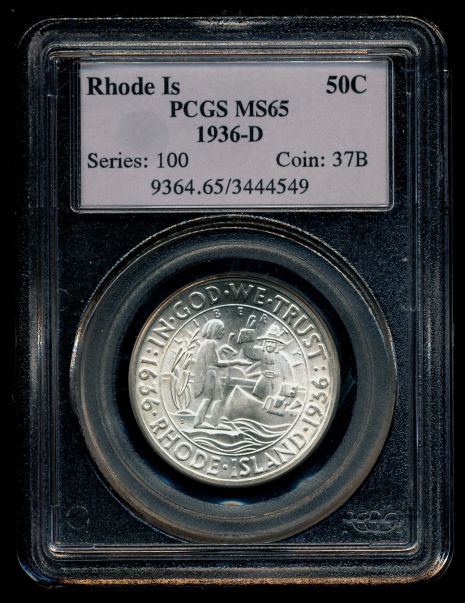
 Rhode Island Tercentenary:
 The last "Native American" coin from the classic era of US commemoratives celebrates the 300th anniversary of the founding of Providence, RI - though no mention of Providence is seen on the coin. On the coin's obverse is a stylistic view of Roger Williams coming ashore and being greeted by a friendly Native American. Williams was the primary driver behind Providence's founding. The coin is the work of John Howard Benson, an instructor at the Rhode Island School of Design, and silversmith Arthur Graham Carey.
Unlike the first
US coins with a Native American themed design (i.e., the Indian Princess gold coins and the
Indian Head cent), each of the commemorative coins featured a realistic rather than symbolic representation of a Native American - no young women of European ancestry were depicted wearing native American headdresses on our commemorative coins!
Read More: Commems Collection




 Posted 05/03/2013 7:50 pm





 with basebal21, I had no idea there was an indian on that coin. I like these types of presentations that you do; they help me look at the coins in a different light.


