I received an email a short time ago that asked if I would post some information about the surcharges associated with modern US commemorative coins. Surcharges have been in the news of late due to the reports regarding the Girl Scouts Centennial coin not meeting the minimum sales threshold to trigger the payment of the collected surcharges. So, I thought it might be of interest to others to read a brief summary of the general topic...
For each new coin it is directed to strike, the US Mint estimates its production costs (including the purchase of needed metals), its marketing costs and other associated administrative costs. It then forecasts the number of coins it expects to sell and determines a fully-loaded unit (per coin) break-even cost. From this unit cost is derived a per unit selling price that will (hopefully) ensure that the Mint's costs can be covered if the coin's actual sales meet (within a pre-determined margin of error) the forecasted target. On top of this unit cost is added a premium that is earmarked for the sponsor of the coin â€" this premium is referred to as a surcharge. US commemorative coins are and almost always have been a fund raising vehicle for their sponsors!
Over the years, the surcharges that have been added to each denomination of modern US commemorative coin have varied, but not greatly. Surcharges on the various half-dollars have ranged from $2.00 to $5.00, for silver dollars the range has been $7.00 to $10.00. For gold half-eagles, the surcharge has generally held at $35.00.
Surcharges have been a part of the modern US commemorative program since the very first issue in 1982 â€" the George Washington 250th Anniversary silver half-dollar. For this first issue, however, the collected surcharges did not go to a private sponsor; the surcharges were deposited into the US Treasury to help reduce the national debt.
The distribution of collected surcharges to sponsoring organizations began with the 1983-84 Los Angeles Olympics commemorative program. The Act authorizing the coins allowed for a surcharge of $10 per silver dollar and $50 per gold eagle. Collected surcharges were divided 50/50 between the United States Olympic Committee for training US Olympic athletes and the Los Angeles Olympic Organizing Committee to stage the Games. Sales of the coins generated over $65 million in surcharges; the two recipient organizations actually received more in surcharge royalties than their total covered expenditures. Excess monies were used to fund the United States Olympic Foundation.
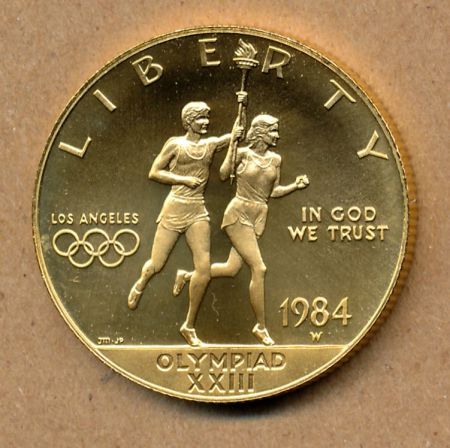

I've gone into some detail on the LA Olympics coin program because it is a good example of what can happen when a large number of coins are sold. In the case of the LA Olympic coins, roughly 4.47 million silver dollars were sold along with approximately 573,000 gold eagles. That volume level allowed the US Mint to make a profit on the coins it produced and enabled the sponsors to reap a strong financial benefit from the provided surcharges.
The model begins to break down, however, when coin sales fail to reach such lofty heights and/or the costs of producing and marketing the coins are higher than expected. Sales of commemorative coins during the period from 1986 through 1993 were sufficient enough for the US Mint to post a profit. But in 1994 and 1995, four different coins program resulted in losses for the US Mint. The Mint lost $4.1 million on the 1994 World Cup program, $100,000 on the 1994 US Capitol coins, over $300,000 on the 1995 Special Olympics coins and over $400,000 on the 1995 Civil War program.
A major concern regarding these financial losses was the fact that, despite the US Mint's loss, the sponsoring organizations of these coins were paid millions in surcharges. There wasn't a law in place at the time to ensure that US Mint production, marketing and other related expenses were covered before surcharge funds were distributed.
That all changed when Public Law 104-208 became effective in September 1996. The new law requires that the Mint must cover all of its costs associated with a coin program before any surcharges can be distributed. It also requires coin sponsors to raise funds from other private sources in an amount that is equal to or exceeds the surcharge amount they could receive to be eligible for the surcharges. This law continues in force to the present and is the reason why the Girl Scouts did not receive any surcharge funds â€" sales were not sufficient for the Mint to cover its costs for the program.
On its web site, the Mint indicates that modern commemorative coin sales have raised over $418 million in surcharges for coin sponsors and their objectives. Within that amount was more than $1 million that was raised by sales of the Black Patriots Memorial coins. It is one of the more unfortunate stories among the modern commemorative series. The US Mint paid the surcharges to the Black Revolutionary War Patriots Memorial organization, but the memorial was never built. Even worse, when the organization disbanded back in 2005, the surcharge money was missing.
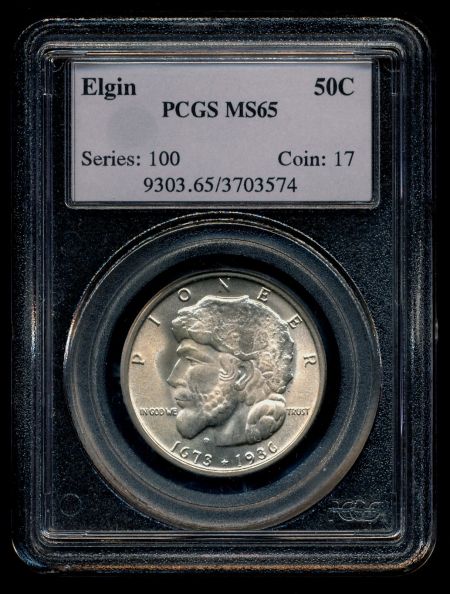
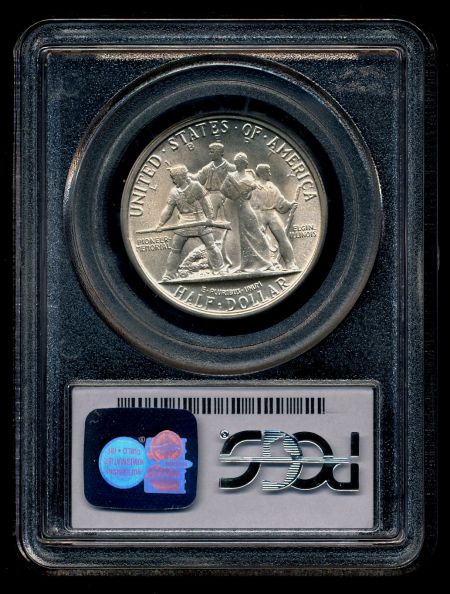
A parallel can be found in the classic commemorative series when the 1936 Elgin, IL half-dollar is considered. Funds from the sale of that coin were to be used to erect Trygve Rovelstad's "Pioneer Memorial" statue in Elgin. The statue was never completed at the time, however, and the memorial project lacked adequate funds to have the artist's plaster version of the statue cast in bronze and erected until 2001; funds from sales of the 1936 coin played no part in the memorial's ultimate realization.
About a year ago, a bill was introduced in Congress that aims to discontinue surcharges as part of US commemorative coins. If approved, private sponsors would no longer be eligible to receive surcharge funds and all profits made on the sale of the coins would be deposited in the US Treasury to help reduce the national deficit.
The bill hasn't gained much traction in Congress and appears unlikely to get approved. I'm disappointed in that as I would like to see a change in direction for our modern commemorative coins. I'd like to see an independent panel of highly-qualified US historians propose one or more annual commemorative coins and present their recommendations to Congress for review and potential approval. I'd like to see the special interest groups removed from the process and our coinage only be used to commemorate important people and defining moments/events in US history. Private organizations such as the Boy Scouts, Girl Scouts, Lions Club and National
Baseball Hall of Fame would no longer be eligible for coins. They could still petition Congress for a commemorative piece, but they would be limited to having a medal struck not a coin. Just my opinion, of course...
Hope all of that answers the original surcharge question I received. If not, let me know and I'll try again!










 Posted 02/14/2014 06:28 am


