| Author |
 Replies: 10 / Views: 1,195 Replies: 10 / Views: 1,195 |
|
|
Bedrock of the Community
United States
20753 Posts |
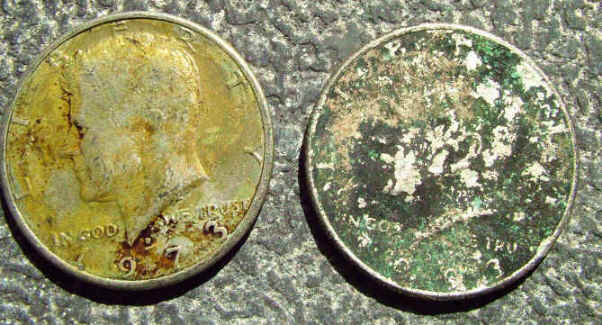
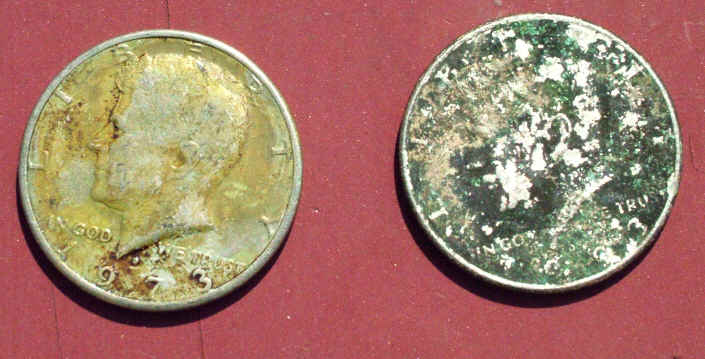
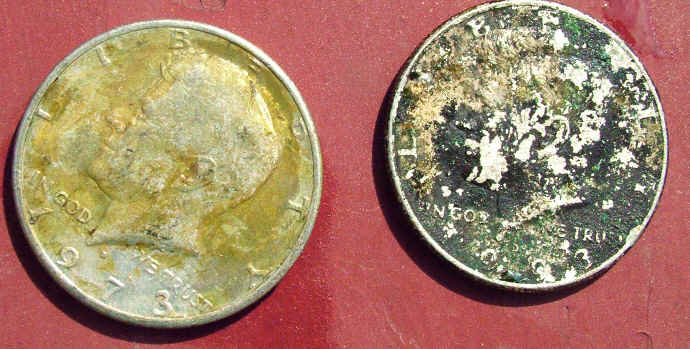
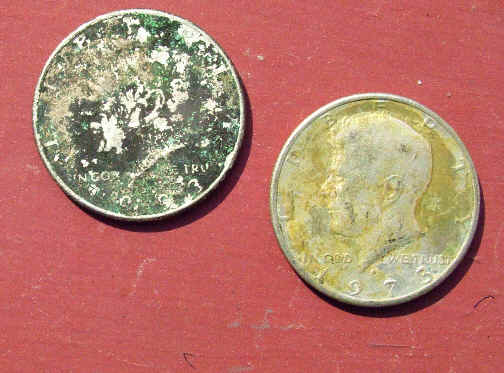
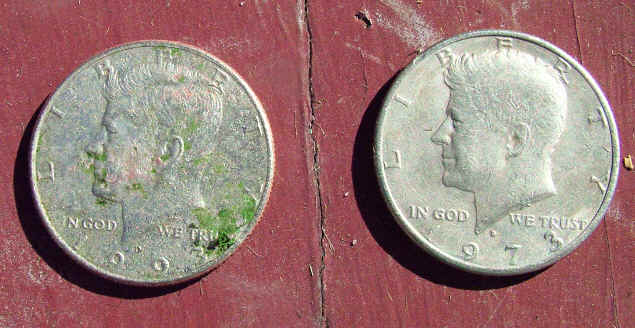
Recently going through a bunch of rolls of halves from the bank I encountered two extremely dirty coins. Apparently with nothing to loose I started to try the numerous methods of coin cleaning mentioned on coin forums as to the method that will not hurt a coin. All methods as noted were for soaking the coin in the solution or liquid for one day, rinsed with tap water and allowed to dry in the sun on a redwood picnic table. One exception is the Baking Soda method. Naturally with so many lately claiming the great success with WD-40, this was my first item used. Also, due to the fact that I used the same table, did not down load the photos until all attempts were finished, there is a chance that the photos are not in the correct order. For sure the first and last ones are in order though. These are the photos of those coins as noted with each type of cleaning. Photo 1 = Coins as is from the rolls. Photo 2 = WD-40 Purchased from Ace hardware store Photo 3 = Soaked in Mineral Spirits Paint Thinner purchased from Menards. Photo 4 = Soaked in Acetone both in the Sun and in the dark since claims have been Written claiming Acetone in the Sun will react with coins. Purchased from Menards. Photo 5 = Denatured Alcohol purchased in a can from Walmart. Photo 6 = Lacquer Thinner in a can from Menards Photo 7 = Coins rubbed in a paste of Baking Soda/tap water for only a few minutes. Photo 8 = Castella Brand Lemon Juice from Concentrate Photo 9 = Open Pit Bar-B-Que Sauce. Would have used Tomato juice or paste but didn't have any. Image:  0001a.jpg 0001a.jpg39.86 KB Image: 0002a.jpg36.34 KB Image: 0003a.jpg43.27 KB Image: 0004a.jpg26.26 KB Image: 0005a.jpg38.11 KB Image: 0006a.jpg40.95 KB Image: 0007a.jpg35.48 KB Image: 0008a.jpg22.95 KB Image: 0009a.jpg32.3 KB Never tried to add photo here before so hope this all works out. |
|
|
|
Pillar of the Community
United States
1984 Posts |
Wow, they're looking like coins! Interesting study. Menard's? You must be somewhere in the upper midwest with me.  |
|
Valued Member
United States
206 Posts |
It seems that there is a big difference between pic 7 and 8. It looks like the lemon juice helped out alot. well done on restoring these coins to acceptable quality.
PLEASE REMEMBER CLEANING COLLECTIBLE COINS WILL RUIN THEIR VALUE AND MAKE THEM WORTHLESS. (But its okay for 'crummy' coins like as shown above.
|
|
Valued Member
United States
330 Posts |
It looks like the lacquer thinner in photo 6 started the ball rolling and the lemon juice really finished the deed. I think I will try those two steps on a few Lincolns that I have dug that have too much verdigris to be high grade but have strong features. I have soaked them in acetone without much luck. The acetone removed the outer-most layer of crud but left a lot to be desired.
Who knows, maybe it was a combination of all 8 ingredients that did the trick.
Thanks for the pictures and the lab time.
Jim
Edited by justjimrob
09/21/2007 1:33 pm
|
|
Pillar of the Community
United States
1173 Posts |
Good going! Now maybe carry them as pocket pieces for awhile, and all traces of the cleaing will be gone. Someday PCGS will slab these as having an "original finish." |
|
Valued Member
United States
204 Posts |
Wow Just Carl! Never thought I would see a post where you cleaned coins . Looks to me like the barbeque sauce worked the best - I wonder if K.C. Masterpiece would work better  . Good experiment - thanks for posting! |
|
Pillar of the Community
United States
2443 Posts |
Nice right up. Seems like an awful lot of work to clean just to clean one coin! Probably ended up spending more money than it was worth, lol.
|
|
Pillar of the Community
United States
2797 Posts |
JustCarl,
There's one you didn't try ... electrolysis. I use a 9v converter and cut off the rca pin and split the + and - wires. I attach an alligator clip to both and mark the +. Find a glass container (mason jar) and fill it about 3/4 with a solution of 1/4 lemon juice, 2 tbs salt and 3/4 water. You'll need a stainless steel fork/spoon too. Attach the - clip to the spoon and place it in the solution. Next clip the + to the coin and suspend it in the solution, not in contact with the spoon. Plug the 9v converter into a power supply and watch the show. Don't leave it more than 10 minutes at a time as it will overheat. It takes off some real heavy crud.
Edited by SeatedNut
09/21/2007 1:56 pm
|
|
Valued Member
United States
277 Posts |
I tried the ketchup on a couple pennies and it worked great. It looks like the lemon juice might work as well and be easier.
Fatcat
|
|
Pillar of the Community
United States
812 Posts |
I think drying them on a redwood picnic table is what made the difference. Oh dear, yet another numismatic expense for supplies.
|
|
Bedrock of the Community
 United States
20753 Posts |
Dave (Not Super)
Edited by - SeatedNut on Today 1:56:20 PM
I read your idea of electrolitic possibilities. Just so you know I've taught college chemistry so I am a little aware of that process. Thanks anyway. I've done many types of these coin cleaning experiments ovet the years and ONLY on very damages or worthless coins. It is possible that the combination of all solutions had a hand in the removal of whatever that black stuff on the one coin was, but the Lemon Juice really appeared to be the one good one. The first photo was on a Bar-B-Que, not lighted at the time. The Red Wood table has had numerous coatings of Redwood Stain so that may be the thing that really worked best. My biggest disapointment was with the Laquer Thinner. I really thought that would remove anything.
With items such as Ketchup, Bar-B-Que sauces, Lemon Juices, etc. always remember that the many different brands may have different substances in their product so results may vary dramatically.
As already noted it is not a good idea to clean coins.
The experiments I usually do are on coins that could or should be back in circulation and that is where the halves from this test will end up.
|
| |
Replies: 10 / Views: 1,195 |
|







 0001a.jpg
 0002a.jpg
 0003a.jpg
 0004a.jpg
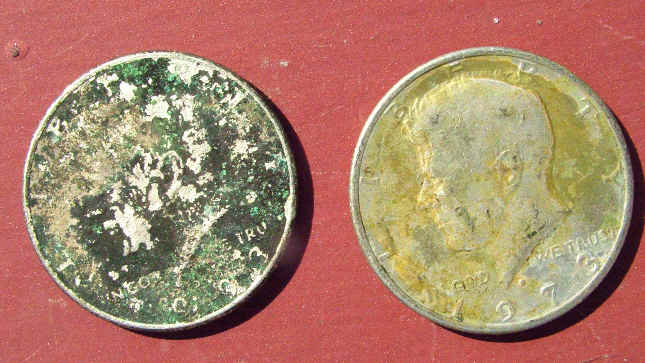 0005a.jpg
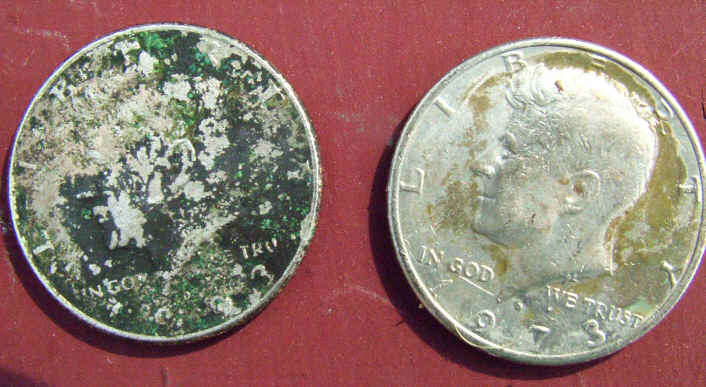 0006a.jpg
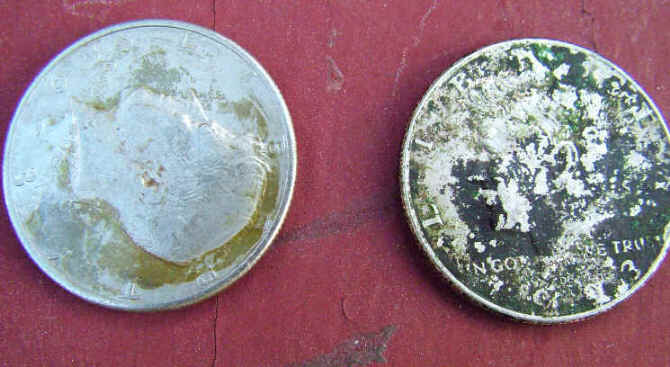 0007a.jpg
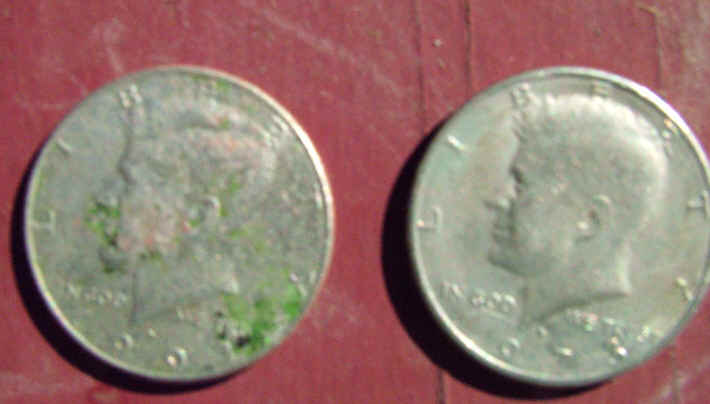 0008a.jpg
 0009a.jpg


 Posted 09/21/2007 12:49 pm


