











 Posted 10/13/2007 9:08 pm


quote:
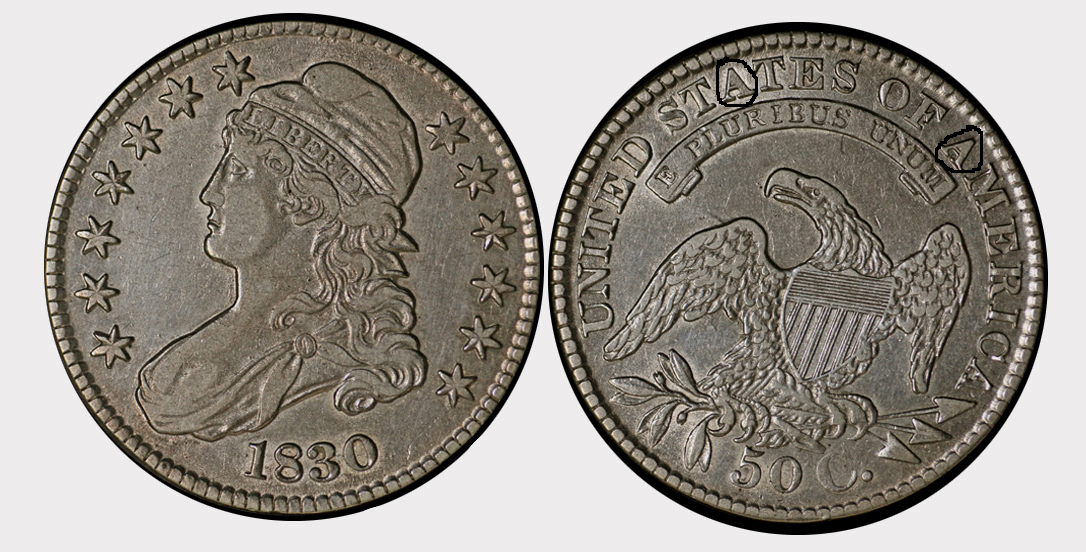
I buy 45, if my reasoning is right. There appears to be a lot of wear on the obverse, but it seems to me that there's so much "wear," evenly-distributed in so many areas, that strike must be a factor. The clasp is nice; shouldn't it wear early? Likewise the reverse; if the wear on the eagle's head, wings and talons were just wear, would not the leaves and shield show more wear? Please, educate me.
Thanks for taking a look. I've found that the ONLY thing you can pretty much count on with this series when it comes to wear is, wear can show up at anyplace you expect it to and anyplace you'd least expect it to. The bust requires a lot of metal flow in order to fill the die, but when that happens the reverse suffers from lack of metal especially around the E PLURIBUS UNUM, especially the letters RI. As far as the clasp goes, I suppose one could take a 'micrometer screw gauge' and measure the height of the bust curls and then compare it to the clasp in relation to height from the regular surface of the coin. One might find the curls are a little higher?
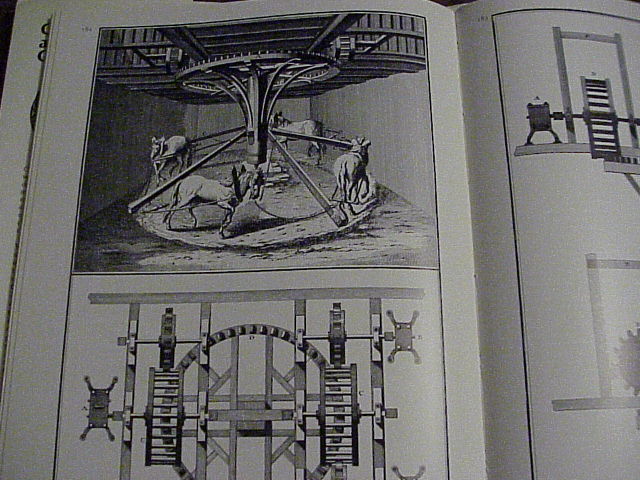
Remember these coins were manufactured on horse powered screw presses and while the planchets were exact in weight 13.48 grams, exactly 1/2 of that used on the Silver Dollar. There is no mention (I've seen) of information on the required applied pressure to strike the coin. I'm sure there was a substantial difference in applied pressure when it comes to the animals used. Here is a picture of woodcut of horses operating a French coin planchet cutting press. I'm guessing the time frame is the late 18th century.
quote:
By the way, I don't know if I mentioned it but I snagged a 3d Edition Overton from ebay for less than $30.
Sounds like you got a great deal. I only have the 1st, 2nd, and 4th, along with a a couple of other books on the series.
Take Care
Ben


