| Author |
 Replies: 10 / Views: 1,335 Replies: 10 / Views: 1,335 |
|
|
New Member
United States
2 Posts |
Hi all! This coin has been in the family for decades. I've had it for a few years and have shown it to a few Medieval/Crusades experts and all they can agree on is it's old! Any chance someone can help me learn a bit more about it (my grandfather brought it back from present day Jordan after WW2)? Country (I think the double eagle is Holy Roman Empire?), denomination (it's silver), what the inscriptions say/language, approximate date range? Many thanks!! 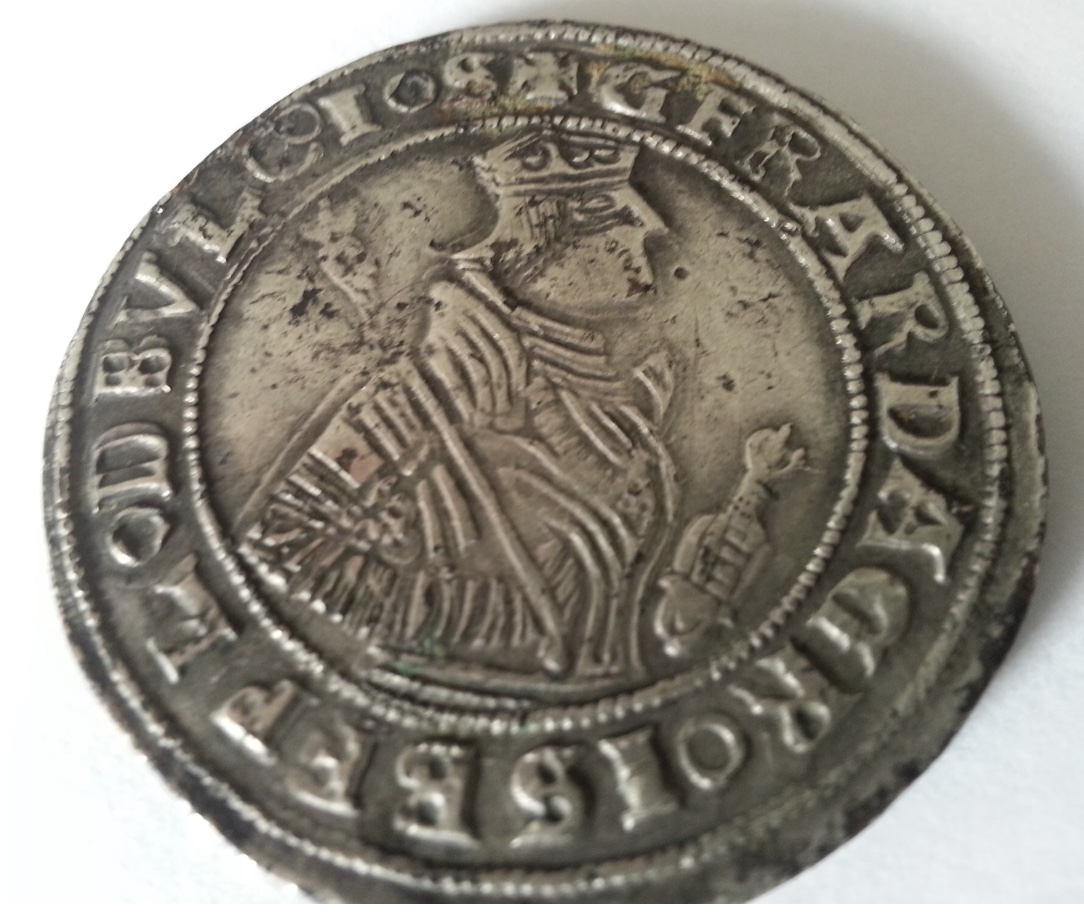 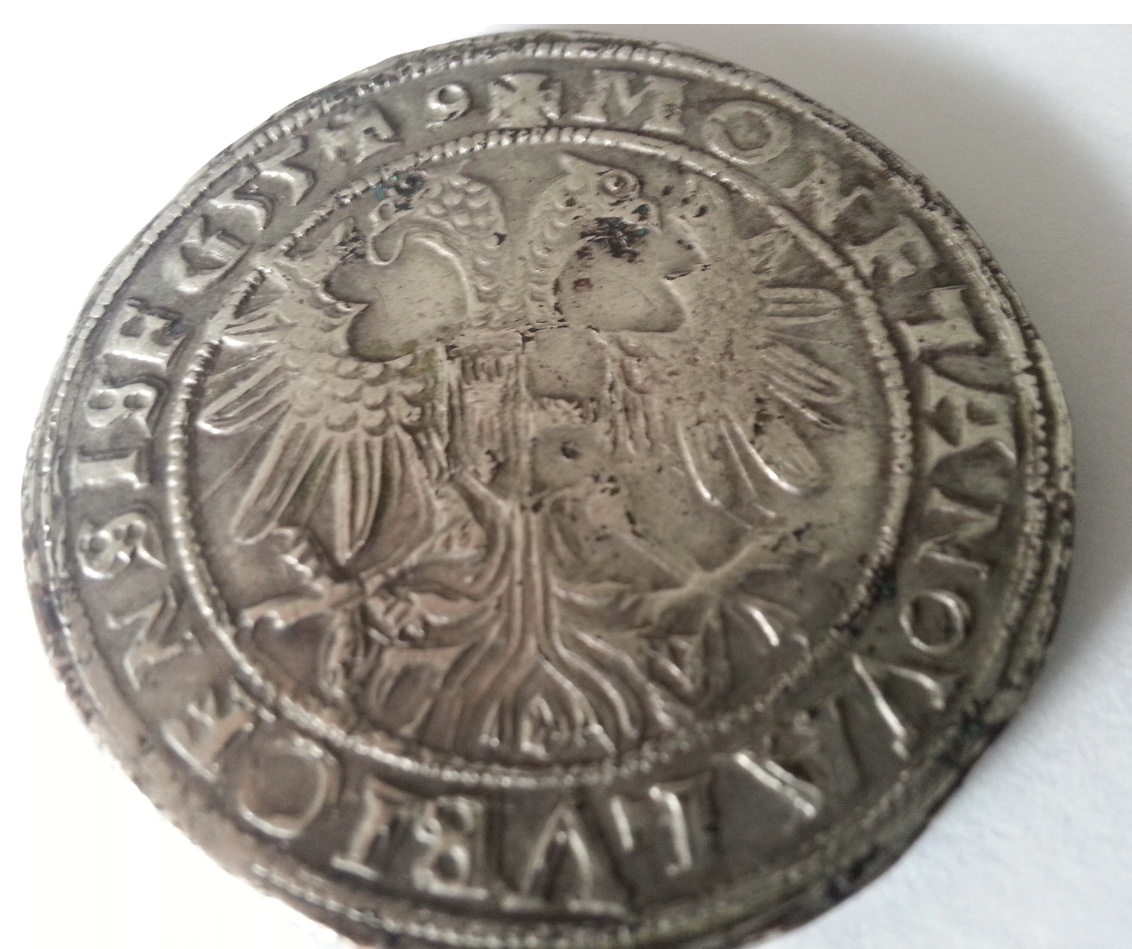 |
|
|
|
Rest in Peace
10197 Posts |
Edited by Crazyb0
02/19/2018 8:37 pm
|
|
Pillar of the Community
Russian Federation
5186 Posts |
The country is probably Lubeck (MONETA NOVA LUBICENSIS).
That other side makes me worry, though. Whoever this Gerhard is, he's not a Holy Roman Emperor, nor is he the Prince-Bishop of Lubeck (in fact there was apparently no Prince-Bishop of Lubeck at all in 1555, the most likely date of this piece were it real).
|
|
Pillar of the Community
United States
7066 Posts |
Edited by Kamnaskires
02/19/2018 8:52 pm
|
|
Pillar of the Community
United States
7066 Posts |
J1M: You seem to be leaning toward this being a fake...fair to say? If so, could it be that it's combining disparate elements from several sources?
|
|
Pillar of the Community
Russian Federation
5186 Posts |
If I understand the German text correctly, that second coin is a Levantine imitation?
If so, the OP's coin could be just such an imitation as well (combining the obverse and reverse of two unrelated types).
Especially since it was apparently brought from Jordan...
EDIT: the "combining disparate elements from several sources" thing is exactly why I thought it might have been a fake; that and the weird tiny O (a style that I can't recall having seen on real coins - not that I've seen many of that period).
In retrospect, this fits "imitation" better than "fake" - for an actual modern fake (intended for coin collectors) it's probably too obvious.
Edited by january1may
02/19/2018 9:05 pm
|
|
Pillar of the Community
United States
7066 Posts |
Seems like a good, sensible analysis, J1M.
Just did a Google translation at the second link...you had it right: "Levantine imitation on copper core"
Edited by Kamnaskires
02/19/2018 9:18 pm
|
|
New Member
 United States
2 Posts |
Thank you so much everyone. A little disappointed it seems to be an imitation but c'est la vie (and I still think it's cool). Can anyone give me an approx idea (if that's even possible) of what you think its age may be? Also, what exactly is a "Levantine imitation"? I tried googling the phrase and while it comes up a number of times in usage, there isn't much in the way I could find ie a definition... thanks again!
|
|
Pillar of the Community
United States
7066 Posts |
No need for disappointment, Janos. I think the designation makes the coin more interesting. If correct, it means the coin is probably contemporaneous to the official issues that it imitates - meaning late 16th century, and that it was produced in the Levant, the Middle East.
|
|
Moderator
 United States
191802 Posts |
 to the Community! |
|
Pillar of the Community
United States
992 Posts |
The Levant is the Eastern Mediterranean portion of the Middle East, it includes Western Anatolia in Turkey, most of Syria, and all of Lebanon, Palestine, and western Jordan.
Whatever it's age and origin, it's a nice piece.
Edited by paxbrit
02/20/2018 12:07 pm
|
| |
Replies: 10 / Views: 1,335 |
|










 Posted 02/19/2018 8:33 pm


