| Author |
 Replies: 78 / Views: 12,188 Replies: 78 / Views: 12,188 |
|
Valued Member
United States
359 Posts |
These seem to be my biggest challenge to this point. Highly reflective coins in slabs. I am trying to get black fields, but the way the light interacts with the fields always seems to give me a number of highlights which are not there when you look at the coin in hand. I picked up Mark Goodman's book and I can't find the section for assistance on these types of coins. I did email him, yesterday, not sure if he replies to book assistance type questions. Anyway, here is a sample. Thoughts? I am on the $400 setup with 1 to 3 jansjo lights available for use. 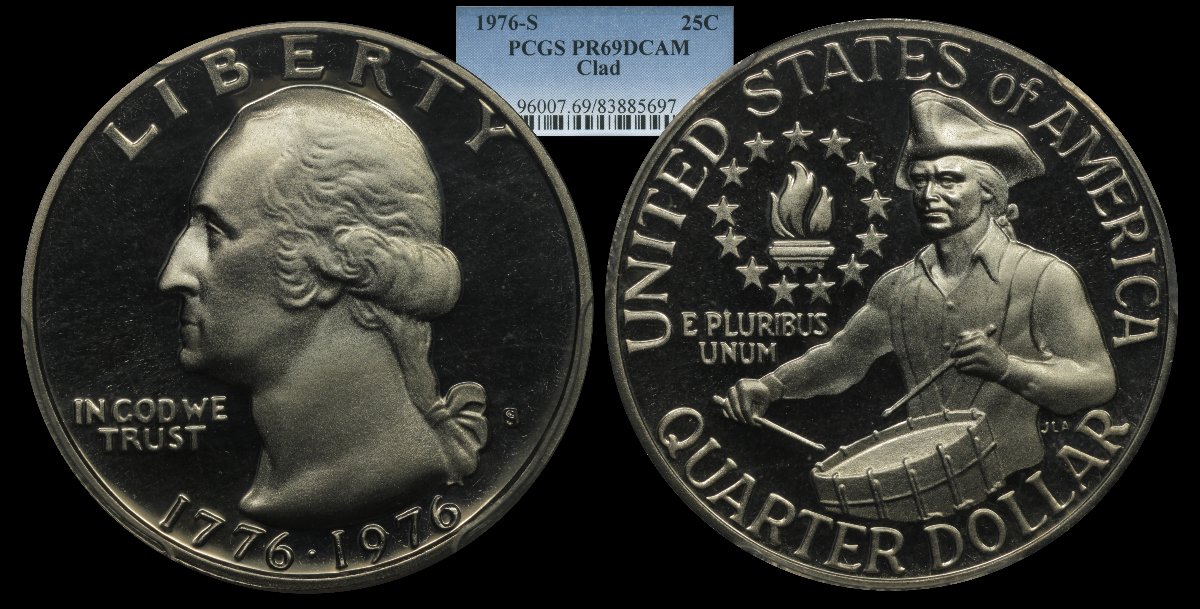 Edited by ngs428
07/21/2018 07:46 am
|
|
|
|
Rest in Peace
United States
17900 Posts |
When there is NOTHING on the coin itself, but reflections wander in from the slab plastic, I just Photoshop the fields.
Never on a coin I'm selling, but just so the glare devils go away.
|
|
Rest in Peace
United States
10625 Posts |
A ring light will net you the best results if you're looking for black fields. The image you posted is about the best you'll get from jansjo lights, at least from my experience. I'm sure Ray and Dave will have some great advice.
|
|
New Member
Greece
45 Posts |
Try the lights parallel to the coins, f/8, iso 100 and shutter speed as it needs.
|
|
Valued Member
 United States
359 Posts |
dave700x: Any particular ring light you recommend? Now that you say it, I think Ray did already recommend a ring light to me at some point in the past.
Nickos: I am on f/8, iso 100, but I have been keeping the high angle lighting
moxking: I could try photoshop although my skills are certainly on the beginner side. :) I have been using paint.net for the circle crop and compiling the images to what you see. That image is straight form the camera with just the circle crop being done.
|
|
Pillar of the Community
United States
7308 Posts |
I agree with the problem of glare off proof cameo coins and this is about as good as I have been able to capture. My lighting is indirect and I will view the slabbed coin in the view finder and change the angle to get the best black field results. 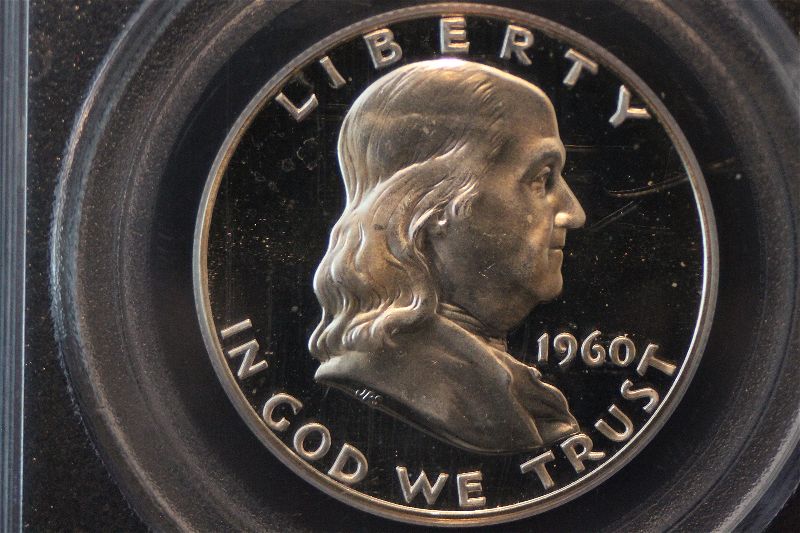 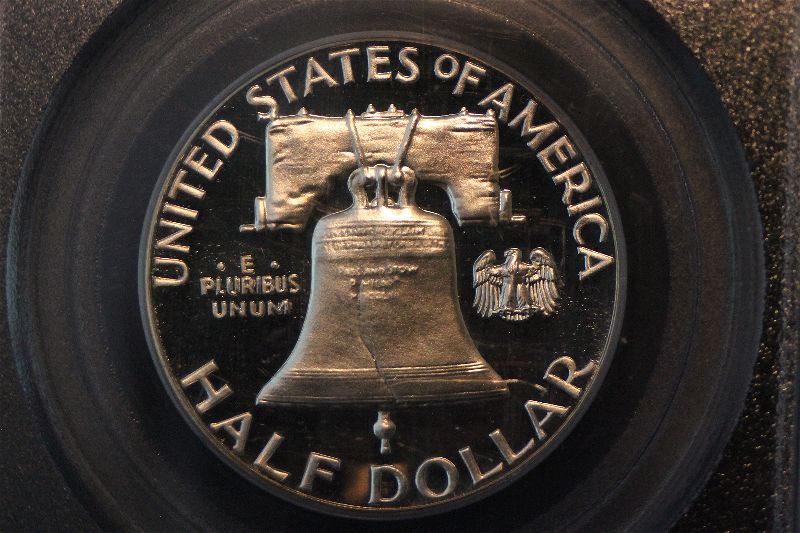 |
|
Valued Member
United States
359 Posts |
Just to brighten my mood I will take some simple shots of circulated slabbed coins. Keeps me motivated.  Muddler, we both feel the pain.  . Your devices look nice! Edited by ngs428
07/21/2018 09:38 am
|
|
Pillar of the Community
United States
9395 Posts |
For a heavily frosted proof, as long as none of the lights reflect off the fields, the light placement is not absolutely critical. With a conical lens-attached diffuser, you can simulate a ringlight, or something close. This seems to work pretty well, as long as the frost is strong:   (Note that this coin is not slabbed, but is in an OGP plastic holder.) Slabbed fully-brilliant proofs (and perhaps reverse proofs) are tougher. The only thing I have found that works somewhat well is axial lighting, despite the glare off slab. Make sure your source light is completely uniform across the slab in front of the coin, so you can subtract out the glare from the slab using the Photoshop levels tool (or something similar). Even after further processing, the end result does not look great:   (This coin is in a very old PCGS slab) I'm certainly open for suggestions from Ray or Dave or others on how to shoot slabbed brilliant proofs. |
|
Rest in Peace
United States
10625 Posts |
Quote:
dave700x: Any particular ring light you recommend? Now that you say it, I think Ray did already recommend a ring light to me at some point in the past. I don't have a recommendation but I think you want at least a 12" diameter continuous ring light rather than one of those macro LED rings that fit around the lens. I think the latter would not work with TPG slabs. Edited by dave700x
07/21/2018 10:09 am
|
|
Valued Member
United States
359 Posts |
Dave, I will have to see what is available. The center of my lens is probably 4" max from the upright of the copy stand. I assume everything should be even. A 12" light would have to be positioned off center of the coin.
Edited by ngs428
07/21/2018 11:20 am
|
|
Pillar of the Community
 United States
4051 Posts |
Dave's the expert on shooting proofs, but I've had good luck with the "angel eyes" ringlights. They are COB LED type, so have a fairly even glow. You need to put the light at an appropriate height so that the light does not reflect off the fields. Best angle is somewhere ~45-deg, but you need to experiment because how the dies were basined makes a big difference.
Axial gives the nice "bright field" look, but many folks want their proofs to have that deep black field. Light angle variation allows you to do either type, or a combo if you get it just right.
Contact me for photographic equipment or visit my home page at: http://macrocoins.com |
|
Valued Member
United States
359 Posts |
Edited by ngs428
07/21/2018 10:49 pm
|
|
Pillar of the Community
United States
4051 Posts |
Yes, they come in various diameters. The actual diameter is not so important, since you can move the light close to the coin to get whatever angle you need. I use 40mm and 50mm diameter ones, but 90mm will allow you to get farther from the coin for the same angle.
Contact me for photographic equipment or visit my home page at: http://macrocoins.com |
|
Valued Member
United States
359 Posts |
I picked up the 90mm one in my link along with a switched cigarette lighter plug and a 120v to 12v adapter (needed one for another project anyway). Should have it mid week.
With the 90mm OD I should be about 1.5 to 1.75 inches off the coin.
Edited by ngs428
07/22/2018 08:01 am
|
|
Valued Member
United States
359 Posts |
pepactonius, that Ike is what I am looking for. Hopefully the ring light does the trick. Thanks for the informative post!
|
|
Pillar of the Community
United States
9395 Posts |
Quote:
pepactonius, that Ike is what I am looking for. Hopefully the ring light does the trick. Thanks for the informative post! This Ike pic was taken with a lens-attached diffuser, with blackout rings: The conical diffuser just screws into the lens filter ring: 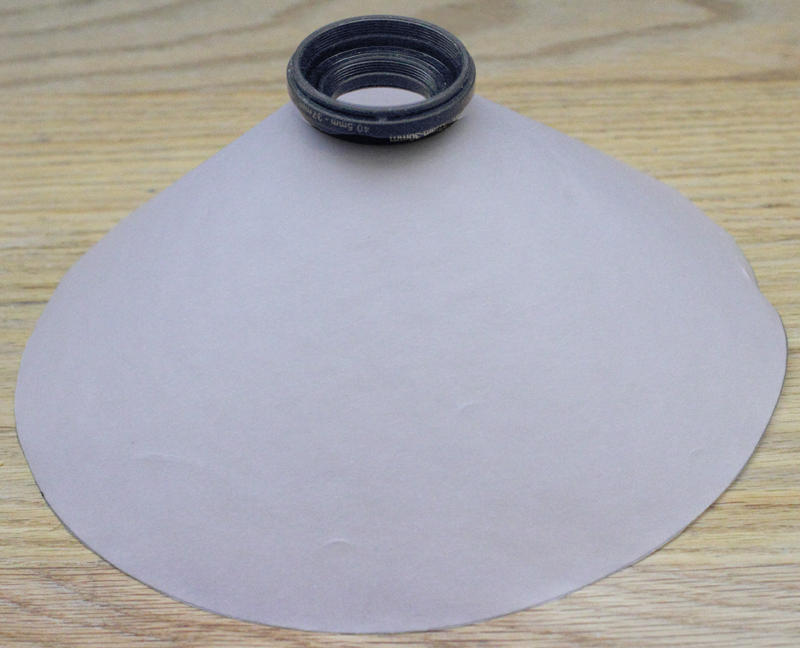 The clear opening is smaller than the lens diameter, but large enough to avoid vignetting at f/5.6 (and f/8): 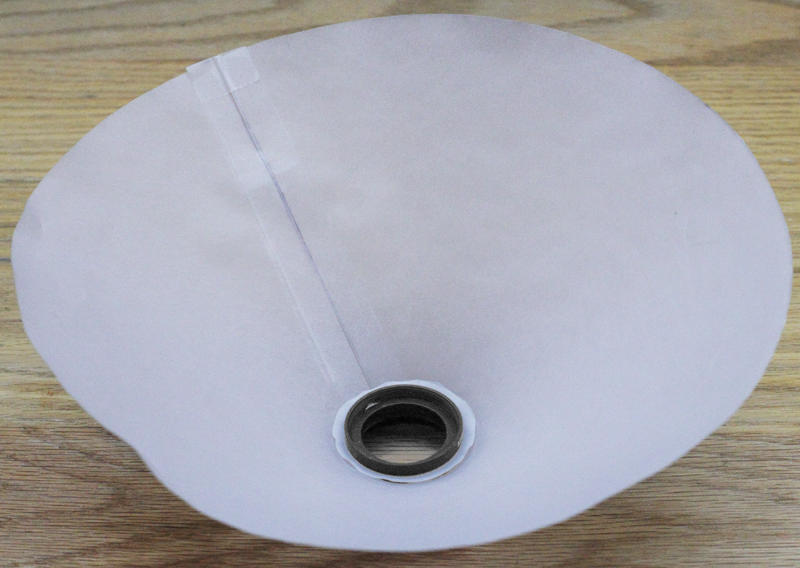 When shooting slabbed coins, a variable-sized blackout ring is used, so that only black areas reflect off the slab (and mirrored fields on the coin). This blackout ring is just a bunch of step-up rings threaded together. Use just enough step-up rings to avoid unwanted reflections off the slab: 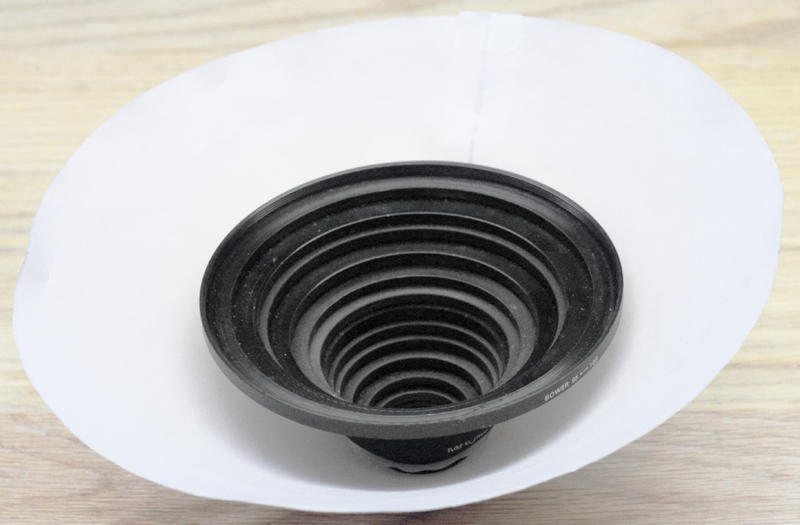 In use, just shine one, two, or more Jansjo lights on the diffuser. Since the diffuser is conical, you can shine the Jansos horizontally to get a ringlight-shaped illuminated area. You can more the lights around to get almost any light pattern (except axial). |
| |
Replies: 78 / Views: 12,188 |








 Posted 07/21/2018 08:32 am


