| Author |
 Replies: 12 / Views: 7,604 Replies: 12 / Views: 7,604 |
|
|
New Member
United States
18 Posts |
Hey ladies and jellyfish, how do I tell the difference between patina and dirt? Can anyone upload images to compare side by side? Please and thank you.
|
|
|
|
Pillar of the Community
United States
5825 Posts |
Patina (also known as toning), whether it's colorful or gray, is integral to a coin's surface.
Remove it and you've cleaned the coin; you've changed the surface.
Dirt (along with glue, tape, etc.) is just foreign debris on a coin's surface.
Removing it is called conserving and is generally done with such things as distilled water or acetone.
Once removed you can see the current state of the surface of a coin.
That could be pristine or damaged but NOT changed.
|
|
Bedrock of the Community
United States
94367 Posts |
That says it pretty well.  to the CCF! |
|
Pillar of the Community
United Kingdom
2100 Posts |
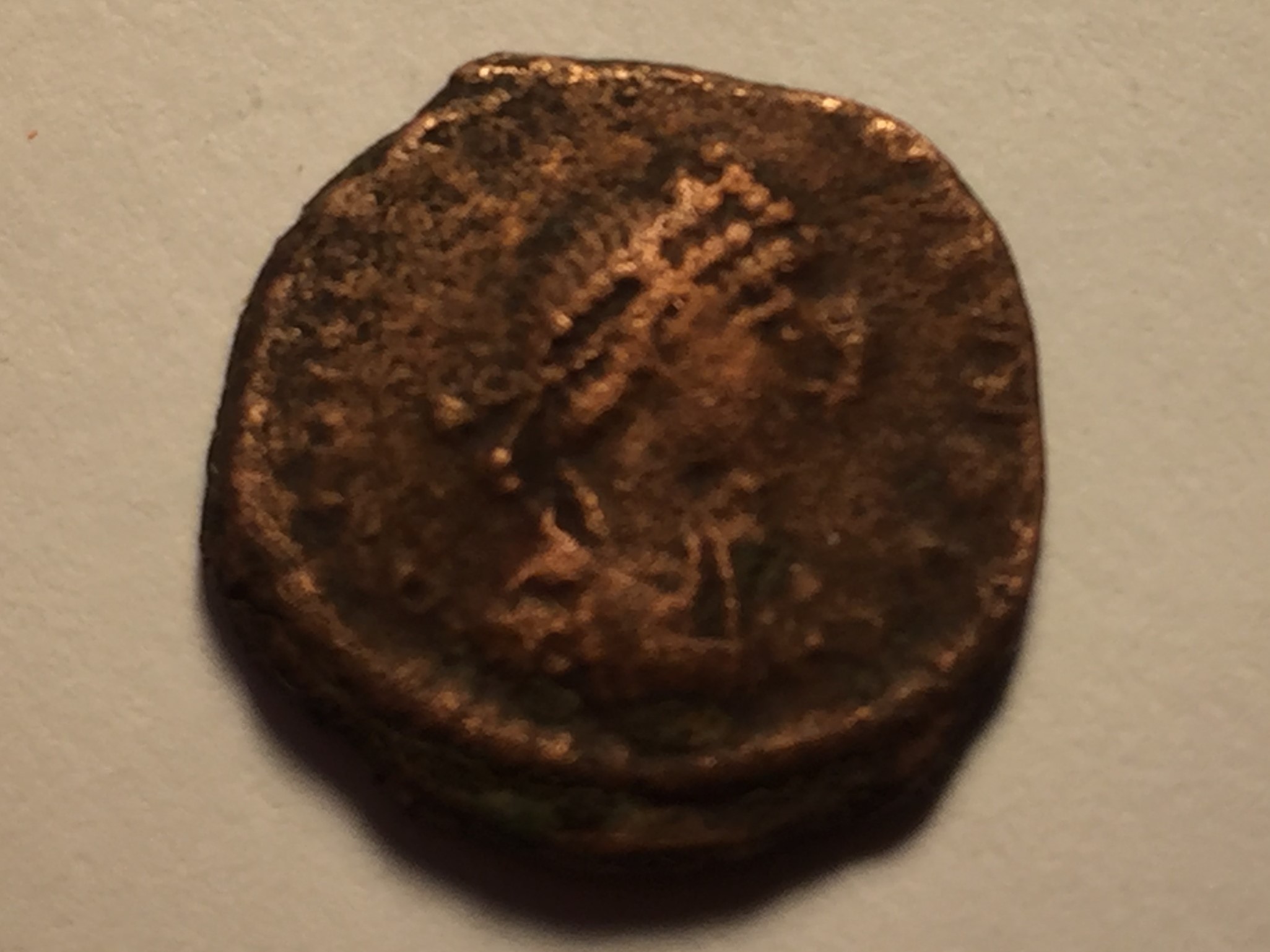
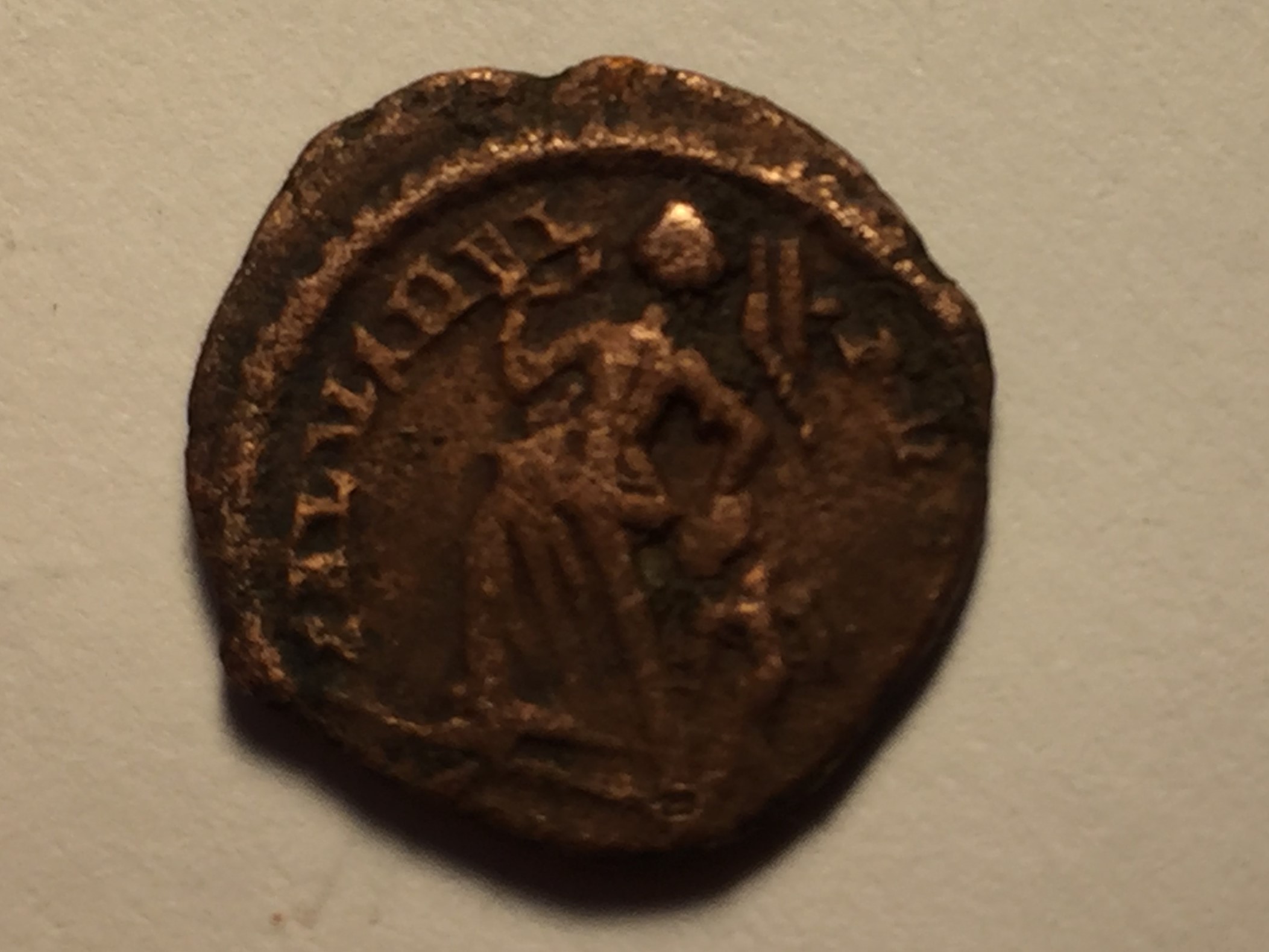
This coin has a black patina, the bronze of the coin has toned to near black. The coin was found in an environment where a build up of dirt/sand has attached to the coin. This sand has been left on the coin as it is sometimes deemed attractive. This can be referred to as desert patina but is dirt on top of a patinated coin. The dirt may be hiding damage, it may not.  Here the patination is green and in cleaning the coin they have either exposed a damaged surface or damaged the surface by over cleaning through the patina  Bronze coins typically patinate to shades of brown. The following coin was originally silvered and the toned bronze can be seen a partially silvered surface, which has itself toned to a golden colour.  Bronze can go to a variety of shades of green too.  The high points on this coin have been cleaned back to the bare metal through the patina. These parts have been over cleaned.  |
|
New Member
 United States
18 Posts |
Thank you maridvnvm, the images really helped in my research for the difference between the 2. So did knowing might be best not to clean off all the dirt because the dirt sometimes helps to see the image on the coin.
Also a thank you for the tip kanga... I was wondering about distilled water. How do I know it's ready to take out of the distilled water, I read it could take weeks not just days.
|
|
Rest in Peace
United States
17900 Posts |
Olive oil does well to remove debris, but it can take years. If you have the patience you can still have the original patination undisturbed.
|
|
Pillar of the Community
United States
1120 Posts |
|
|
Pillar of the Community
United Kingdom
4208 Posts |
When cleaning a coin, you keep going until there is only patina left or when the remaining dirt/encrustation is visually pleasing. Olive oil will darken the patina but distilled water will not. Distilled water can be very slow - I would say it isn't a matter of days, it isn't a matter of weeks, it is a matter of months. A lot of patience is needed - it can be very tempting to break out picks and scalpels against better judgement.
|
|
Pillar of the Community
United States
1554 Posts |
In the strict numismatic sense, "patina" is the actual surface of a coin which has been mineralogically transformed. "Dirt" may be deposited on the surface. "Patina" is the surface.
Confusion arises from "patina" as used in the broader antiques trade where it simply means that an object has acquired the look of 'age'.
|
|
Pillar of the Community
United States
1120 Posts |
|
|
Moderator
 Australia
16910 Posts |
For ancient bronze coins that have been buried in moist soil for a couple thousand years, the difference between "patina" and "dirt" can be vague, because they're both green. Over that length of time, chemicals in th soil can react with the coin metal, and some of those reaction by-products can then leach out into the surrounding soil. Thus the "original surface" of the coin is preserved not in the metal itself, but in the patina, or corrosion byproducts - not entirely unlike a fossil. As with extracting fossils, telling where the "original surface" was is as much an art as a science.
Don't say "infinitely" when you mean "very"; otherwise, you'll have no word left when you want to talk about something really infinite. - C. S. Lewis
|
|
Pillar of the Community
United Kingdom
2100 Posts |
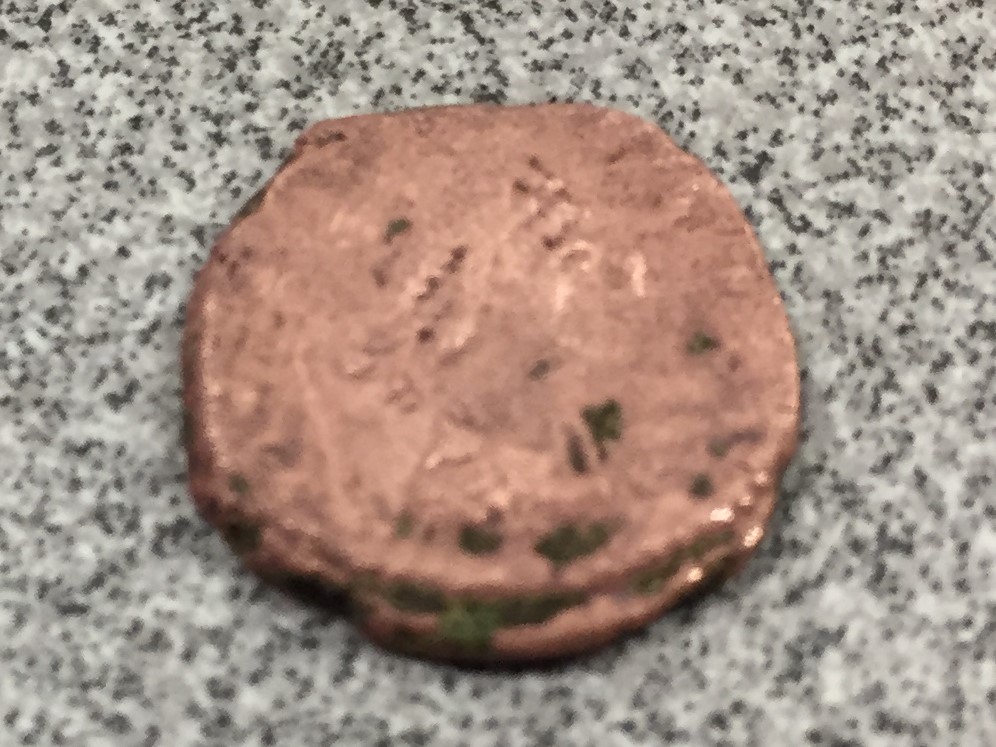
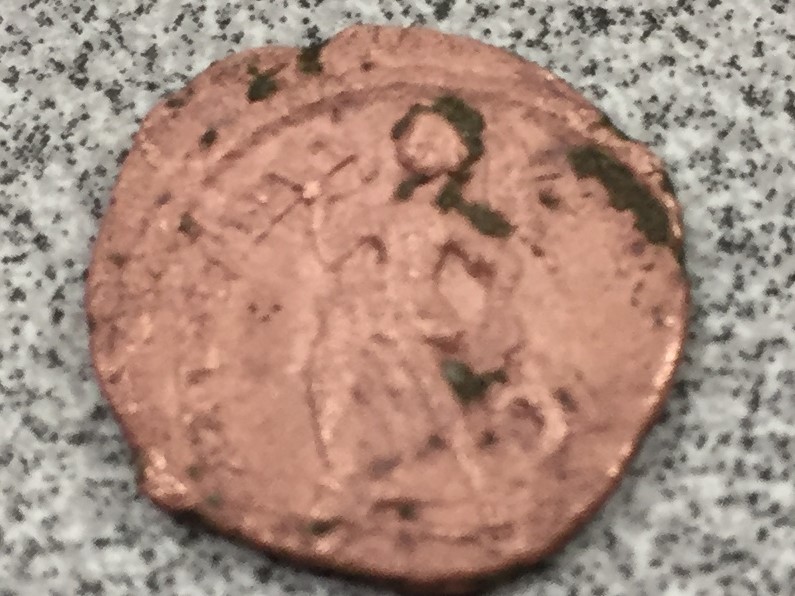
The following coin illustrates a challenge on ancients. This is how the coin has reacted to everything around it over the years. We end up with green "adhesions". This is more than dirt as it is a chemical reaction between the coin as the environment. The coin as it stands is really ugly. Under the green layer there may well be a partially silvered coin but the green is bonded to the surface. It can be mechanically cleaned but it is not something that I would undertake. I live with the coin as it is.  The following shows a partly cleaned coin where the black adhesions have been partly removed. The coin might well be far more attractive it were all to be removed but I keep it this way.  People should be aware that there are ancients that are sold with a "desert patina" where the sand/dirt has been newly added to try and make an unattractive coin have more eye appeal. Glue is applied to the surface, filling pits in the surface etc. and then the coin is dusted with fine sand and brushed. I find this process reprehensible. Be careful out there. |
|
Pillar of the Community
 United States
7983 Posts |
Quote:
In the strict numismatic sense, "patina" is the actual surface of a coin which has been mineralogically transformed. "Dirt" may be deposited on the surface. "Patina" is the surface. This is more or less how I see it too. Dirt has been adhered to the surface, and in principle can be removed by a physical process like washing. Because patina IS the surface (I would say in a chemical sense which I think is a bit broader than mineralogical), it can only be undone by a chemical process, or by removing some of the surface (i.s. by abrasion or dissolution). I realize most who have commented are thinking of ancient coins, which in some cases have been buried, but I also see the term patina applied to coins that are just a few hundred years old, and for which the patina is due only to atmospheric effects, i.e., toning/tarnishing processes which have gone on for a long period of time. @MARIDVNVM, that's a great set of educational examples. Edited by tdziemia
07/31/2019 12:32 pm
|
| |
Replies: 12 / Views: 7,604 |
|







 Posted 07/30/2019 11:09 am