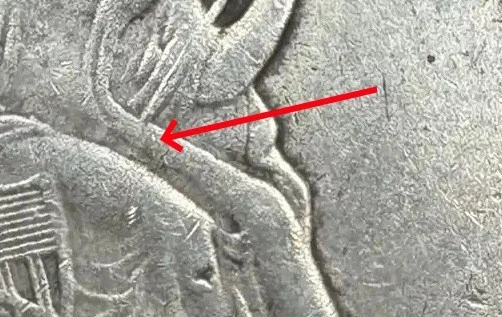
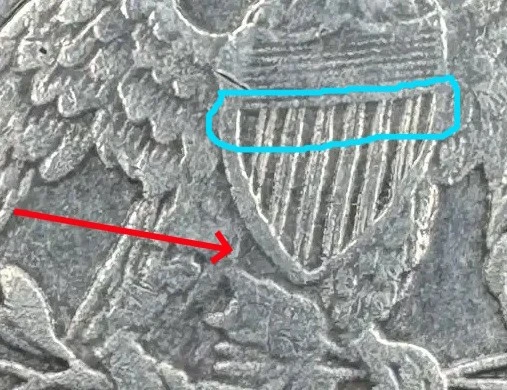
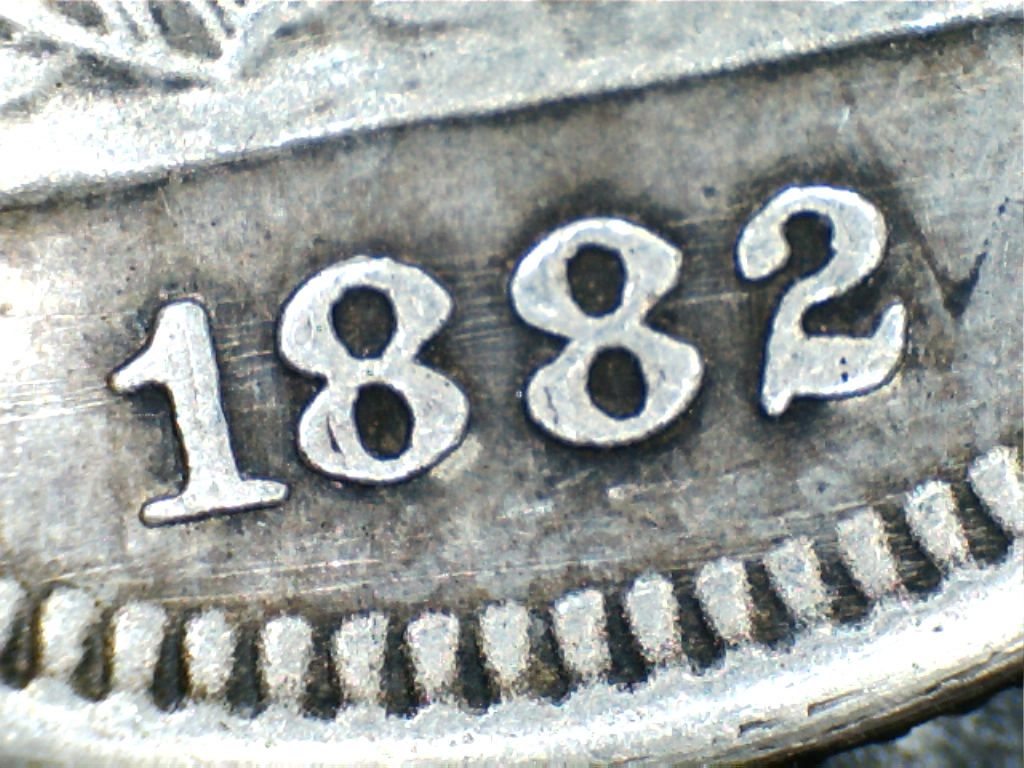
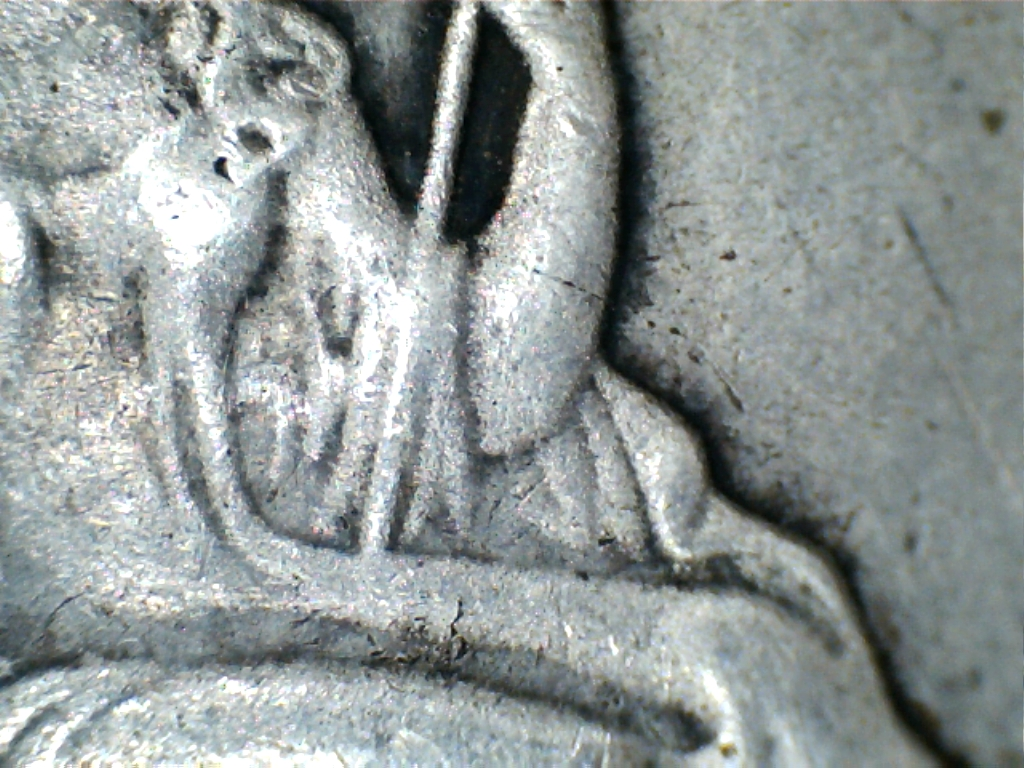
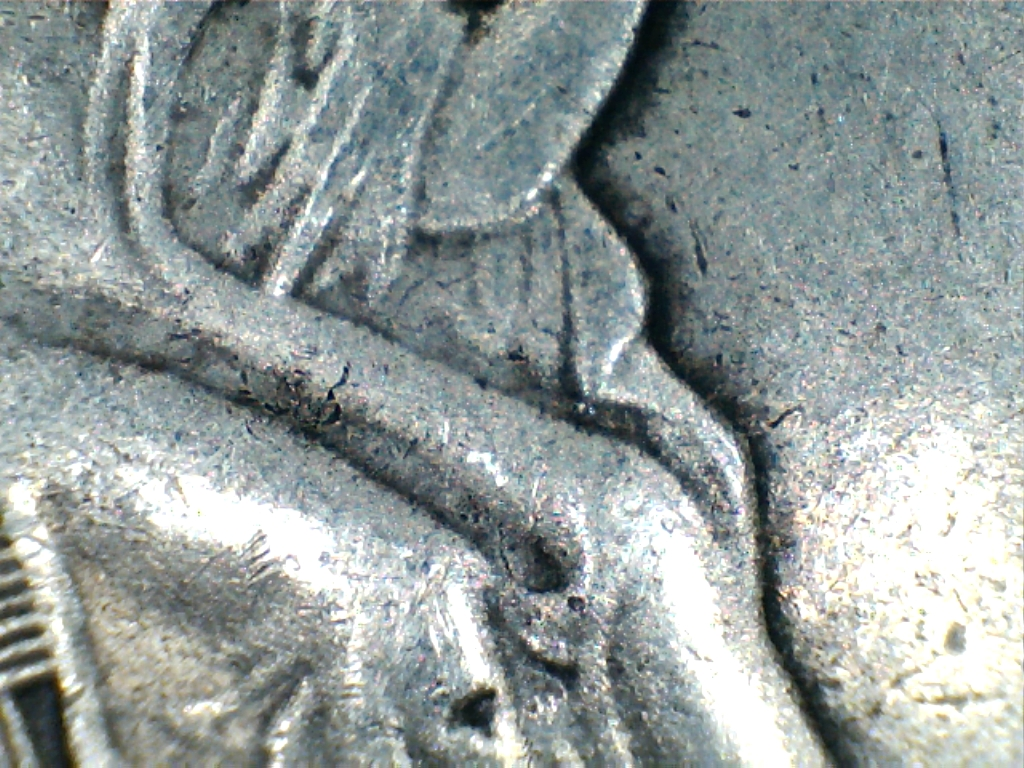
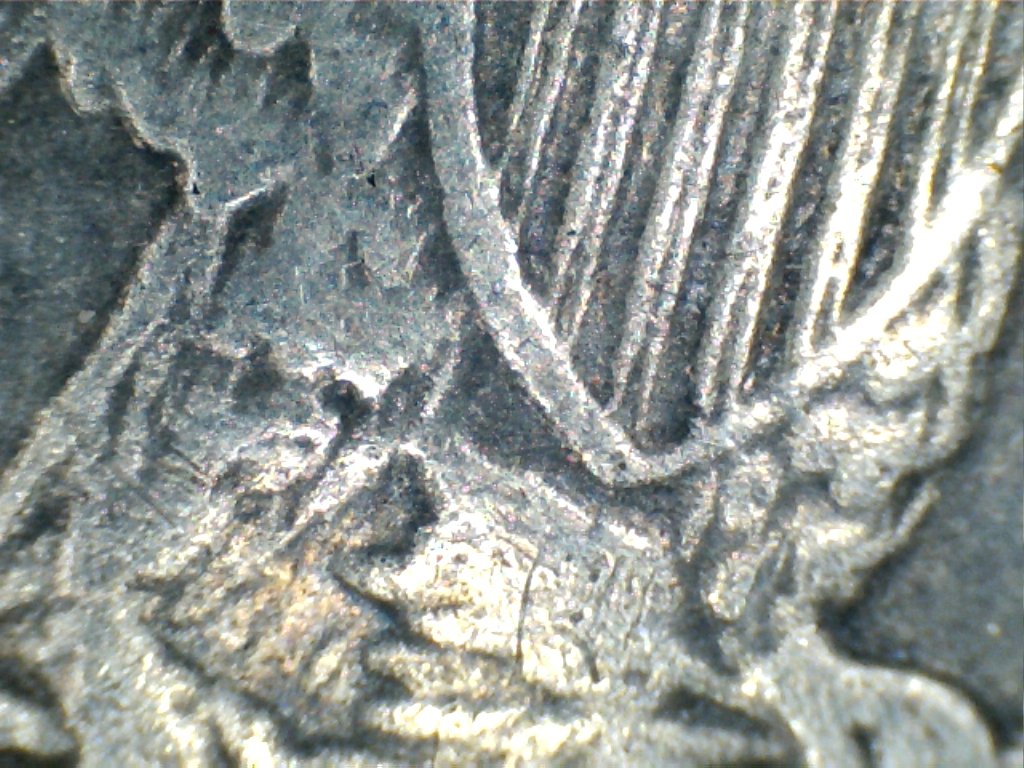
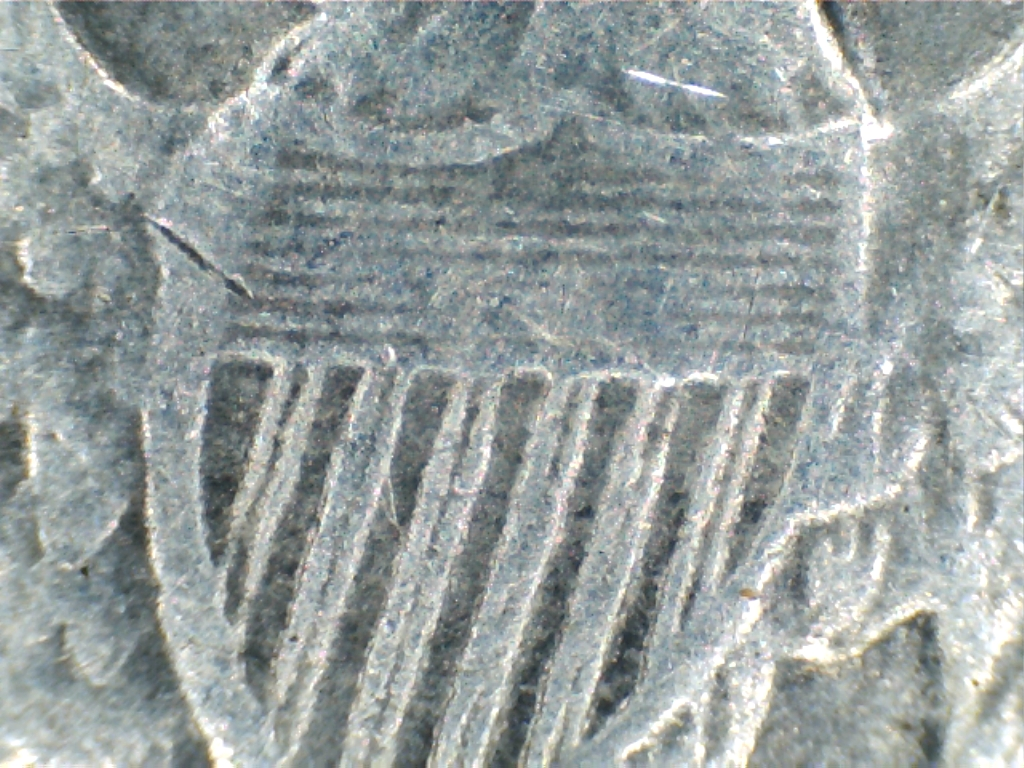
Since I don't have photos of the coins I've handled, I looked at the PCGS plate coins. All three photos here belong to PCGS and are on their website. I clipped portions of them here to show the markers.
The first two photos here belong to PCGS and are from their 1882 business strike plate coin, a fantastic MS-68 example. The die chip on Liberty's arm isn't very big, and could certainly wear down in circulation. The die chip on the reverse, however, is in a protected area and should remain visible even on heavily circulated coins.
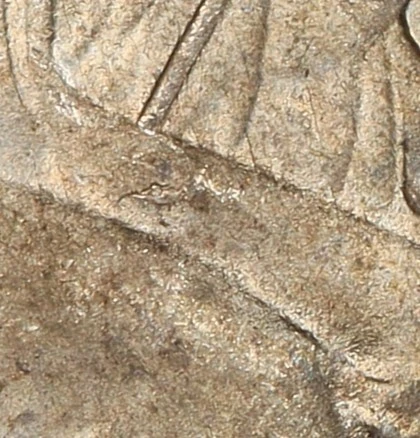
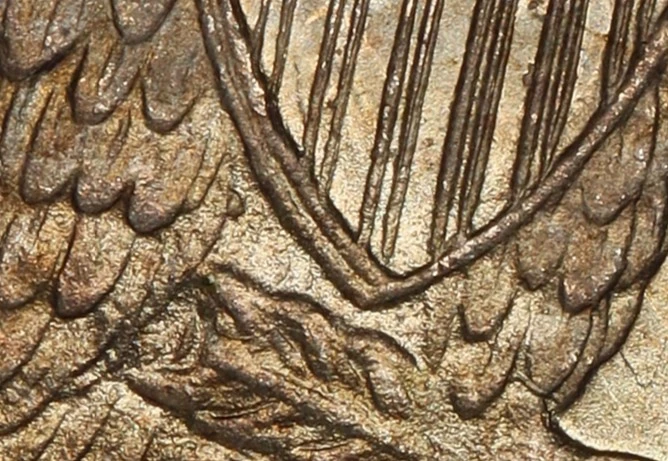
The last photo that belongs to PCGS is is from their 1882 proof plate coin, again a spectacular PR-68 example. The die polishing within the lower shield is visible, and is also in a protected area. Note the strong feather details in the triangle beneath the shield.
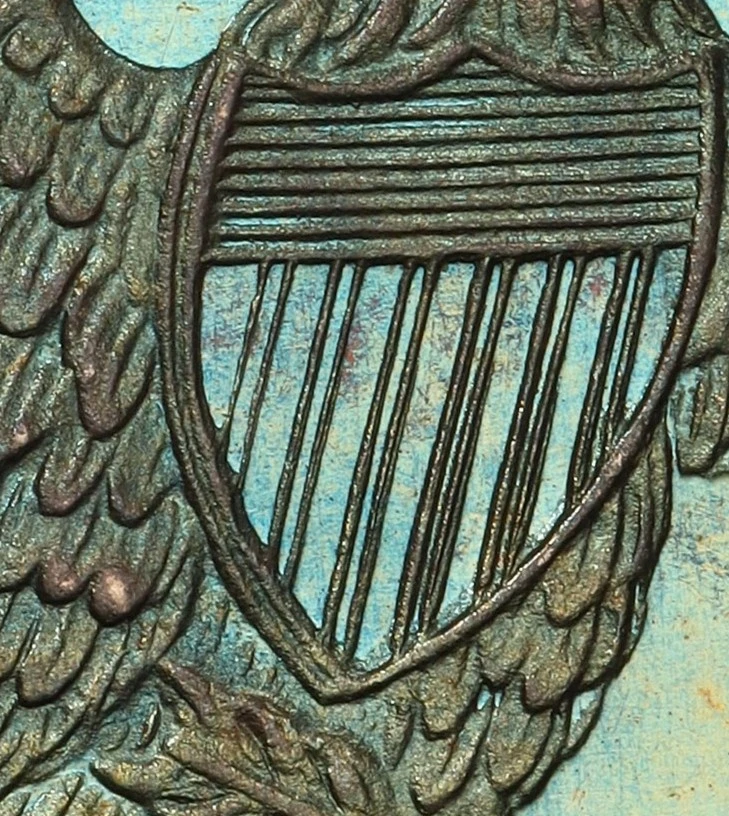
I do not think your coin came from the proof dies because of the design weakness throughout your coin. Because of that weakness, the lack of the reverse die chip, your reported coin weight, and the overall appearance, I have a suspicion that your coin
may be a contemporary counterfeit.
If it is a contemporary counterfeit, it likely is either a cast "German Silver" example (generally 60% copper, 20% nickel, 20% zinc) or could be an antimony-lead-tin mixture (generally 70-80% tin, 15-20% antimony, and 10-15% lead). The impression likely would have come from a transfer die, which would explain the lack of detail and markers.
The easiest way to find out would be to take the coin to a jewelry store and see if they would ping it with an XRF to determine composition. That's a non-destructive test and could save submission costs to a
TPG. Some stores charge a few dollars per test ($5-10), but if you are a regular customer, they might do a test free.
Just a warning. If the coin contains antimony, be careful handling it. Antimony is toxic.
All of that said, the devices on your coin have some roughness, which the genuine coins of that era exhibit. This may well be a genuine coin, just heavily worn and likely cleaned some time ago. My main reason for pausing is the lack of the die chip on the reverse.
That's the best I can offer here. It's an interesting coin. If genuine, an 1882 is a tougher date. It isn't rare, but it definitely isn't common, either.







 First Page


 Posted 08/17/2026 11:27 am