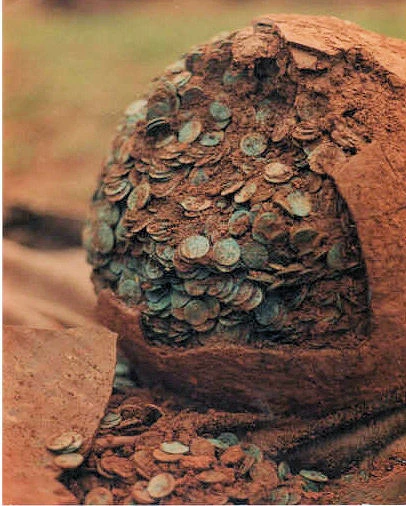
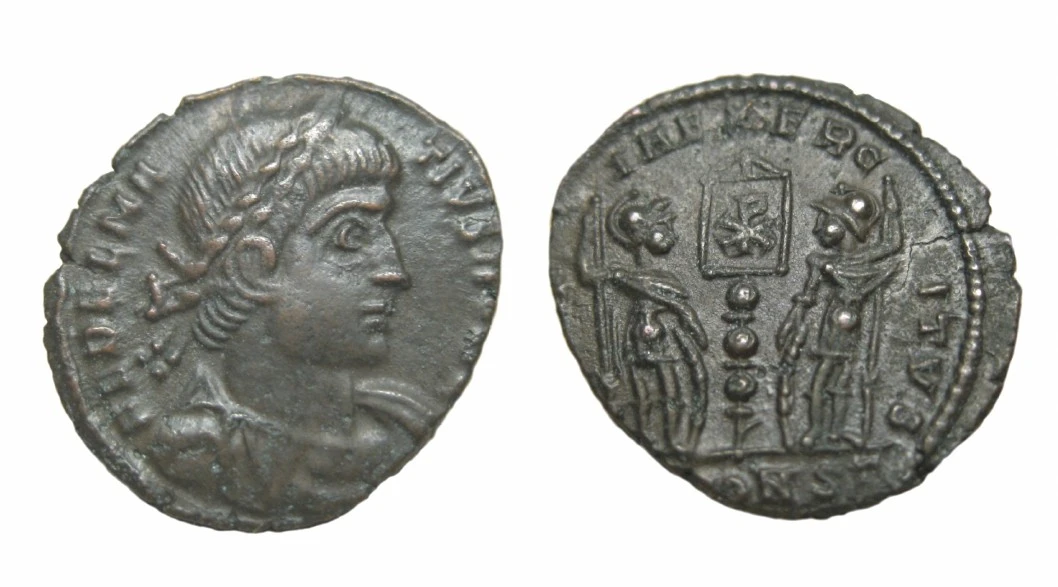
All ancient coins that currently exist in the world today were once buried in the ground for several centuries, and were dug up sometime in the last few hundred years. There's simply no such thing as a coin that's been kicking around in coin collections for 2000 years, even the oldest collections of the Vatican and other European monarchs date back only to the 1400s. And all coins, except for high-purity gold, will stop looking like coins after being buried in dirt for so long. Copper and bronze coins come out of the ground looking like little green rocks (even worse than that green coin in the OP sale), and turning them back into something resembling coins is an art, not entirely dissimilar to the process by which fossils are extracted from their surrounding rock.
In other words, every single ancient coin (except for some gold) has been cleaned, 100% of them. So if you're just getting into collecting ancients, you need to unlearn that one specific fact that's drummed into every coin collector, that "all cleaning is bad". Because for ancients, some cleaning is essential.
Now, just because "some cleaning is essential" doesn't mean "all cleaning is good". As with modern coins, there's "good cleaning" and "bad cleaning". It's just that for ancients, "good cleaning" can be somewhat more harsh and severe than modern coin collectors are comfortable with.
So the question ought not to be "Have these coins been cleaned?", but "have these coins been overcleaned?". And while there are different opinions among different ancients collectors around the question of "how much cleaning is too much", the three coins in the
ebay auction in the OP are a mixed bag. The Trajan denarius looks OK enough. The Hadrian looks like it's got some nasty corrosion and might benefit from further cleaning. And the late Roman city bronze looks barely cleaned at all and could certainly benefit from additional cleaning.
Don't say "infinitely" when you mean "very"; otherwise, you'll have no word left when you want to talk about something really infinite. - C. S. Lewis










 Posted Yesterday 5:04 pm