| Author |
 Replies: 9 / Views: 1,813 Replies: 9 / Views: 1,813 |
|
|
Valued Member
Croatia (Locally: Hrvatska)
342 Posts |
|
|
|
|
Valued Member
Canada
389 Posts |
My guess they are chinese but here is a website which has a really updated list on coins http://en.numista.com/ |
|
Moderator
 Australia
16962 Posts |
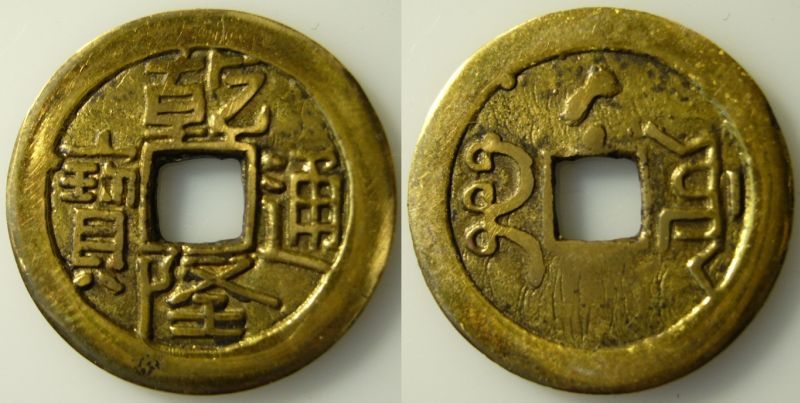
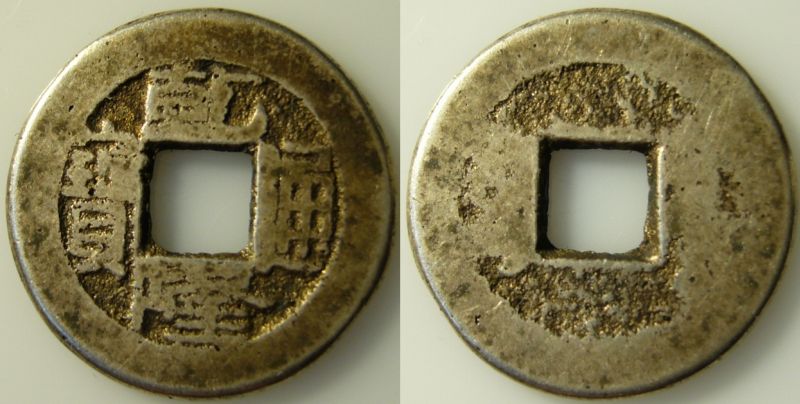
#1: replica of China, Qian Long cash.
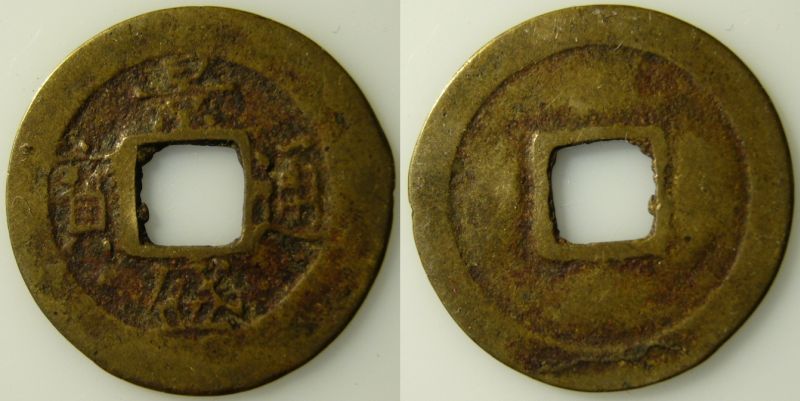
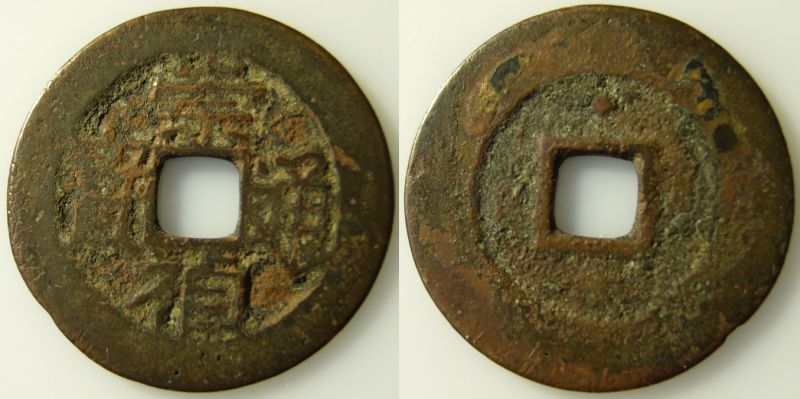
#2: Annam (Vietnam), Canh Thinh (1793-1800).
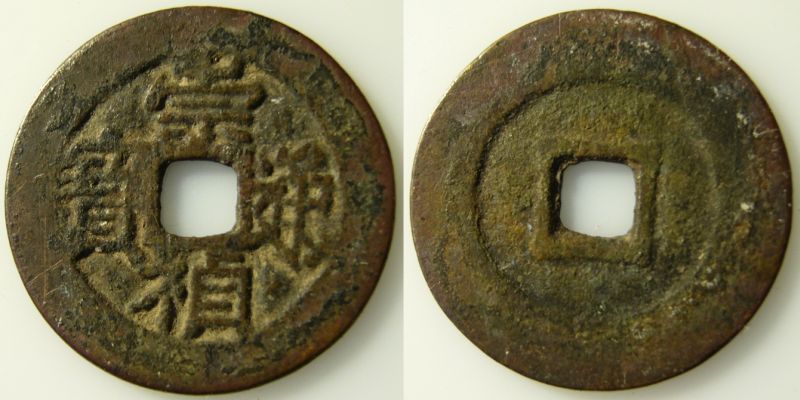
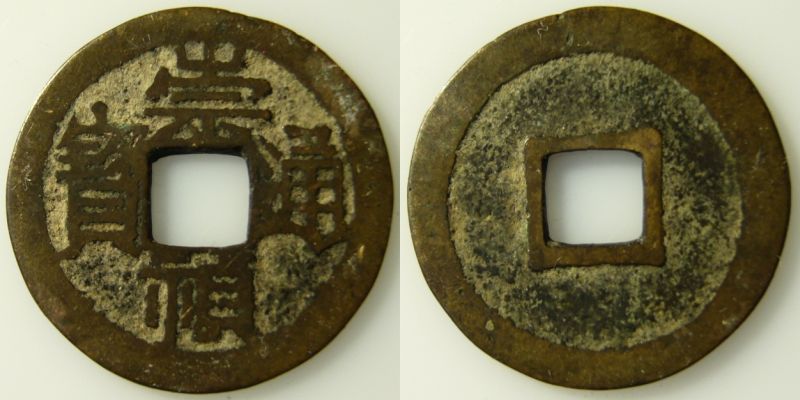
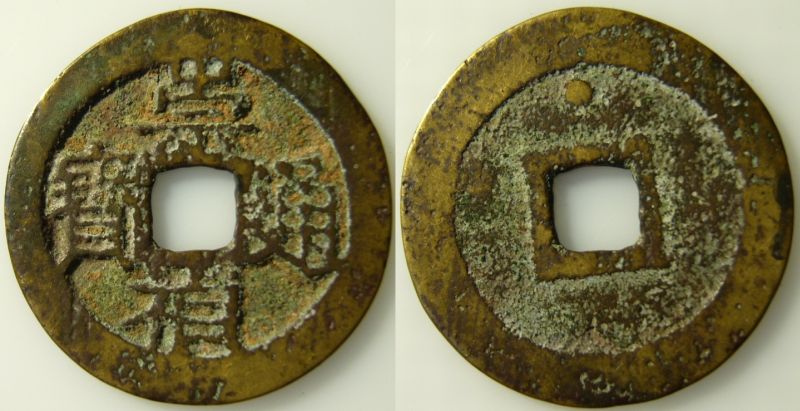
#3 and #4 are the same time period: China, Ming Dynasty, Chong Zhen (1628-1644), plain reverse. They are different varieties, based on the different shape of the bottom character (zhen). The "Type 2" coin (#4) is slightly scarcer.
#5: China, Qian Long (1736-1795). It's too heavily worn to read the mintmark on the reverse.
#6 and #7: the same as #3, except the reverses have a dot on them. A slightly scarcer version than #3.
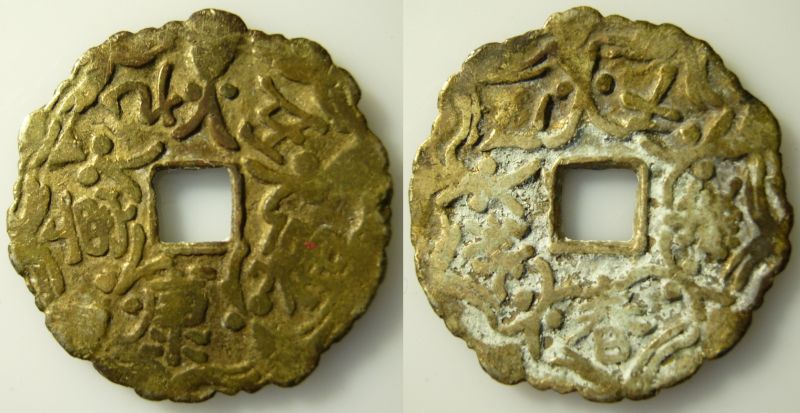
#8: not a coin, but a "good luck charm" of some kind.
#9: China, Guang Xu (1875-1908), machine-struck cash of Guangdong province, struck 1890-1899.
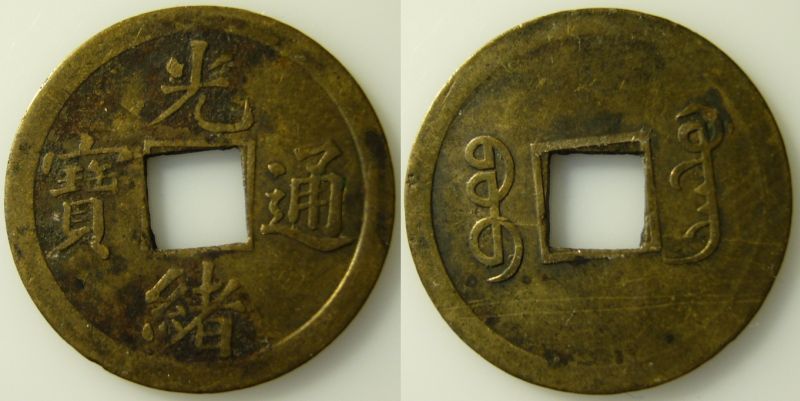
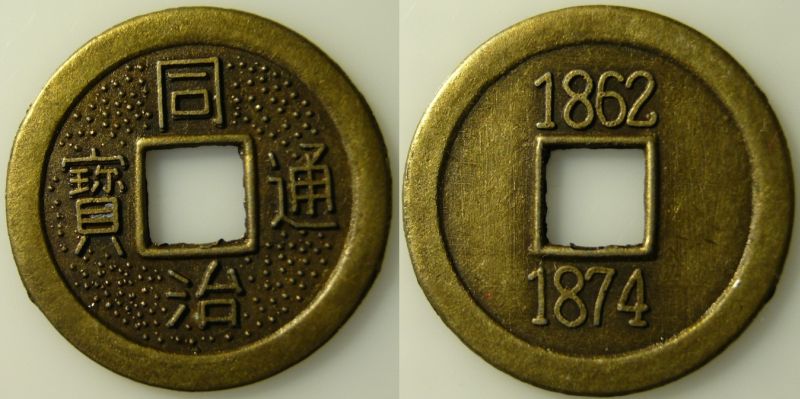
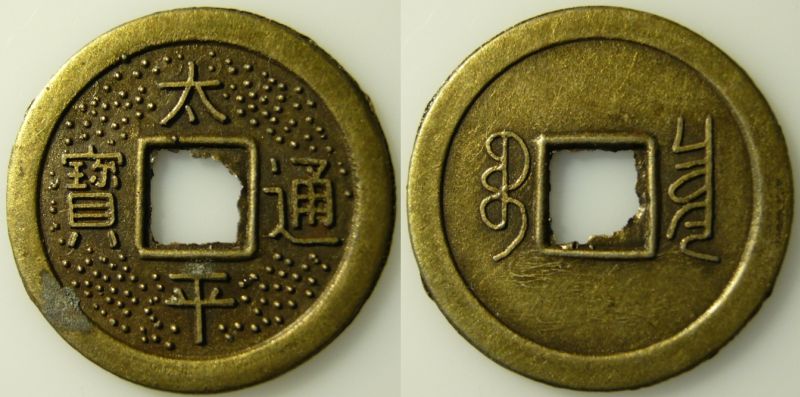
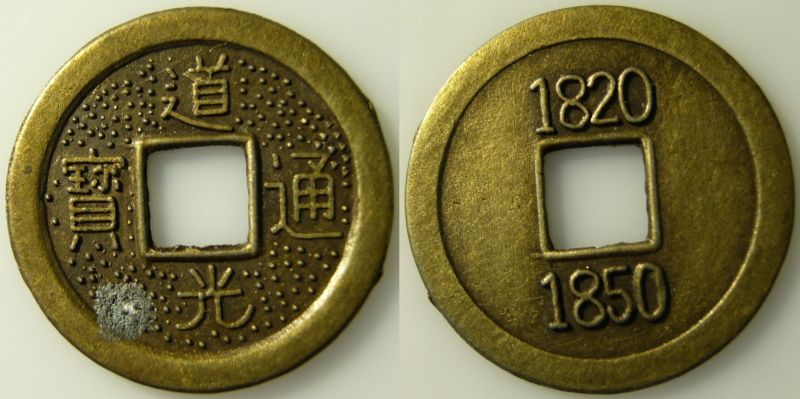
#10 to #12: sorry, but these are all machine-struck replicas of older cash coins.
Don't say "infinitely" when you mean "very"; otherwise, you'll have no word left when you want to talk about something really infinite. - C. S. Lewis
|
|
Valued Member
Canada
480 Posts |
Number 5 appears to be Board of Revenue- I can just see the tips of the box at the op. It is also a "white-metal" coin- it appears to be more tin-lead than brass.
|
|
Valued Member
United States
347 Posts |
#8 is a charm.
I'm not sure if it is Chinese or Korean but I think I can help a little with the translation.
The inscription on the left image reads wu fu kang ning jiu (äº"福康宁九) which translates as "five, fortune, health, composure, nine".
The "five fortunes" comes from the ancient Chinese "Book of History" and includes longevity, wealth, health and composure, virtue and the desire to die a natural death in old age.
As you can see, the "health and composure" is repeated in the inscription.
The "nine" (jiu 九) is a pun on the Chinese word for "for a long time" (jiu ä¹.).
The charm, therefore, expresses the wish that one will enjoy the "Five Fortunes" for a long time.
The right image has the inscription qian sui chun qiu ba (千岁春秋å.«) which translates as "thousand, year, spring, autumn, eight".
The first four characters have the meaning of "a thousand years (of springs and autumns)" or, in general, a long time. It is a wish for a person to have a long life.
It is appropriate that you listed this piece as #8. The eight in the inscription is another pun because in Chinese the word "eight" is auspicious because in southern dialects it sounds like the word for "wealth".
The meaning of this side of the charm is the hope that one will have a long and prosperous life.
You will notice that there is the same design between each of the Chinese characters on both sides of the charm. If you look carefully, you will see that these are "bats" (the flying animal). The two dots are the eyes, then a triangular body with the wings running along the edge of the rim.
In Chinese, the bat is an auspicious animal because the word "bat" (fu 蝠) and "fortune" (fu 福) have the same pronunciation.
Also, each side of the charm has five bats. The pronunciation of "five bats" is exactly the same as that for "five fortunes" which is part of the inscription.
Gary
|
|
Valued Member
 Croatia (Locally: Hrvatska)
342 Posts |
Hello thank you all for help. #3 KM# 55.1 CASH Cast Bronze Obv: Characters deviating in style Obv. Inscription: "Ch'ung-chên T'ung-pao" Rev: Plain Mint: Board of Public Works Note: Schjöth #1228 #4 Cant find this type in my Krause , it is Ch'ung-chên (Chuang Lieh) 1628-1644AD like #3,The character chen is written with first type and Rev is Plain d:22mm / w:2.19g #5 is white-metal d:21mm / w:4.10g(?) #6 and #7 KM# 58.3 CASH Cast Bronze Obv. Inscription: "Ch'ung-chên T'ung-pao" Rev: Circle above Note: Schjöth #1234 But #6 is:d:23mm /w:2.29g and #7 is d:25mm/w:3.19g the inner circle of #6 is much smaller 16mm and #7 is 20mm  |
|
Pillar of the Community
Canada
650 Posts |
Great input from all,but must appreciate ManyMore, wow very knowlegable, I have to ask, what % of what you responded to was off hand and how much was in your head?
|
|
Valued Member
Croatia (Locally: Hrvatska)
342 Posts |
I did not form my question right.
Is there any site or book with all China cash coins after 1600 with dimension and weight.
I have identified 67 cash coins today.
For coin #5 it looks like silvered.
|
|
Moderator
Australia
16962 Posts |
Quote:
#4 Cant find this type in my Krause , it is Ch'ung-chên (Chuang Lieh)
1628-1644AD like #3,The character chen is written with first type and Rev is Plain
d:22mm / w:2.19g Krause isn't the best guidebook for IDing Chinese cash; the best match in Krause is KM# 54, I think. Hartill classifies it as Type 2.1, with plain reverse, number 20.302. Quote:
#6 and #7 KM# 58.3 CASH
Cast Bronze Obv. Inscription: "Ch'ung-chên T'ung-pao"
Rev: Circle above Note: Schjöth #1234
But #6 is:d:23mm /w:2.29g and #7 is d:25mm/w:3.19g the inner circle of #6 is much smaller 16mm and #7 is 20mm
KM# 58.3 is the type with the "circle above" reverse; your coins don't have circles, they have dots, which is a different type. The Krause reference for them is 58.1, Hartill number 20.293. Rather than talking about the "diameter" of the inner circle, cash collectors usually talk about the thickness of the rim. Your coin #6 does have a thicker rim, but in this instance, the differences in size, weight and thickness of the rim do not seem to constitute separate recognized varieties. The chronology of late Ming Dynasty coinage is still uncertain. It appears that Type 2 coins are later in the reign than Type 1, and the northern mint in Beijing tended to produce heavier coins than the southern mint in Nanjing. But the regime was collapsing and central control over the mints was slipping, as was the general quality of the coinage. There were no "official" silver-coloured cash coins issued during the Qian Long period. However, copper became scarce on occasion throughout this reign, and some mints produced coins with very low copper content. Alternatively, it could be a counterfeit, or even a modern replica. Quote:
Is there any site or book with all China cash coins after 1600 with dimension and weight. Most Chinese Cash reference works (such as the book by Hartill I've been referencing) cover the entire period of cash coinage. These books typically mention the weight of the coins when it is relevant, but for cash coins it often isn't. For some periods, size and weight were very tightly controlled, for others the quality of coinage varied wildly over time and between mints. Don't say "infinitely" when you mean "very"; otherwise, you'll have no word left when you want to talk about something really infinite. - C. S. Lewis
|
|
Valued Member
Croatia (Locally: Hrvatska)
342 Posts |
Thank you Sap,I have acquired Cast Chinese Coins by David Hartill.  |
| |
Replies: 9 / Views: 1,813 |
|










 Posted 10/24/2011 04:43 am


