











 Posted 11/20/2011 11:19 am


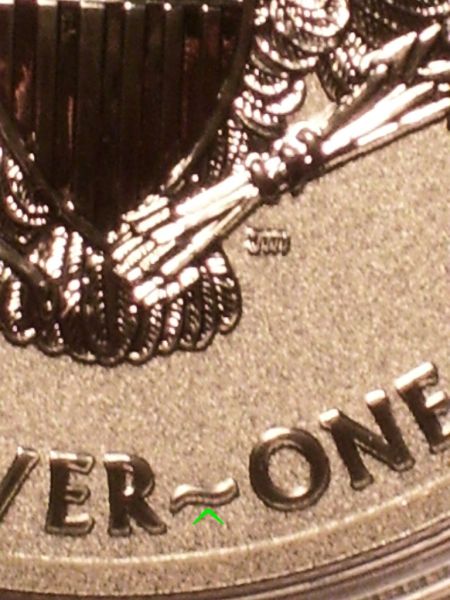
There is not actually a masking step in the preparation of the RP die. The die are first polished completely smooth, then a computer guided laser is used to create the surface texture in the desired areas, then a chrome-nitride layer is vapor deposited to harden the entire die face. What you may be looking at is a mis-alignment of the die during the laser step, a shifting of the entire "image" being applied to the die. If that happened, it should also be visible on the main devices but may be more difficult to see there if the mis-alignment is small. It is possible that this amount of mis-alignment is perfectly within spec and we may see other coins with different shifts. What you most likely have is coins from two different die pairs. I doubt that it is related to movement between strikes unless you see the normal evidence associated with Machine Doubling as well.
As a side note, the laser is not used to create the surface treatment on the uncirculated die. They are vapor "sand" blasted.
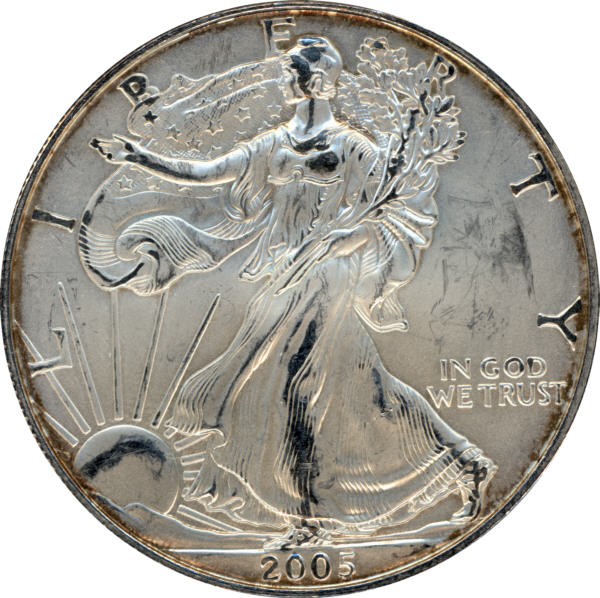
Here is an image of a circulated 2005 bullion SAE showing how easily the mint luster wears away and just how thin it is. This "matte finish" is a beautiful but very fragile surface.
As a side note, the laser is not used to create the surface treatment on the uncirculated die. They are vapor "sand" blasted.
Here is an image of a circulated 2005 bullion SAE showing how easily the mint luster wears away and just how thin it is. This "matte finish" is a beautiful but very fragile surface.


