| Author |
 Replies: 11 / Views: 10,166 Replies: 11 / Views: 10,166 |
|
|
New Member
United States
3 Posts |
I'm new to collecting greek coins. I've heard years ago someone made a lot of fake tetradrachm owl atticas. From what you see in this picture could you tell if it or the other coins are fake? I've been collecting indian heads and roman coins a number of years but know little about greek coins. Thank you! 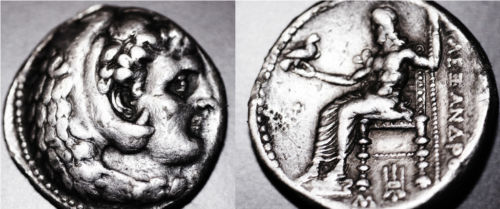 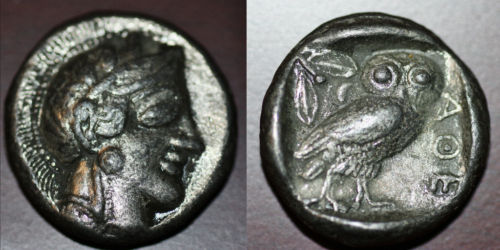 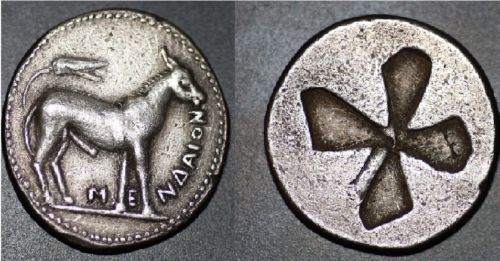 Edited by mjtvillanova
11/21/2011 10:20 pm
|
|
|
|
Pillar of the Community
United States
4253 Posts |
First off,  Secondly, we need to see the pics  . Looking forward to it. Regards, JW |
|
New Member
 United States
3 Posts |
Sorry about that. I'm used to collecting coins that show some ago for being 2000 years old. I know towards the end the Romans started making coins of poor material and using poor techniques hence why they look horrible today. These greek coins I'm seeing from this one seller look like art. That is why I'm asking for your input. Thank you so much!
The first image: Danubian Celtic AR Tetradrachm, imitation of Alexander the Great type. Head of Herakles right in lionskin / ALEXANDPOY, Zeus seated left holding eagle & scepter.( 17.2gr/25mm)
The second image: Attica, Athens tetradrachm struck 449-413 BCE (17.03 gm/23mm)
Third image: Danubian Celtic AR Tetradrachm, imitation of Alexander the Great type. Head of Herakles right in lionskin / ALEXANDPOY, Zeus seated left holding eagle & scepter.( 17.2gr/25mm)
Edited by mjtvillanova
11/21/2011 10:22 pm
|
|
Pillar of the Community
United Kingdom
2838 Posts |
Top coin looks OK but wait for more opinions, its always difficult to be certain from a single picture, all I could really say is that I see nothing in it that would worry me. Middle coin looks 'wrong' to me, partly in style (though I've seen some odd looking originals) but mainly in surface and shape. Bottom coin looks very questionable indeed! Always trust the seller more than the coin and only spend big if they offer 'no quibble' lifetime guaranties. Edited to include bottom coin. Edited by bobbyhelmet
11/21/2011 10:28 pm
|
|
New Member
United States
3 Posts |
BobbyHelmet.
The third coin looks a little strange to me too. The coins I see struck on one side during that time usually curve back towards the side without an image. This coin looks too flat and pressed.
|
|
Pillar of the Community
United States
4253 Posts |
I'm not a Greek coin collector, so take what I say with a grain of salt (perhaps a pound of salt). I believe all three of these coins are fakes. Take a look on http://www.forgerynetwork.com. I believe I see some coins that could be a match to your coins. Another place to look is http://www.forumancientcoins.com/fakes/index.php. I haven't looked here yet, but I find both of these to be great resources for weeding out fakes. Hopefully, one of the Greek coin experts will be along shortly to confirm that you have genuine or fake coins. Regards, JW |
|
Valued Member
United States
123 Posts |
The Owl doesn't feel right to me as well. The style if Athena just isn't what I've seen on originals and the owl's feathers don't look right. The bottom coin looks porous. Maybe a sign of casting? I'll defer to the real experts.
|
|
Bedrock of the Community
United States
10045 Posts |
While I don't have any Greek coins, I'm quite fond of the Attic Owl Tetradrachm, so I look at every example I can find. On the owl reverse, the square punch isn't usually perfectly centered, and there is often evidence of metal pushed out, causing stress cracks. Combined with the weakness of the owl's features and lack of test cuts, it make me wonder if it's a copy? Of course, if anyone knows better...please tell me--I come here to learn most of all. Here is a page of owl tetradrachm replicas to compare. Edited by DVCollector
11/22/2011 12:40 am
|
|
Moderator
 United States
23731 Posts |
to the community. I'm also not a Greek coin collector so like JW said take my answer with a pound or two of salt. IMO the first coin appears to be genuine, if it turns out not to be it's a very good copy. The second and third coin do not appear to be genuine. |
|
Pillar of the Community
United States
4253 Posts |
Quote:
The bottom coin looks porous Porosity is not always a sign of a cast fake. I have a very porous Claudius Denarius I originally thought might be fake, but it has proved otherwise. Take a look: 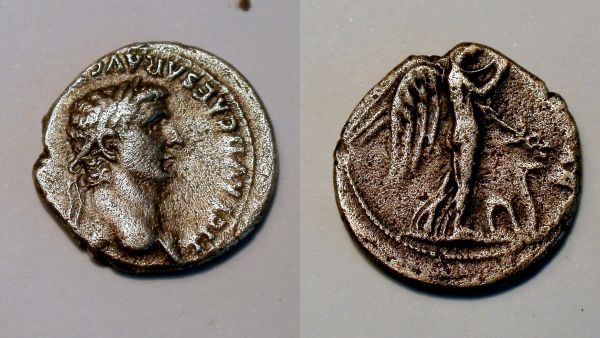 |
|
Bedrock of the Community
Australia
21792 Posts |
DVCollector: You have made a very obvious point.
It can be very difficult to say for sure that from pictures alone, that a coin, especially an ancient greek silver coin can be adjudged as genuine or not. Style characteristics are very useful in helping to identify a fake, but other factors should always be investigated as well, especially if a commercial transaction is involved.
It has often been said that the best fakes are capable of fooling the best experts, and I have little reason to doubt this.
Modern technology has produced, for instance, a technique called
Laser Optic Profiling, which is capable of copying a coin into digital form. A die can be cut from this digital information. These copies can be detected, but experience in handling many of them is essential.
That is why it pays to deal with a professional, who is experienced in this area, and why it is important to establish the provenance of a valuable coin.
This is just one modern technique for making copies of ancient coins.
I have seen a Philip 11 of Macedon gold stater rejected for no other reason than is showed not even she slightest sign of wear or damage. Gold alloys of around 95% purity are very soft, and it would seem highly implausible that such a coin would survive for 2,300 years in such pristine condition. yet, there are many of these be seen around coin shows. I have come across about one of these per major coin show.
I just look at these, and quietly walk away.
|
|
Pillar of the Community
United Kingdom
2838 Posts |
JW's coin has undergone 'crystallisation' giving it its porous look, this exert explains it better than I could in my own words: Quote:
Also called intergranular corrosion, reticulate corrosion, or embrittlement, crystallization happens under certain conditions with silver coins that are naturally alloyed with small amounts of copper or lead, as were most ancient Greek-era silver coins. Most Owls, however, very pure silver compared with other ancient coins, so relatively few Owls are seen crystallized.
Crystallization occurs because of the inherent instability of silver alloys at room temperature. The copper and lead separate from the silver over time, leaching out, causing voids between the silver grains, and lowering the coin's weight. This leaves the metal spongy and brittle while causing crisscrossing hatch marks and swirling, perpendicular grooves to form on the surfaces. Under magnification feather-like crystals can sometimes also be seen on the surfaces. Other times the crystallization is visually undetectable.
Though the term "crystallization" is commonly used in numismatics, "intergranular corrosion" is a somewhat better term because the metal isn't actually becoming crystallized. Instead, the crystalline structure of it is becoming more visible as a result of the internal corrosion. Using the links JW has posted is a good idea to spot fakes but can be time consuming as the first and second coin will return many, many hits when you search. If your comfortable with Roman coins look at all of the sellers Roman offerings, if they have any, fake sellers will often offer a number of fakes, you may get a 'good' or 'bad' feeling about the seller by doing this. The best advice is dont rush into buying something, owls imparticular can be very expensive and for what it will cost you you need to be 100% happy with the coin. |
| |
Replies: 11 / Views: 10,166 |
|










 Posted 11/21/2011 10:17 pm


