| Author |
 Replies: 8 / Views: 1,684 Replies: 8 / Views: 1,684 |
|
|
New Member
United States
2 Posts |
Hi everyone,
I'm a newbie to coin collecting, and I've read a few articles about ways to figure out whether a morgan coin is genuine or not.
I'm familiar with the weight test, the magnet test, the sound test, and am also mostly interested in morgans with the cartwheel luster.
My question is: If the coin is within the weight range (26.73 to 26.86g) and meets the other tests, and has cartwheel luster, is that enough to tell me that the coin is genuine?
Thanks!
|
|
|
|
Pillar of the Community
United States
3546 Posts |
Hello newo., I attached a couple of interesting and applicable sections found within a past CCF thread addressing counterfeits: 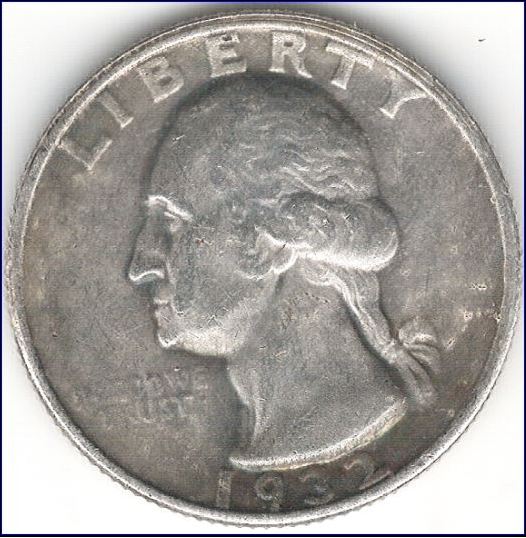  These were taken from: https://goccf.com/t/72134&SearchTerms=seamAlthough this past discussion focused on a rare 1932-D silver US quarter the same type of counterfeit seams could appear in Morgans also. Check out the doubled rim above the RTY of LIBERTY: characteristic of cast replicas shrinking when cooling down... fyi, mdpmedia |
|
Pillar of the Community
United States
1796 Posts |
There are a wide range of tests for detecting counterfeits. Some of the more effective ones that can be easily carried out I've posted to The Black Cabinet: http://fakes.numismetrica.com/ident...ounterfeits/Generally these rules will catch 90% of fakes, so you have a very good chance it's genuine at that point. The other 10% can be caught on small details that involve subtle comparison to genuine coins and known counterfeits. For example, there are a number of Chinese fakes out on the market now that are made of silver (usually of a lower fineness), so they will pass the silver test; however, these counterfeits can be caught by looking for casting grain on the strike, comparing die pairings, or in some cases counting reeds. Usually your best bet is to get as many pairs of experienced eyes to take a look at it in those cases. :-) |
|
Valued Member
United States
132 Posts |
Dont forget that posting good, quality pictures on this forum could help. That could be your most powerful weapon, besides the tests done in hand.
-Dan
|
|
Rest in Peace
United States
9104 Posts |
 , neworchid! Quote:
If the coin is within the weight range (26.73 to 26.86g) and meets the other tests, and has cartwheel luster, is that enough to tell me that the coin is genuine? You be approaching certainty, but there are copies that have fooled the experts. If a man bets you 20 bucks that the Jack of spades will jump out of a sealed pack of cards and spit tobacco in your face, better get your hanky handy. |
|
New Member
 United States
2 Posts |
|
|
CCF Sponsor
United States
702 Posts |
From those pictures, it's pretty tough to tell. Do you have access to larger ones?
|
|
Moderator
 United States
23522 Posts |
Unfortunately, your best weapon to detect Morgan counterfeits is a trained eye. As Fredd saidd, there are some pretty darn good fakes out there, ones which will pass all the standard "tests." Heck, there are Morgan counterfeits of the same silver composition as the originals. At that point, it's your own experience with looking at and handling Morgans which must take over.
Until you reach that point - and the best among us can still be deceived occasionally - your best bet is to deal only with reputable sellers. Especially in the case of the two coins you pictured here. They're both rather scarce in the grade they look to be, particularly the 1884-S which is probably a $200 coin figuring it for AU53 or so. The 1883-S is roughly a $90 coin, figuring it for about AU50.
I don't see anything about either which jumps out to call itself "fake," but both are coins I'd approach with caution.
|
|
Rest in Peace
United States
9104 Posts |
The 83s reverse doesn't look quite right*, but the other isn't sending any obvious red flags.
*This can be anything from lighting, to photography, to my own lack of familiarity with that specific date.
|
| |
Replies: 8 / Views: 1,684 |
|










 Posted 03/25/2012 11:20 pm


