











 Posted 04/24/2012 12:55 am


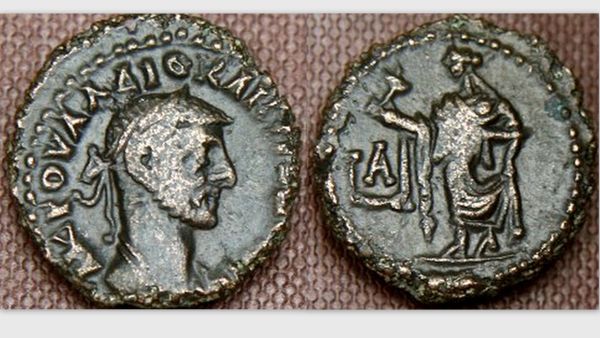
Seems to be weakly struck on the high points, not wear.
As is often the case with these coins, they can be a bit dumpy, and with granular edges.
My theory about the edges:
I think these coins had a rather high tin content. Tin has a much lower melting point than copper, and the large paste temperature range, accentuated by the thick blank, shows up by the evidence of the granular edge.
The blanks for this issue would have been heated to soften them.
Melting point of tin 232 deg.C
Melting point of copper 1083 deg.C
That is a huge paste range of 851 celsius degrees.
If you have a lot of tin on the alloy, and with such a huge paste range, I reason that a granular edge would be a by product of the striking.
As is often the case with these coins, they can be a bit dumpy, and with granular edges.
My theory about the edges:
I think these coins had a rather high tin content. Tin has a much lower melting point than copper, and the large paste temperature range, accentuated by the thick blank, shows up by the evidence of the granular edge.
The blanks for this issue would have been heated to soften them.
Melting point of tin 232 deg.C
Melting point of copper 1083 deg.C
That is a huge paste range of 851 celsius degrees.
If you have a lot of tin on the alloy, and with such a huge paste range, I reason that a granular edge would be a by product of the striking.
Edited by sel_69l
04/24/2012 02:31 am
04/24/2012 02:31 am


