| Author |
 Replies: 13 / Views: 4,378 Replies: 13 / Views: 4,378 |
|
|
New Member
United Kingdom
13 Posts |
Hi Everyone! I got my first Mexico 8 Reales today, but still need to build confidence. Its weight is 27.07g, the diameter is 37.64mm, and has normal silver color and toning. However, I see the details are a bit suspicious. First, I see some dots in the plain field on the observe.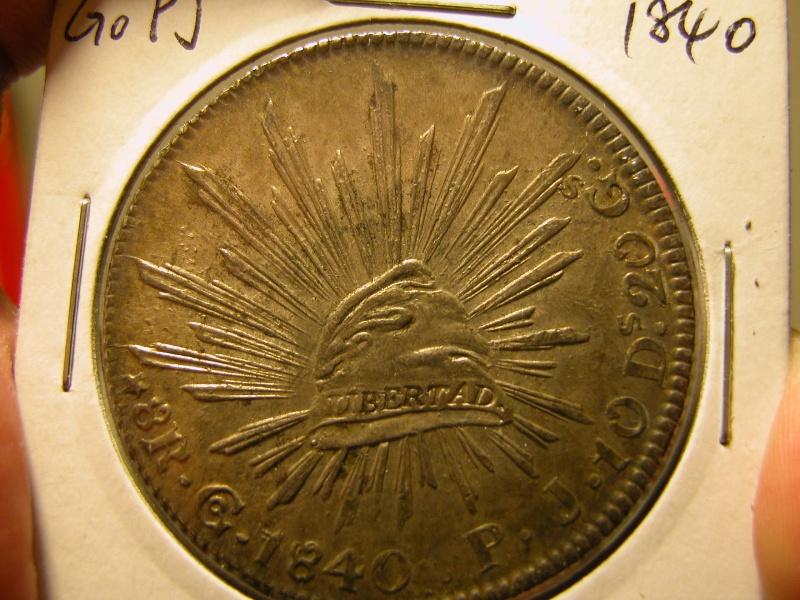 Second, the letters on the reverse are 'rough', for example, there is something connecting the 'R' and 'E' of 'REPUBLICA'; the 'X', 'N' and 'A' of 'MEXICANA' seem to be weird... Second, the letters on the reverse are 'rough', for example, there is something connecting the 'R' and 'E' of 'REPUBLICA'; the 'X', 'N' and 'A' of 'MEXICANA' seem to be weird...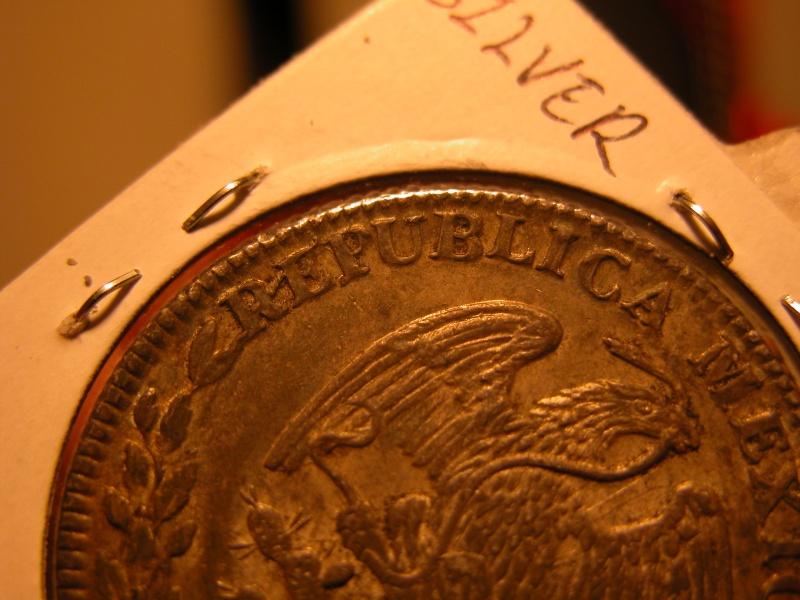 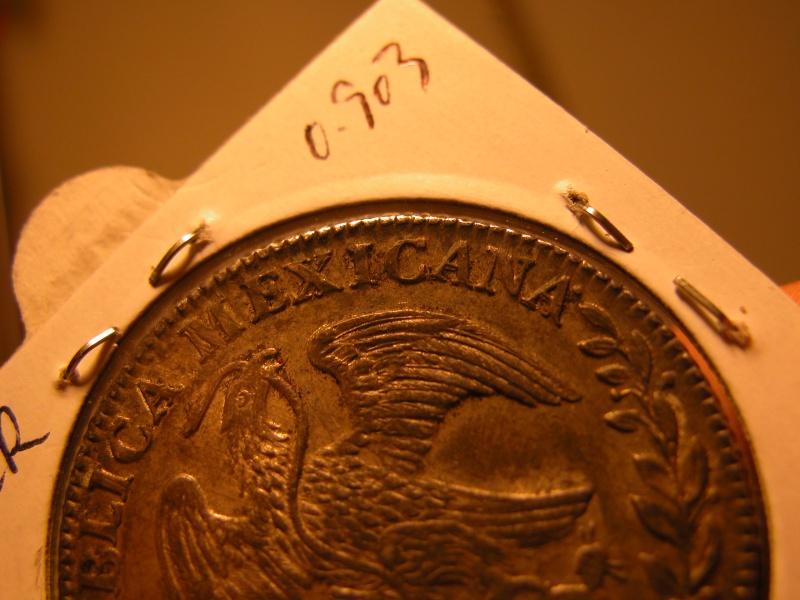 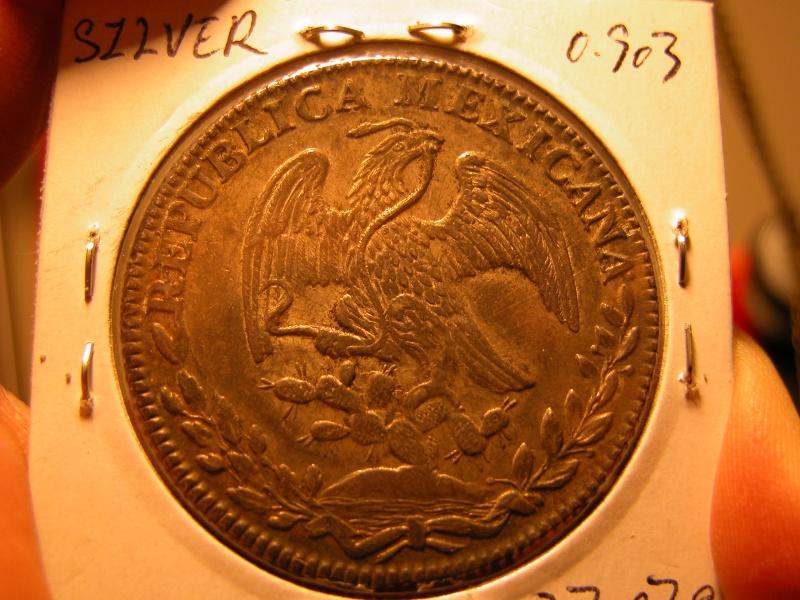   Edge(part are fine, part are irregular or asymmetric):    Please advice... Edited by Tben
06/21/2012 6:10 pm
|
|
|
|
Pillar of the Community
United States
648 Posts |
 Optimistically could be from rusty die? Some of the rays look not well developed? Just do not know so..   nice coin hoping to lean too edit for that's hope to learn  Edited by tokenmast
06/20/2012 11:31 pm
|
|
Pillar of the Community
United States
2120 Posts |
Almost looks like you have a lot of doubling going on here.
Can we get a shot of the Edge of the coin?
Something about the eye of the eagle looks odd.
Perhaps SwamperBob will happen along.
|
|
New Member
 United Kingdom
13 Posts |
Hi Namachieli, I have added another photo of the edge.
|
|
Pillar of the Community
United States
5362 Posts |
Tben Hello and welcome to the world of Mexican 8 Reales.
The size and weight are fine for the date and state of wear in my opinion. (The coin shows almost NO wear).
The coin you have is a Guanajuato issue. The date 1840 means that the hubs used to make the working dies were about 10 years old at this point.
Concerns are raised about the "raised" lumps in the fields. On the die these would translate to holes of some sort. So the question becomes are they possible as die features on a real coin or not?
Then there is the raised feature connecting the R and E in REPUBLICA. Could that be a problem?
Also questioned are the shapes of the "weird" letters X, N and A in MEXICANA and the date with the obvious over punch of the 1 and 8.
So to answer these issues you need to know what the hub originally looked like and what alterations were made to the hub as years passed. The original pattern shows NONE of these features. It was dated 183 - with the last digit omitted and NO assayer initials (see picture bottom of page 216 in Resplandores").
The easiest features to dispose of are the "weird" letters. Look at any of the hubbed dies that date between 1830 and 1843 and you will see some modifications. A recut ray or a repunched letter or some other similar feature. But these are usually isolated changes - they are NOT systemic in nature and they do not involve major alterations in shape or relationship between features.
Most of these were modifications made die by die because of weak hubbing - some are repairs necessitated by numerous clashes that forced the dies to be refinished with loss of details. Most of these corrections are in fact die by die.
So to dispose of the features that fall into this category - the prominent 1 doubling along the seriff along with the 8 doubling in the upper loupe were made as a hub correction on at least 1 of the hubs that were in service. The fact that more than one hub existed is only established after comparing many examples side by side. The odd X, N and A are also hub features seen on many later date dies. I do not see these as odd in the slightest.
Now the RE line is something else. It could be a cut in a soft plastic mold but it should be examined up close. To my eye it appears to be a die crack that is beginning to chip out at the edges (points of highest stress after the initial break) between the R and E. But the shape is in my opinion fine for a break in steel. It is also in an area where breaks are known to occur. I would expect to see a trace of the break extending along the same angle to the left of the R. I think I see traces through the R out the lower left serif into the leaf adjacent. I also think the break runs from the top right side of the E to the dentils. If the break is actually as I describe - I would attach no significance to the break - it is normal in all respects.
The raised dots in the field COULD indicate a problem. Here the best way to view the raised areas is up close with a Binocular microscope. Dies do rust - the die steel blanks may also have weak areas (overlying voids in the steel), the die steel alloy may have included some impurity (like dirt) that can erode out quickly, or the dies may have mechanical damage. So lumps by themselves are not an absolute indicator of forgery UNLESS the shape is in the form of a soft break like you see that forms in plastics and not in steel.
What I see are rather typical shapes for rust spots. They are round or almost round with smooth edges. No trace of the softness seen in plastic breaks.
I did notice some dimpling of the dentils - which may simply be discoloration caused by wear. I would check the dentils to see if they are really dimpled or not.
The edge views made me very comfortable with the coin - I recognized the edge as being one I have seen many times on originals.
So all in all - I conclude that the coin is an original.
I wanted to go through all the steps to show you what needs to be done.
|
|
Pillar of the Community
United States
2120 Posts |
Wonderful post, Thanks SwamperBob.
|
|
New Member
United Kingdom
13 Posts |
which photo shows the dimpling of the dentils? I cannot see where to check...
|
|
Pillar of the Community
United States
5362 Posts |
The 5th and 6th pictures from the top show the cap side. The dentils in question are the ones that run counterclockwise from the date to about the end of the Gs.
|
|
New Member
United Kingdom
13 Posts |
I double check it, it seems most of them are flat, only one or two seems to be dimpled(from knock?). I make another super size photos as below: 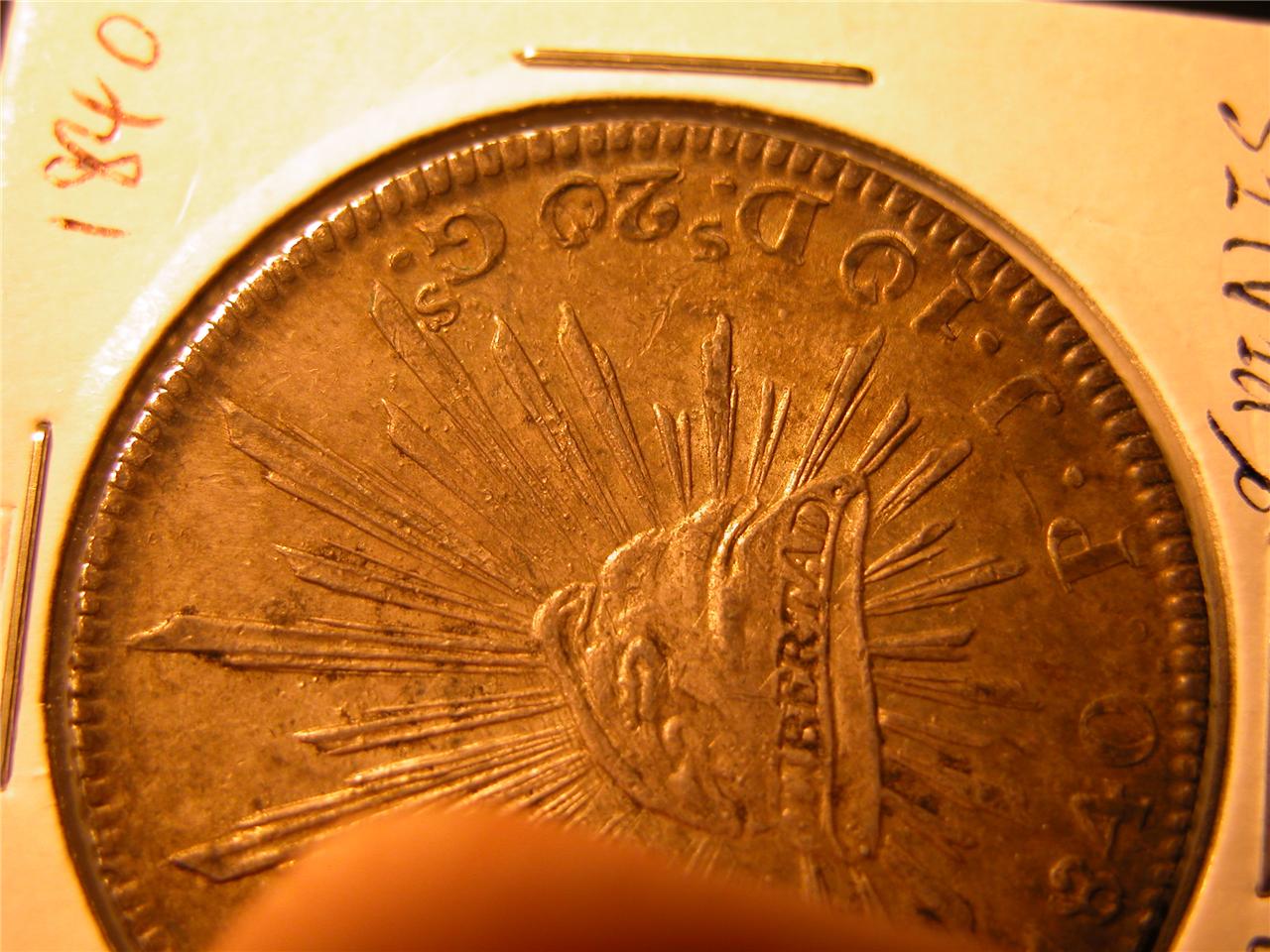  |
|
New Member
United Kingdom
13 Posts |
A new question, I see some silver color below the '0' of '10' in the last 2 super size pictures, and on the left of all 'A' in the 3rd picture. It is not very shining silver, just looks to be contrast to the color nearby, and they all appear near the edge of letters/numbers...
|
|
Pillar of the Community
United States
5362 Posts |
If the dentils are, as you say flat except for a couple knocks then I have no concerns about the coin being real. The photos show an "apparent" feature that is not really there. It is a trick of the mind based on a slight difference in the color. It may also have to do with the way light reflects because it is seen inside a 2x2 holder.
Regarding the area of bright silver near a high feature as seen on the 0, all I can say is that it is seen fairly commonly on both real and counterfeit coins. I have many thoughts about the cause but no conclusive answer as to why it happens. It just does.
|
|
New Member
United Kingdom
13 Posts |
Many thanks, swamperbob. I really appreciate your professional knowledge.
|
|
Pillar of the Community
United States
648 Posts |
 so much to learn so much FUN!! which is good because this looks like a life time (or more ) of study |
|
Valued Member
United States
426 Posts |
Welcome to the cap & rays club! I came across this thread kind of late but let me say what a beautiful piece!
Full breast feathers!It's hard to come across Cap & Rays with full feathers on the eagle.
I like this period of 8R's from the Guanajuato mint because the design looks sharp and they always seem to be strongly struck.
Awesome coin!
|
| |
Replies: 13 / Views: 4,378 |
|










 Posted 06/21/2012 12:21 pm


