| Author |
 Replies: 12 / Views: 1,632 Replies: 12 / Views: 1,632 |
|
|
Valued Member
United States
305 Posts |
Is this infrequently reeded? 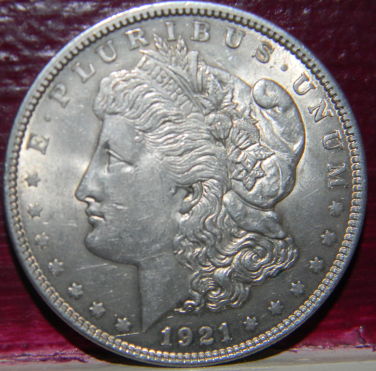 |
|
|
|
Pillar of the Community
United States
1436 Posts |
Not sure if the collars were different in any way or not. Have you verified the weight of the coin in question to make sure it's not a fake?
|
|
Valued Member
 United States
305 Posts |
Quote:
Have you verified the weight of the coin in question to make sure it's not a fake? Yes, It's weight is right (0.9 oz.)  |
|
Moderator
 United States
23522 Posts |
Yep, that's IR (center coin). Now, let's see the reverse and figure an attribution.  That's a very nice illustration. With your permission, Coinguy1000, I'm going to snag your pic for future use. |
|
Valued Member
United States
305 Posts |
Quote:
With your permission, Coinguy1000, I'm going to snag your pic for future use. Sure, Please do Here are obverse and reverse photos (obverse photo with flash). If you need up close pictures of anything please ask. 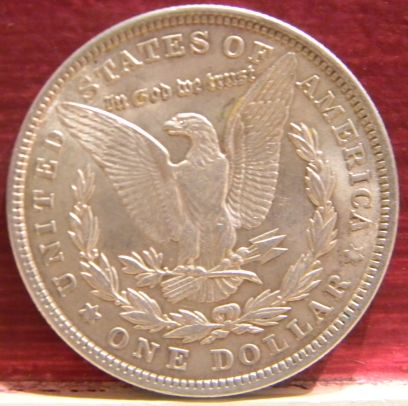 |
|
Valued Member
United States
305 Posts |
sorry, |
|
Valued Member
United States
305 Posts |
grrr... 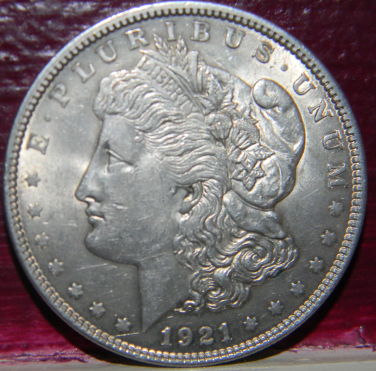 |
|
Moderator
United States
23522 Posts |
You've run afoul of using the same filenames for different pics, and overwritten the original rim image.
The reverse shot is a tad small to make out the details I'm looking for. Check the "n" of "In" for obvious doubling at the bottom. Also, examine the denticles above ST of STATES and OF for beveling or die gouges extending into the fields; if they're there they will be obvious to you. If we can find features like this - you won't see everything I've mentioned together - we can more easily attribute the coin. If not, you're probably going to need a loupe.
|
|
Pillar of the Community
United States
1796 Posts |
Aye change filenames and please upload an image of the reeding :-)
|
|
Valued Member
United States
305 Posts |
Quote:
You've run afoul of using the same filenames for different pics, and overwritten the original rim image.
Quote:
Aye change filenames and please upload an image of the reeding :-) OK, I will give you the rim image later. Quote:
Check the "n" of "In" for obvious doubling at the bottom. Also, examine the denticles above ST of STATES and OF for beveling or die gouges extending into the fields; if they're there they will be obvious to you. If we can find features like this - you won't see everything I've mentioned together - we can more easily attribute the coin. I'll check!  Quote:
If not, you're probably going to need a loupe. Already got one!  |
|
Valued Member
United States
305 Posts |
infrequent reeding: 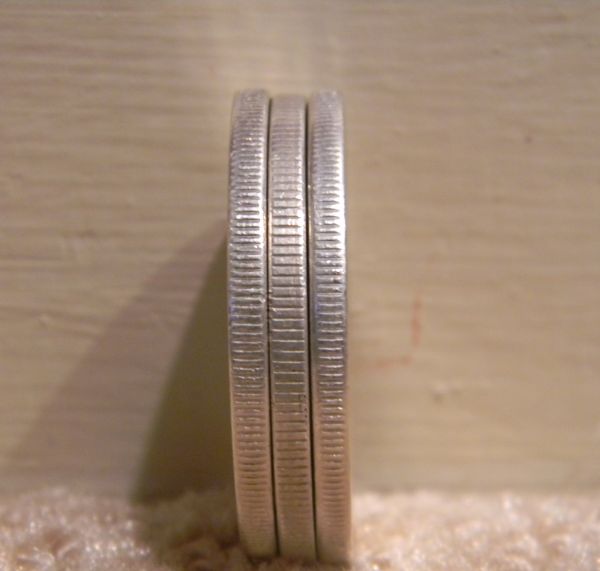 SsuperDdave: No problems with denticles and no problems with N. |
|
Valued Member
United States
305 Posts |
and yes, I am sure, because I found another one that does have the problem with denticles.
|
|
Moderator
United States
23522 Posts |
Good enough - you're obviously aware of what I was getting at with the things I was asking. Without any of those markers, it's gonna get difficult. Most of the IR 1921's are noted for some sort of obverse doubling, but it's been my experience that it's really difficult to identify, especially on a worn coin. Your best bet now is to go through the VAMworld listings for IR 1921's and look for the other die markers presented for each - the small lines in out-of-the-way places. These will survive circulation, and probably be easier to find if you have enough magnification than will any profile doubling.
|
| |
Replies: 12 / Views: 1,632 |
|









 Posted 09/26/2012 2:18 pm


