| Author |
 Replies: 13 / Views: 2,224 Replies: 13 / Views: 2,224 |
|
|
New Member
Czech Republic
12 Posts |
Hello Please can someone recognize origin of this coin. thanks 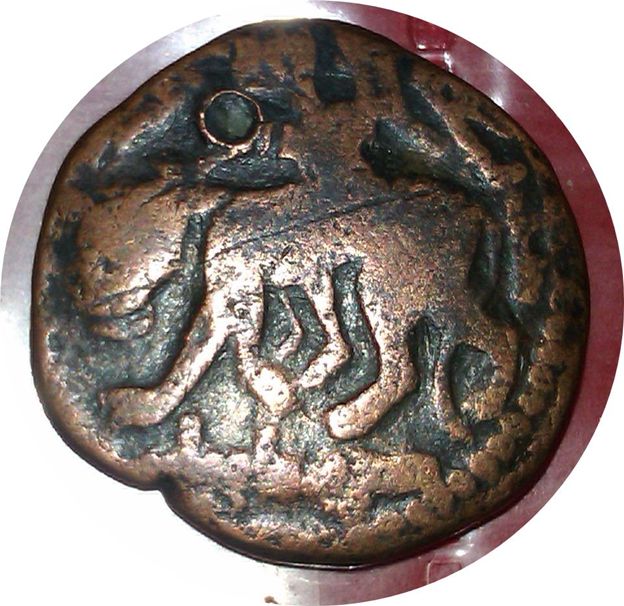 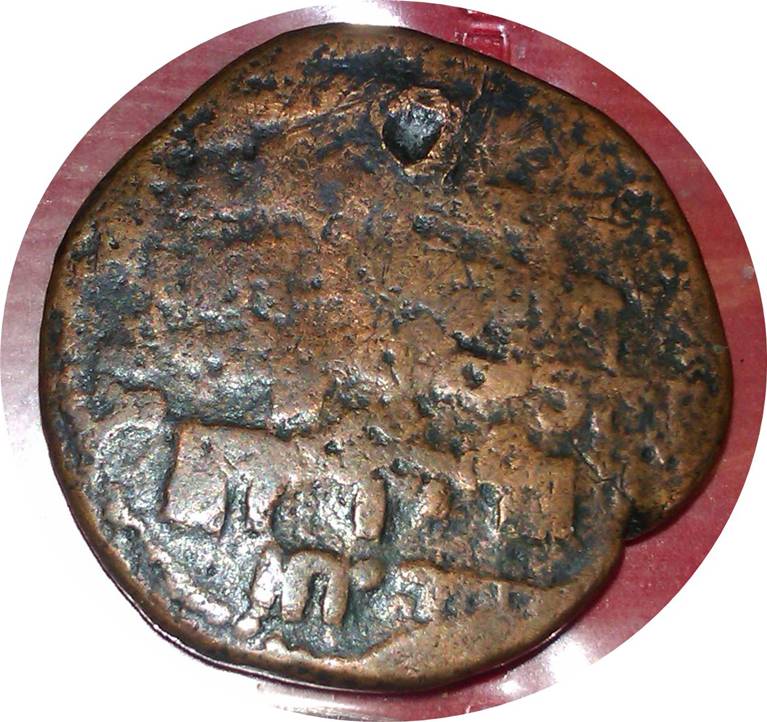 |
|
|
|
Pillar of the Community
United States
4253 Posts |
Welcome. Sorry, I don't recognize your coin. Perhaps someone else here will be able to help. Good luck.
|
|
Pillar of the Community
United Kingdom
946 Posts |
Mmmm, the coin looks to be from a Seljuk or Artuqid dynasty, the lion featuring in the late coinage of the Seljuk Sultanate of Rum, for example. The Arabic verses adds to it being of an Islamic dynasty, so not Roman. The coin has also been used as a pendant in its history, but the hole has been filled in. Turns out it is Artuqid... See here: http://www.mcsearch.info/record.html?id=496180Edited by Masis
09/29/2012 3:30 pm
|
|
Pillar of the Community
United States
5010 Posts |
|
|
New Member
 Czech Republic
12 Posts |
Great thanks, I have just one question. In Islam is prohibited to create image of animal or person and here it is possible
|
|
Pillar of the Community
United Kingdom
4208 Posts |
Stredo - Islam has changed a lot. Religions change through time, and, believe it or not, the islamic section of the planet was, for a time, the most technologically advanced and accepting area. This kind of thing ended with the crusades, when us Europeans went over there and unleashed a big can of christianity on them, burning texts and destroying ancient structures. The arabic and the middleeasterns are credited with a lot of mechanics - the crank shaft, for example. We kind of screwed them over.
|
|
Pillar of the Community
United Kingdom
2145 Posts |
That,I think, is the case now, but there was a talk at the Royal Numismatic Society in (I think) 2009, when the speaker said that in the early history of Islam, there wasn't a blanket prohibition on depicting animals.
In some of the countries where Islam was becoming the majority religion, there possibly wasn't full understanding or even knowledge of the requirement not to depict image of animals or persons.
In addition, those countries bordering the Byzantine empire or Persia needed their currency to look similar in order to be acceptable to foreign traders, so they used similar images to those found on non-Islamic coins.
|
|
Pillar of the Community
United States
4253 Posts |
Quote:
when us Europeans went over there and unleashed a big can of christianity on them I find it difficult to accept that Christianity or the crusades had much if anything to do with the depiction of man or animal in Islam. But you are correct when you say that religions change and interpretations of "the written word" evolve over time. |
|
Pillar of the Community
United Kingdom
946 Posts |
Yes, it is actually forbidden in Koranic law to have depictions of a person or animal, which is deemed as idolatry. But in real life, that is rarely practised, except in former Taliban Afghanistan where TV's were banned. Even 77 years after Muhammad, the ninth Caliph, Abd al-Malik did not object to having himself depicted on Dinars.  Moreover, the Seljuks, who had initially been Animists, then Jewish and finally Sunni Muslim, seem to have had a very different understanding of Koranic law. They were also happy to have images of animals and themselves depicted, only Muhammad was depicted, but his face was not. 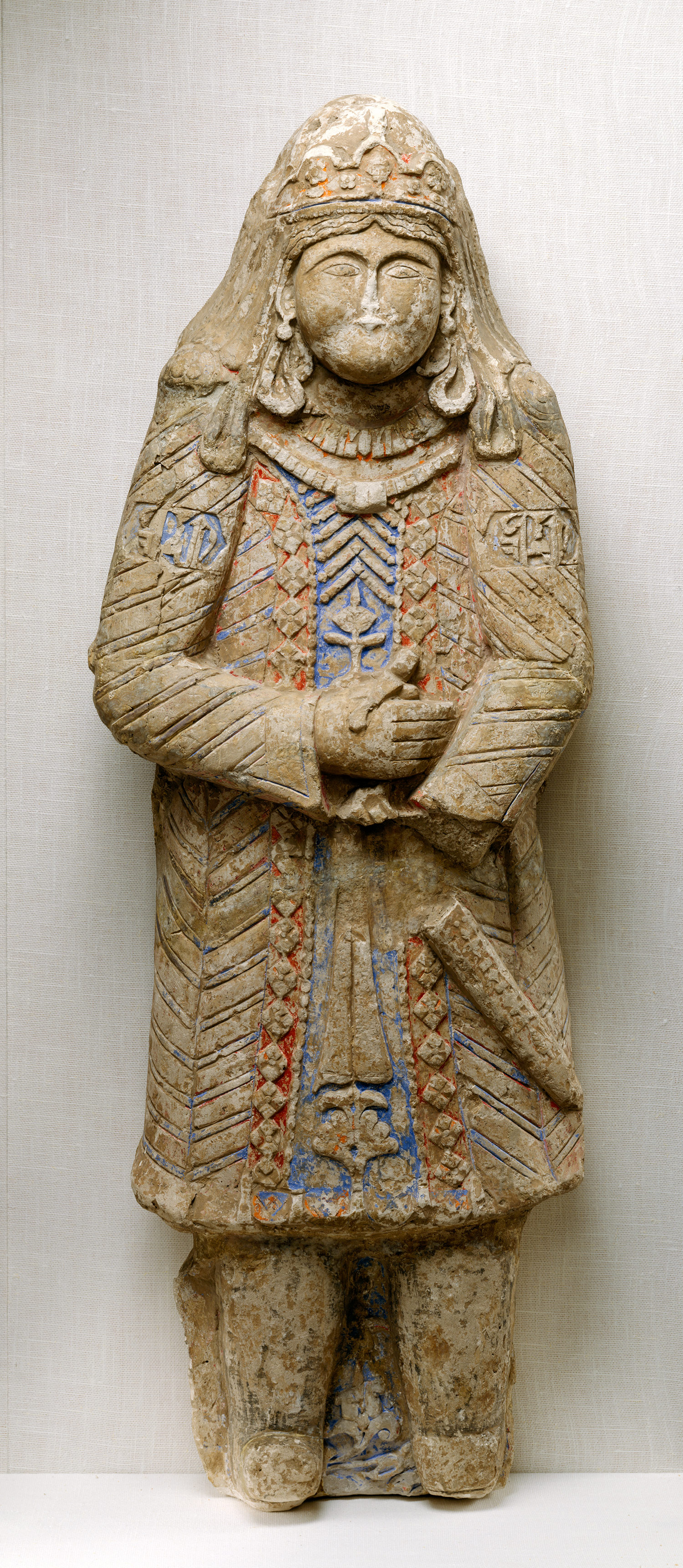 Some expansion needs to be made on Ben's comments however... Although a high degree of technical and intellectual superiority is credited to the "golden age" of the Caliphate, actually a lot of that accumulation of learning was the result of ancient Greek, Roman, Persian and even Indian texts being translated into Arabic... and often by non-Muslims, such as Nestorian Christians monks, who had networks spanning as far afield as India and China or Armenian monks or Sabians. http://en.wikipedia.org/wiki/Translation_MovementEven the Caliphate's "house-of-wisdom" and Baghdad was in imitation of the Zoroastrian Persian model, set 400 years earlier by the foundation of the city of Firuzabad in Persia, even the round design of the city imitated Firuzabad. http://en.wikipedia.org/wiki/FirouzabadAnd many Islamic scholars of the Abbasid Caliphate, were Persian. http://en.wikipedia.org/wiki/Nizam_al-MulkOf course, Jihad can be seen as a reaction to the 11th century AD Crusades, but the Caliphate was the result of Jihad in the first place, conquering north-Africa and Syria from Rome and almost the entire Persian empire by the 8th century AD, and it must not be overlooked that the Franks imposed Catholicism on Orthodox and Monophysite Christians. This has resulted in the creation of the large Catholic Aramaic community of the Lebanon, Palestine and formerly in Iraq, and even Catholic Armenians formerly in Cilicia, rather than Muslims being forced to convert en-masse to Catholicism. There was more antagonism between the Catholic west to the Orthodox east than to Islam. After all, Catholic Venice was quite happy to deal with Islamic Egypt and to conquer Orthodox Christian Byzantium in 1204 AD http://en.wikipedia.org/wiki/Fourth_crusadeEdited by Masis
09/30/2012 2:54 pm
|
|
New Member
Czech Republic
12 Posts |
Thank you very much for every information and opinion. I am numismatic from Slovakia and I see that you have a lot of information. thanks Now let me show some nice coins from my country . I give you 48 hours to recognize them, aftet this time I write something about them. ( coins have similar arabic motive so I put it there) 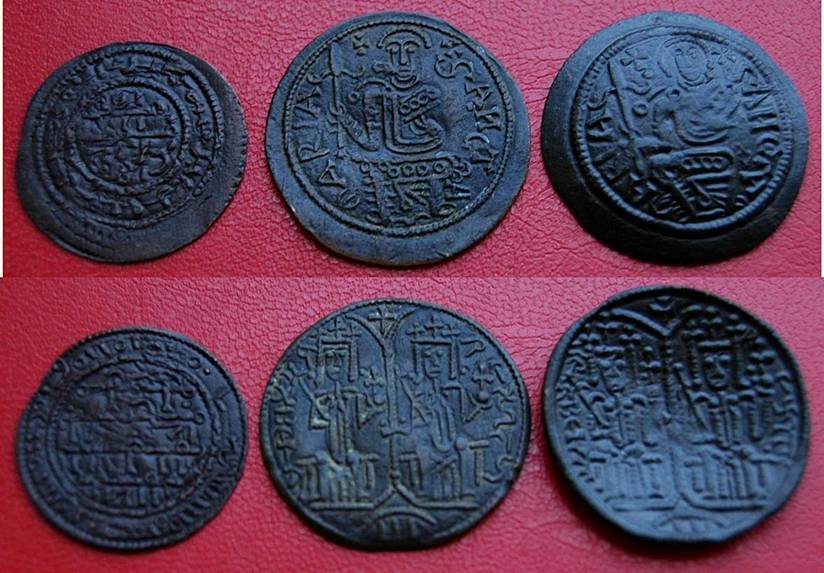 |
|
Valued Member
United States
209 Posts |
Those are interesting coins. I can make out the Sancta Maria. Latin words and similar appearance to a Byzantine...hmmm. Very similar look to Hungarian coins from 1000-1600 AD, but I don't know anything about them. This has been a pretty interesting thread. I will have to keep an eye out for the lesson on these coins.
|
|
Pillar of the Community
United States
4253 Posts |
I believe the second two coins, and possibly all three coins are Bela III, 1172 - 1196. If I am right, they should weigh around 3-4g and measure about 27mm.
|
|
New Member
Czech Republic
12 Posts |
Yes it is Bela III from dynasty of Arpad very intresting is coin that look like arabic, text on this coin is only fake without any sense. It is common coin but meaningless symbols on coin are very nice historical joke
|
|
Moderator
 Australia
17005 Posts |
Quote:
I have just one question. In Islam is prohibited to create image of animal or person and here it is possible It is my understanding that the interpretation applied by various Turkic states to this teaching was this: "Graven images" were forbidden. But coins are not "graven", they are struck with dies. So using or owning coins with images on them are OK. However, the dies used to make the coins are "graven", so it was forbidden for Muslims to make or use the dies. The Turks got around this problem by employing Christian artists in their mints. Don't say "infinitely" when you mean "very"; otherwise, you'll have no word left when you want to talk about something really infinite. - C. S. Lewis
|
| |
Replies: 13 / Views: 2,224 |
|










 Posted 09/29/2012 3:26 pm


