| Author |
 Replies: 11 / Views: 1,387 Replies: 11 / Views: 1,387 |
|
|
Valued Member
United States
162 Posts |
Just like to clarify that this is in fact, Struck Through Grease. I don't think it'd be PMD because the wear is uneven and it weighs 3.1g which is normal. 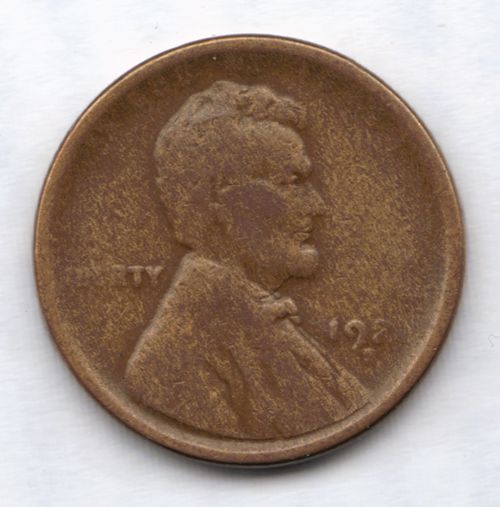  |
|
|
|
Pillar of the Community
United States
1137 Posts |
I believe you have some Struck Through Grease and/or die wear on the front but normal circulation wear on the rest of this coin, not much here, sorry! |
|
Valued Member
 United States
162 Posts |
Nothing to be sorry about, I didn't think this coin was worth anything more than face value. Just wanted to confirm that it was Struck Through Grease. Gotta make sure I know what I'm talking about and that I can properly identify things myself, ya know? Thanks for the input. :) |
|
Pillar of the Community
United States
1137 Posts |
not a problem, good luck!
|
|
Rest in Peace
United States
1943 Posts |
Sorry but I see all wear.
|
|
Valued Member
United States
162 Posts |
If it was wear Pyrbob, why would it weigh 3.1g like unworn coins of this era? My worn coins from the 1920's weigh anywhere from 2.8-3g. This coin however weighs the same as a new unworn coin, therefore I cam to the conclusion it was Struck Through Grease. |
|
Valued Member
United States
163 Posts |
I think grease is a possiblility but also a weak strike. Coin has uneven wear. Note that detail is sharper toward the middle. The rim is distinct too. ANACS grading book cautions that many early Lincolns were struck weakly on obverse, or reverse, or both. Many times I come across Lincolns with VF details on the bust but with VG wheat lines. If you can see the entire date, it's worth more than face value.
|
|
Valued Member
United States
162 Posts |
Good points sab3927. Didn't think it could be wear due the the fact that the rim and the center of the coin show detail. I wasn't sure though if it was Struck Through Grease, or a weak strike like you just stated. Are there any key indicators to tell the difference between the 2? Also, if I rotate the coin at the right angle, I can make out the date clearly and it says 1920-S, but at the angle the picture was taken it doesn't seem to show at all. |
|
Valued Member
United States
163 Posts |
I think that since the entire coin is affected, I lean to a weak strike. Most greasers have more local effects.
Sab
|
|
Rest in Peace
United States
1943 Posts |
The only problem I have with the weak strike theory is the sharpness of the letters in the center of the reverse. The letters in the center of the reverse are oposite of lincoln on the obverse. If this were a weak strike then I would expect weakness on these letters. The weight is a valid point. But keep in mind this coin could have started out weighing as much as 3.24g and still would have been in tolerance. This is just my opinion from what I see.
|
|
Valued Member
United States
163 Posts |
Weak strikes create havoc with the metal flow at the time of strike. That's why certain areas are sharper than others.
|
|
Valued Member
United States
162 Posts |
Also, if it was a weak strike, wouldn't the higher parts of the image be struck more sharply than say, the letters around the edges that would be "lower"? If so, it makes perfect sense that Lincoln & the letters in the center of the reverse are sharp since they would be the tallest/sharpest parts of the coin anyways.
|
| |
Replies: 11 / Views: 1,387 |
|










 Posted 11/08/2012 12:18 am


