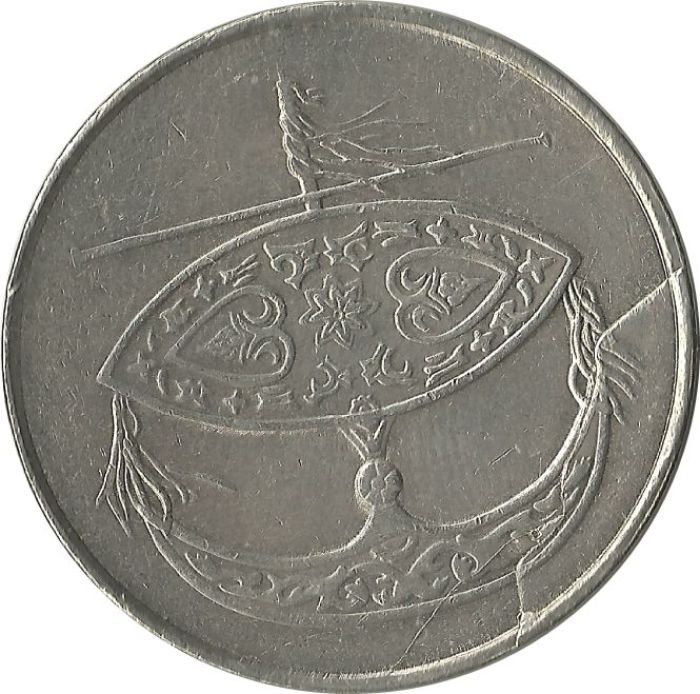
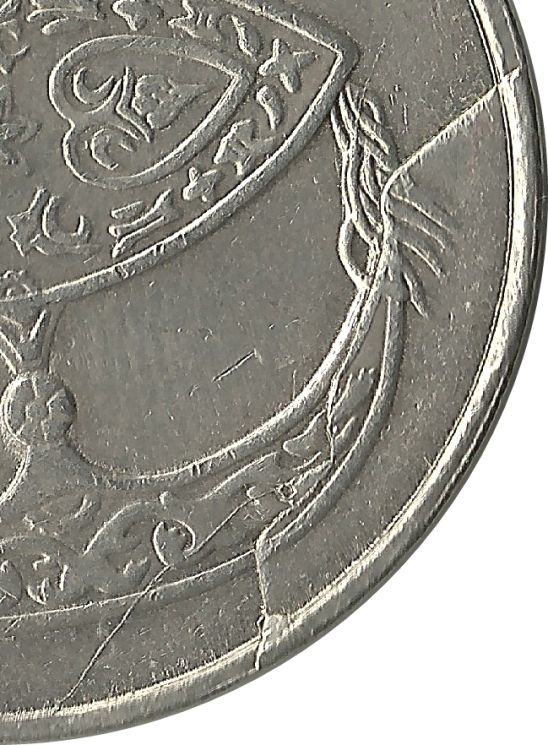
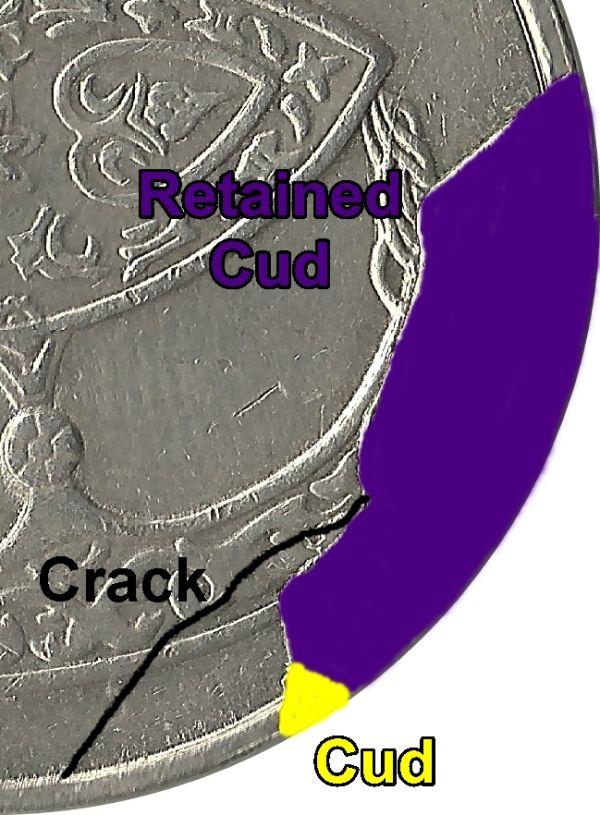
That die was very close to failure. The key to a Retained Cud is the presence of a shift between the parts of the die affected. On the lower die crack, the fields are at the same level on either side of the crack- that area was cracked but still fully attached to the rest of the die. The Retained Cud shows a shift in the broken piece with that area raised slightly higher on the coin. That shift is due to the broken piece of the die sinking in relation to the rest of the die and most likely broke off completely in the next few coins struck after your example.
Disclaimer: While a tremendous amount of effort goes into ensuring the accuracy of the information contained in this site, Coin Community assumes no liability for errors. Copyright 2005 - 2026 Coin Community Family- all rights reserved worldwide. Use of any images or content on this website without prior written permission of Coin Community or the original lender is strictly prohibited. Contact Us | Advertise Here | Privacy Policy / Terms of Use












 Posted 11/25/2012 12:51 am


