| Author |
 Replies: 7 / Views: 2,085 Replies: 7 / Views: 2,085 |
|
|
Valued Member
Australia
64 Posts |
hi All, i have been trawling through the vast amount of threads on bellow setups and I am still confused. i have a Canon 500D that I wish to mount on to a bellow. correct me if I am wrong but I believe I need the bellow and a lens (that will work in manual mode) on the end of the bellows. I have had a look at ebay and the only thing I can find for true Macro lenses are rather expensive. i have an old Olympus SLR and I was wondering if either of the lenses would be suited to fitting on the end of a bellow (with an adapter of course). here are some pics of what I have 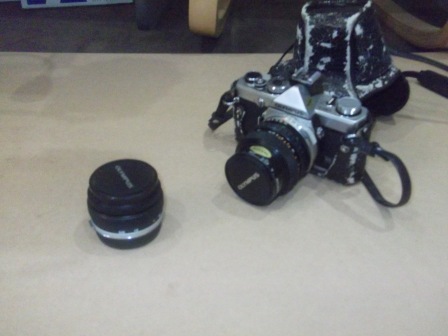 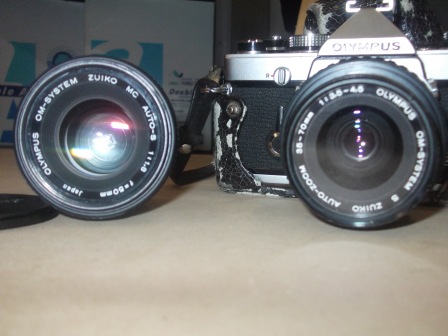 would I be able to use either of these lenses and if so, would I need a macro screw on magnifying lens on the end? |
|
|
|
Pillar of the Community
 United States
4051 Posts |
I'd suggest getting an enlarging lens rather than macro lens to go with the bellows. For enlarging lenses, the following are likely good and relatively inexpensive choices:
Nikon EL-Nikkor 105mm, 80mm, or possibly 75mm if your bellows is short enough
Rodenstock Rodagon 105mm or 80mm
Schneider Kreuznach Componon 105mm or 80mm
There are lots of other choices but these are safe bets. You can get by with cheaper lenses (see my El-Cheapo thread for a wide range of <$30 options) as well and in fact this may be a great way to start your bellows experience.
For bellows, I usually recommend (in order or personal preference)
Canon Auto Bellows FD
Nikon PB4
Pentax Auto Bellows
Vivitar Auto Bellows
The above are fairly available and not too expensive. There are some other excellent choices such as the Vivitar Triple Track, Novoflex Balco, etc but they are far less available. However, if you find one pick it up!
You'll likely need to adapt from the bellows to the lens (FD-M39, Nikon-M39, etc) and from the camera to bellows (EOS-FD, EOS-Nikon, etc) so plan on buying appropriate adapters once you've chosen your lens and bellows.
Ray
PS: forgot to add why I recommend the bellows above...each of them has integrated focus rail. The Vivitar Triple Track, and most Novoflex bellows, do not have integrated focus rail but you can always purchase a rail as an accessory. You will need the rail for focusing with your homemade copy stand since I don't see a height adjustment option with fine adjustment capability...
Edited by rmpsrpms
12/28/2012 8:20 pm
|
|
Valued Member
 Australia
64 Posts |
hi Ray,
yes the copy stand has no fine adjustment so I was looking at either a 4 way focus rail or the bellows you suggested.
do the enlarging lenses fit straight to the bellows or do they need a standard lens with an aperture in between?
Cheers - Geoff
|
|
Pillar of the Community
United States
4051 Posts |
Geoff...the enlarging lenses include an aperture adjustment but no focus adjustment. They need the bellows to provide proper extension for setting the desired magnification. However, they won't generally fit directly to the bellows and thus will require an adapter. For example, if you choose a Canon Auto Bellows and Nikon EL-Nikkor, you will need a FD-M39 adapter to mount the lens to the bellows...Ray
|
|
Valued Member
Australia
64 Posts |
thanks Ray, i have had a look at ebay and added some items to my watch list. I'm also following the El cheapo lens thread as well. Cheers - Geoff |
|
Valued Member
Australia
64 Posts |
one more question, what is the difference between using a macro lens and an enlarging lens?
|
|
Pillar of the Community
United States
4051 Posts |
There are a few differences:
- macro lenses have integrated focusing helicoids while enlarging lenses do not and require a bellows or added helicoid for focus/setting magnification
- macro lenses usually shorten their focal length as magnification increases while enlarging lenses maintain full focal length
- macro lenses are almost always quite large in diameter and thus make getting light at high angles difficult, while enlarging lenses are usually small in diameter
- macro lenses are available new while enlarging lenses are usually only available used
- macro lenses are typically much more expensive than enlarging lenses
There are likely other differences but these are the more compelling ones.
One thing that doesn't get much discussion is the notion of "accuracy". Often folks like a particular macro lens (or any "taking" lens) for the "look" it imparts on the image. This look is the result of careful lens design and varies from manufacturer to manufacturer. An image taken with a Zeiss lens looks different from one taken with a Nikon, and different Zeiss lenses look different from each other even if the measured specifications of the lenses are similar. This can happen with lower quality enlarger lenses as well, but in general enlarger lenses are designed specifically to NOT impart much added "look" to the image, instead simply enlarging the image that is already there as accurately as possible. If the photographer used a special Zeiss or Pentax or whatever lens in order to get a particular look, then he wants the enlarger lens to pass that look along without adding anything of its own. This quality of accuracy in enlarger lenses is one of the factors that I find most appealing, but some folks find the look to be "sterile" or "lifeless" because the image is lacking in those intentional aberrations that they have come to expect.
Contact me for photographic equipment or visit my home page at: http://macrocoins.com |
|
Valued Member
Australia
64 Posts |
wow, I now see the differences.
thanks heaps Ray, your knowledge is of great help to me.
|
| |
Replies: 7 / Views: 2,085 |
|








 Posted 12/28/2012 9:24 pm


