









 Posted 04/04/2013 10:15 pm


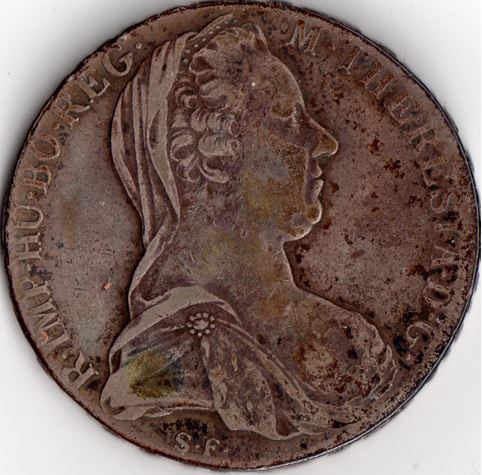
If you follow the Hafner system - yours is an S.F. (with the periods positioned at half height of the letters.) This typically indicates a later restrike.
Earlier restrikes that actually used SF as the mint mark have periods placed at the base of the letters or they have colons.
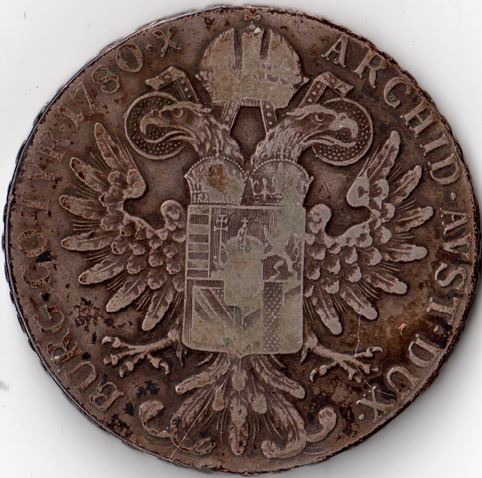
Your coin has a type C shield with the small central point - seen on all post 1850 Austrian re-strikes.
The Cross X is a type e which is preceeded by the stop centered on the letter.
The clasp is type III the oval with pearls.
The diadem has 8 pearls.
The combination fits all of the post 1850 Austrian versions and as such is extremely common.
I know that some specialists subdivide number 50 into many sub-varieties but the value of those smaller varieties is limited by a very small interested group. These minor varieties only bring premiums in MS grades - they are all Trade dollar restrikes.
A coin in the grade range of yours would have to be one of the earlier pre-1850s varieties to get offers above melt and it is not one of those.
Sorry.
Earlier restrikes that actually used SF as the mint mark have periods placed at the base of the letters or they have colons.
Your coin has a type C shield with the small central point - seen on all post 1850 Austrian re-strikes.
The Cross X is a type e which is preceeded by the stop centered on the letter.
The clasp is type III the oval with pearls.
The diadem has 8 pearls.
The combination fits all of the post 1850 Austrian versions and as such is extremely common.
I know that some specialists subdivide number 50 into many sub-varieties but the value of those smaller varieties is limited by a very small interested group. These minor varieties only bring premiums in MS grades - they are all Trade dollar restrikes.
A coin in the grade range of yours would have to be one of the earlier pre-1850s varieties to get offers above melt and it is not one of those.
Sorry.


