| Author |
 Replies: 12 / Views: 1,967 Replies: 12 / Views: 1,967 |
|
|
Valued Member
United States
166 Posts |
Can someone tell if this is a proof or not it is allot more shiny than all of the other nickels 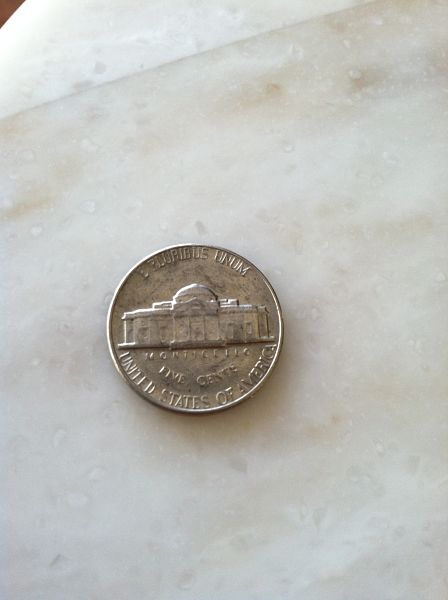 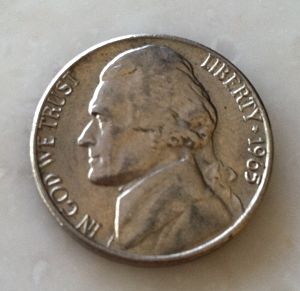 |
|
|
|
Pillar of the Community
United States
2150 Posts |
Not a proof. There were no proofs minted that year. Instead they issued special mint sets which I don't think this came from. A regular business strike from what I can tell.
|
|
Pillar of the Community
United States
3486 Posts |
There were no proof nickels issued in the years '65, '66 and '67.
1964 was that last year for Philadelphia.
1968 was the first year for San Fransisco.
jokingjoker is quite probably correct.
Edited by matthewvincent
04/11/2013 5:33 pm
|
|
Valued Member
United States
117 Posts |
I've had a hard time in the past, trying to figure out proofs from non-proofs, especially when I was roll hunting. But that was before I ever found one. When I saw my first proof coin, I knew without a doubt, it was a Proof. Unless the coin have been circulaed for a very long time, Proofs will catch your eye very quickly, especially with the perfect edges and nice details.
You'll get the hang of it as soon as you find your first proof. Of course I've seen people post pictures of some proofs that you could barely tell. But I'm just looking for the easy, eye appealing ones.
|
|
Pillar of the Community
United States
860 Posts |
Is there any source that lists whether and what mints produced Jefferson nickel proofs year by year? |
|
Pillar of the Community
United States
2150 Posts |
|
|
Pillar of the Community
United States
1620 Posts |
The Red Book has all that and how many they made that year good reference book |
|
Pillar of the Community
Australia
7096 Posts |
Elton JohnOops , sorry misread the thread title  |
|
Valued Member
United States
131 Posts |
I have several nickels from the mid 60s that I wondered whether or not they were proofs. They are MUCH sharper than most nickels. When I did finally find my first proof from this era, there was NO question and I realized the others were probably from the mint sets.
|
|
Bedrock of the Community
Australia
21789 Posts |
|
|
Bedrock of the Community
Australia
21789 Posts |
It has only been since about 1970 or so, that proofs have been made from polished dies and blanks, and specifically marketed at collectors. A cameo effect is made of the details either by sand blasting, or in more recent times, by laser etching.
Personally, I am not keen on the cameo effect, because some of the sharp detail must necessarily be lost.
For this reason, I prefer proof coins made BEFORE about 1970. Proof coins before this time were struck from the best dies, and can be identified by exhibiting very sharp detail true to those dies. They were retained by the mint. They are usually found in FDC (Fleur De Coin) condition. They were sometimes double struck to bring up all of the detail.
Originally, proof coins were made for record purposes, at the START of production and struck with unused dies, and in very limited numbers. They were made for quality control purposes, against which the quality of business strikes could be judged.
They were NOT made for collectors. They DID NOT have polished fields or cameo effect. For this reason, old pRoofs(!), they are usually quite rare, and can be as few as 10 or less in number. If these coins get into circulation, they can be almost impossible to identify.
Production of modern proof coins can be in the millions. When these coins get into circulation accidentally, they become 'impaired proofs', and can be identified by residual polished fields and cameo effect.
|
|
Pillar of the Community
United States
860 Posts |
daniels, I am not familiar with the Red Book. Can you tell me more about it? |
|
Valued Member
United States
140 Posts |
Jon the Red Book is a common nickname for 'A guide book to American coins XXXX' followed by a year because it is simply published annually. Contains information like mintage figures, full colored pictures for just about all of coins minted by the US from beginning till when that book was issued. It does contain a price guide for these coins but the coin prices are so fluid that I would not rely on these figures but as a mere guide. For instance you will be able to find that a 1909 VDB cent goes for decent money while a 1909 S VDB will be listed much higher. You will be able to see which coins are more valuable but I wouldn't take the actual prices and apply them to buying and selling. |
| |
Replies: 12 / Views: 1,967 |
|










 Posted 04/11/2013 5:31 pm


