| Author |
 Replies: 10 / Views: 1,547 Replies: 10 / Views: 1,547 |
|
|
New Member
United States
3 Posts |
My eyes are bleary and there isn't much reference on the web. Hoping someone can help me identify the Sheldon variety of this old coin I found. I believe that coins of this date are hard to come by in any condition, oh yeah this is "environmentally damaged". Thanks in advance for any help. 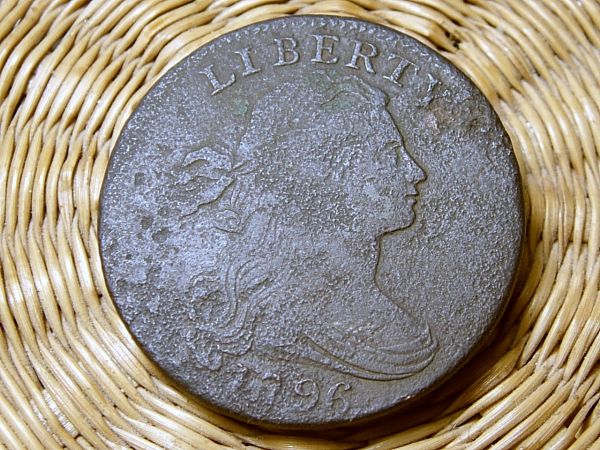 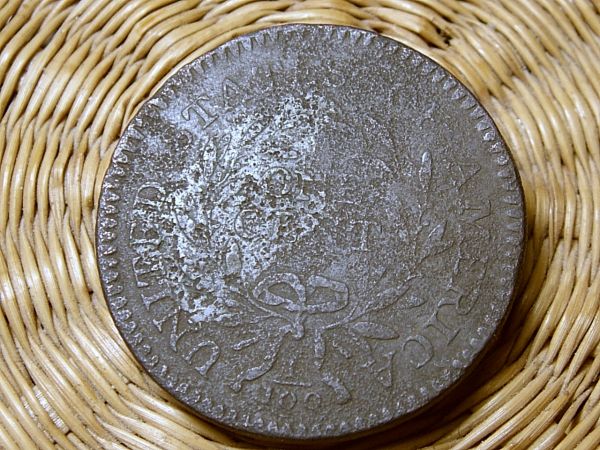 |
|
|
|
Moderator
 United States
23522 Posts |
Welcome to Coin Community, 6ft7ak.
I lack the usual reference materials and am therefore cobbling data together from multiple sources to come up with an attribution. We'll have to wait for better-qualified individuals to weigh in before we're sure, but I'm tentatively calling it S-111. If so, it's a pretty scarce variety.
|
|
Bedrock of the Community
 United States
18899 Posts |
Probably better to post this one on the variety sub-forum
|
|
Moderator
United States
23522 Posts |
Just so you know, we can do that without posting a second thread. As you can see.  Should have done this myself when I first saw the thread; it never occurred to me which forum it was in. |
|
Pillar of the Community
United States
3253 Posts |
I'll go along with SsuperDdave on S-111. I think we can make out a trace of the die scratch that runs from the loop of the 9 to the tail.
|
|
Moderator
United States
23522 Posts |
I had it based on the (fairly common) reverse using the stem length and the leaf relationships with ICA. The obverse came based on the location of the 6, and the spacing of LIB. Those two reduced it to S-111. For the record, 6ft7ak, I did this online using only Heritage Auctions' archives (accessing them is free with registration) and largecents.net. I have no written references for copper.
|
|
New Member
 United States
3 Posts |
Thanks to SsuperDdave and philadelphian! It may be easy for you guys, but all those large cents to me are like looking at babies. They all look like old coins and I am not studied enough to know where to look for differences.
|
|
Bedrock of the Community
United States
17884 Posts |
I'm away at a show and don't have my normal references with me but I agree with S-111. the reverse die is easy to identify. The leaf cluster below M has the leaf points separated at almost a 90 degree angle and the outer point below the right foot of the right upright nails the rev. It was used on S-106 - 111. 106 - 108 have the date widely space and the 6 up almost touching the bust so we can ignore those. 109 - 111 have the 96 close but well away from the bust. On 109 the 6 is noticeably tipped counterclockwise so it is out. 110 and 111 are very similar in date spacing but on 110 the point and top of the 1 are right up against the hair wave, on 111 and this coin the point and top of the 1 are well away from the hair wave.
|
|
Pillar of the Community
United States
2480 Posts |
Conder101-- you're away from your normal references... did you just pull all of that data out of your head? If so, IMPRESSIVE!
|
|
Moderator
United States
23522 Posts |
That's why I listed him as one of my top 3 online references in a recent thread. |
|
Bedrock of the Community
United States
17884 Posts |
Part of it was from memory (the rev die and the elimination of 106 - 109), but I just recently did an attribution on a 108 so I had gone over the details of the pieces with that reverse recently. I also used the Goldberg auction archive of the Dan Holmes early date sale for confirmation.
|
| |
Replies: 10 / Views: 1,547 |
|







 Posted 04/20/2013 2:17 pm





