| Author |
 Replies: 9 / Views: 3,815 Replies: 9 / Views: 3,815 |
|
|
Pillar of the Community
Canada
1106 Posts |
Newfoundland did not become a Canadian Province until 1949 1907 ( Royal Mint issue) 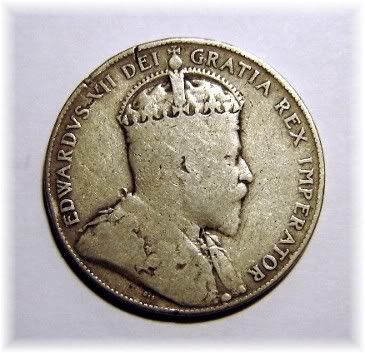 1919 C (Ottawa Mint issue) 1919 C (Ottawa Mint issue)  Edited by chrycopaul
05/13/2007 04:18 am
|
|
|
|
Pillar of the Community
United States
1267 Posts |
Now those are rather interesting.  Ben |
|
Pillar of the Community
Canada
965 Posts |
So, technically, doesn't this belong in the UK forum? j/k
Very nice. One of these days, I'll get my first NL coin. I'm just waiting for the right one to come along.
|
|
Pillar of the Community
United States
4870 Posts |
Wow, you have quite an extensive collection!
|
|
Pillar of the Community
United States
4589 Posts |
Very nice I have a few Large cents, and a few small bur not 50 cent pieces very nice
|
|
Rest in Peace
United States
2684 Posts |
Topher, Newfoundland (and Labrador) were separate Canadian Territories, not part of the UK except secondarily through Canada.
As a point of fact, the Province of Newfoundland was renamed the Province of Newfoundland and Labrador in 2001. Labrador, a third larger than the Island of Great Britain has a permanent population of about 27,000 people and easily comprises the predominant land area of the Province. As a frequent traveler to Labrador and holding a ham radio license for Labrador with a Labrador City address, I consider myself to be a quasi-resident and ambassador of Labrador.
I would love to secure a series of coins for the Province!
Fred
|
|
Pillar of the Community
 Canada
1106 Posts |
Newfoundland was never a Canadian Territory. It was its own political entity within British North America. Just as a matter of information, many people do not realize the France is also a part of North America. There are two small islands, St. Pierre & Miquelon, with a population of about 7000, off the South coast of Newfoundland that are still part of the Republic of France. If you are afraid to fly, it is possible to drive to France with the use of car ferries.
|
|
Rest in Peace
United States
2684 Posts |
OK, ya got me there. Newfoundland and Labrador didn't join Canada until 1948 (officially 1949) and until then retained their independence as separate political entities. So much for relying on my Alzheimer's memory for historical facts and I stand corrected on the territory designation.   Regardless, both regions have a fascinating history ranging from L'anse aux Meadows (site of the first known Viking colony) to construction of the largest hydroelectric project in North America at Churchill Falls, Labrador. St. Pierre and Miquelon Islands just south of Newfoundland are little pieces of France (the only pieces of the French Empire remaining in North America) and are worthy of a separate topic. I'll throw in the Territory of Nunavut for added discussion. Nunavut, split off from the Northwest Territories in 1999 with its capital Iqaluit on Baffin Island joins Newfoundland, Labrador, and St. Pierre and Miquelon Islands with being the least known parts of North America, especially to most folks in the US where geography isn't a major subject. As a ham radio operator, I've been aware of them for years and have made repeated contacts with all, but when I'm operating from Labrador (VO2), I receive back some varied comments such as "Wait a minute; let me turn my beam to South America.", "Isn't Labrador right next to Alaska?", and "What's a Nunavut?". I have many good friends in Labrador and we all do our best to educate the world about the existence and magnificence of the extreme parts of North America, but often it's difficult to convey this to folks who think Seattle is on the Atlantic Ocean.  Fred |
|
Pillar of the Community
Canada
1106 Posts |
Things got interesting last year when Denmark sent a ship to a remote island in the Canadian Arctic and planted their flag and claimed it as their own.
|
|
Rest in Peace
United States
2684 Posts |
As long as it wasn't Ellesmere Island, the Danes could probably occupy whatever they claimed and nobody would find out about it for years unless they started sending out radio signals. That's what got the Germans in trouble when they set up weather stations in the Arctic during WW2 - if they hadn't sent out weather reports back to Berlin, they could still be up there and nobody would know.  |
| |
Replies: 9 / Views: 3,815 |
|










 Posted 05/13/2007 11:04 am


