All-
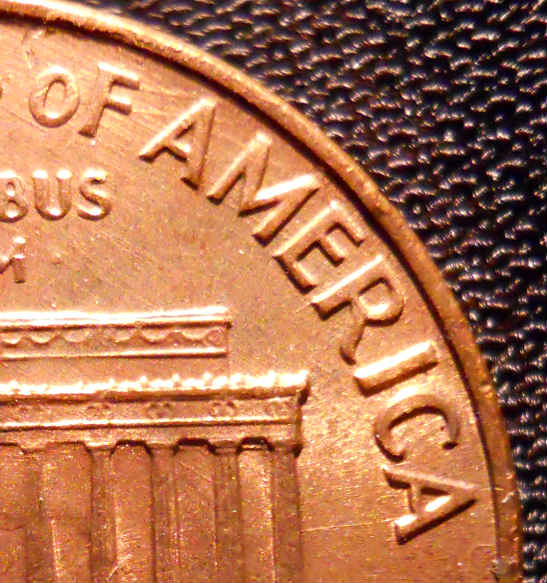
Apologies in advance- I'm pushing the envelope with my point and shoot here, but I wanted to share some images of an interesting cent I found recently.
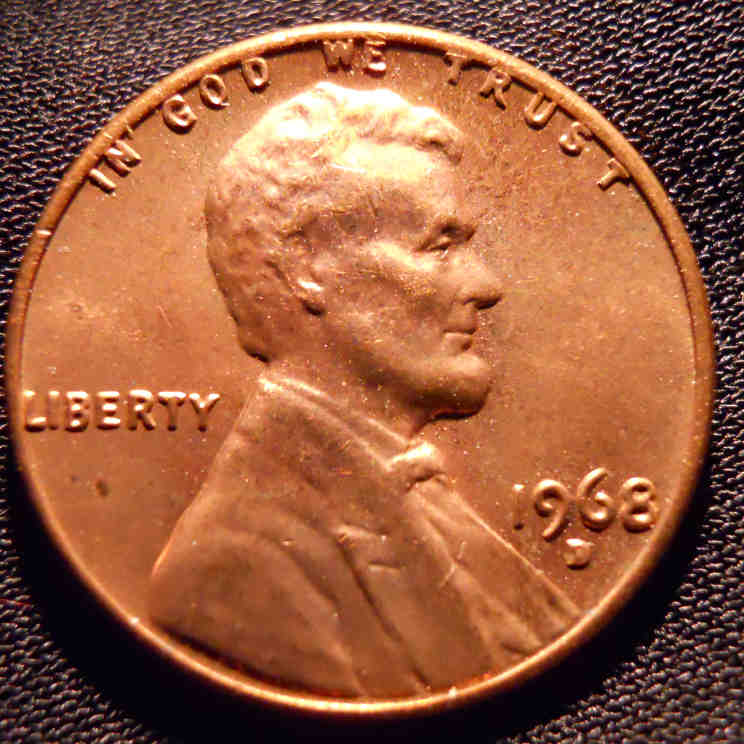
The obverse is fairly typical, though the mint mark appears partially filled:
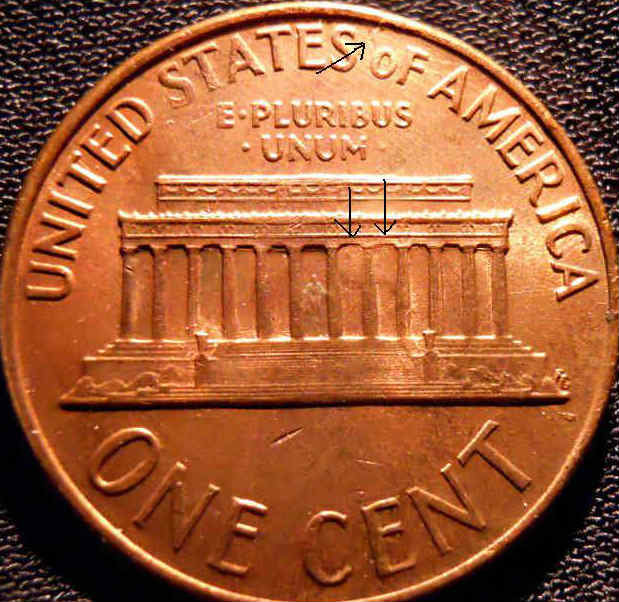
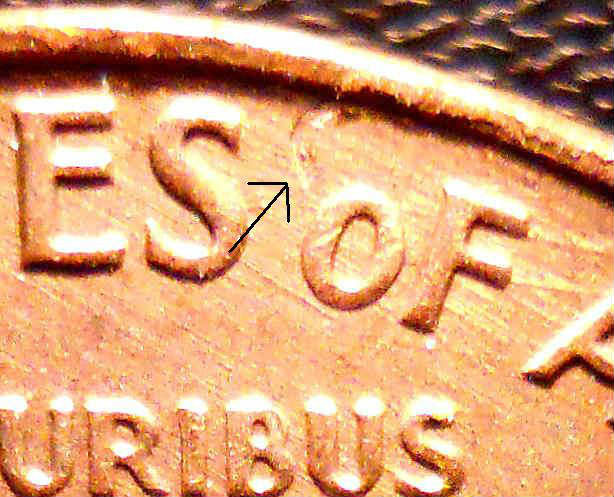
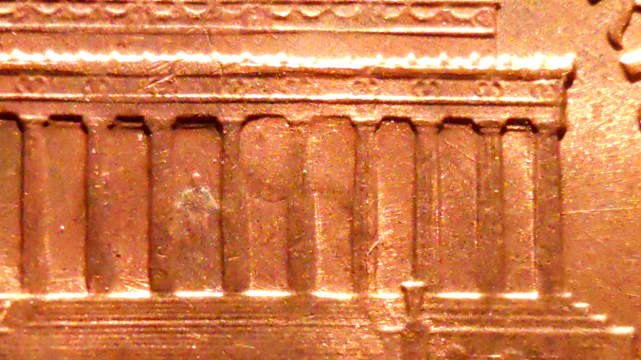
Here's the reverse. The upper arrow points to a barely discernible strike-through (shown below) and the lower arrows point to anomalies between columns 7 and 8.
Here's a poor close up of the strike-through. There was actually a tiny shard of copper still stuck to the rim when I first noticed this, but it has since fallen off while I've been handling the coin.
Here's a close-up of the column anomalies. I always wrestle with the relationships between positive and negative spaces on dies and coins- I'm kind of dyslexic that way. Let's see if I can talk my way through this and have it make sense to everyone else...
If grease were caught in the recessed parts of the die (the columns), then the columns would appear less raised than they ought to- a "positive" element on the die will make a "negative" impression on the coin.
However, the columns appear to be fully raised, therefore the die could not filled with grease. On the contrary, the inter-column spaces appear to be shallower than normal, meaning the high points of the die weren't as high as they ought to be. Perhaps, then, this is a case of localized die wear.
Here's the same with my interpretive lines. Column 7 and especially column 8 appear
narrowed toward the top- perhaps the high points of the die slumping towards the sides- the voids that represent the columns. Likewise, there is a faint raised line (in white here) that runs down the middle between the columns. It doesn't show well here (or at all, really), but it's there- perhaps the start of a crack in the die (though it looks suspiciously straight- like the side of a column).
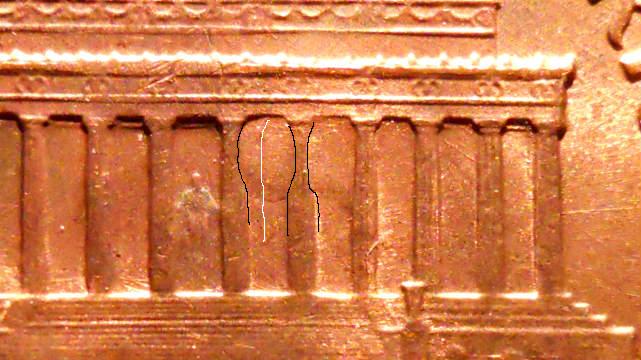
I know the pictures are not really adequate for the task, but would anyone hazard a guess as to what's going on? Am I thinking about this correctly, or is my dyslexia showing? Could it be some sort of grease strike through after all, or some completely different process?
Again, sorry about the pics- they are about the best I can do from home...
cheers,
tbg









 Posted 05/28/2013 10:57 pm