For my 10,000th post, I thought I'd finally get around to posting pics of this coin I bought recently. I bought it off a local coin dealer, who says it came in very unusual circumstances and was assuming it was fake. He just had it sitting in his odds'n'ends tray and was asking far less than a Macedonian tet ought to be selling for.
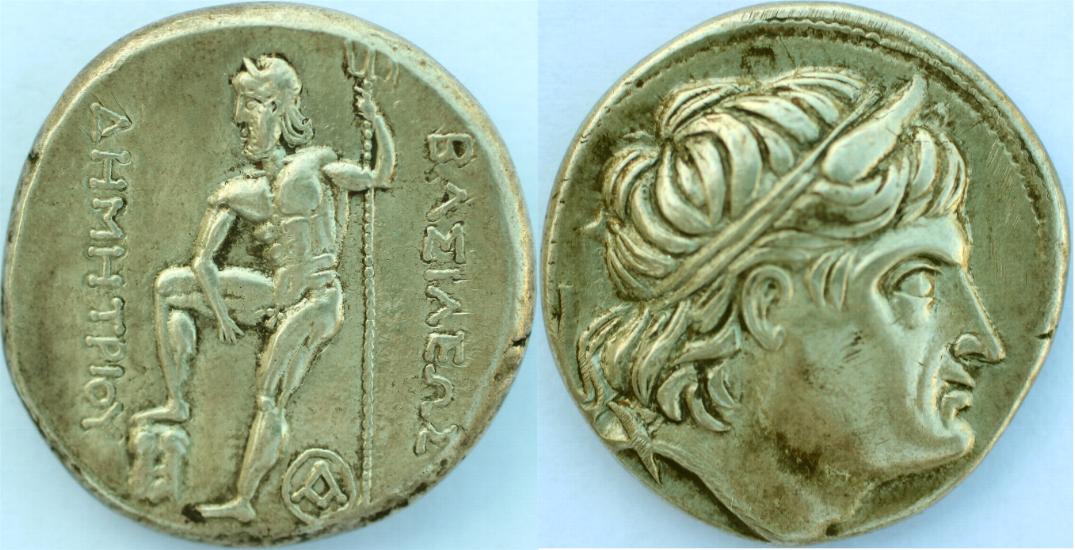
At first glance I agreed with him, and second glances aren't helping its case much. If it is genuine, it's been messed around with, with evidence of smoothing and possibly tooling around the reverse inscriptions. Here are the pics:
Now, my observations.
Cons:
- The delta at the start of the king's name appears to be a space capsule re-entering the atmosphere or something. I hadn't noticed this until I took the hi-res pics. I can't think of any reason why a coin would look like this, unless it's been hacked into by a smoother who either hacked too deep or didn't finish the job.
- The face of Poseidon looks distinctly "Bulgarian", with the bulbous cheeks and flat nose I've come to associate with their modern repros.
- The tarnish - or what's left of it - looks like that spray-on, wipe-off stuff I've seen on both Chinese fake moderns and Bulgarian fake ancients.
Pros:
- Weight is 16.63 grams, which seems more or less OK for the type.
- I've done a comparative magnetic check using tokenmast's "TrueField Detective" diamagnetic pendulum, and it responds similarly to genuine Hellenistic tets in my collection and to modern silver coins of similar mass - so there seems to be a good chance that it's actually silver.
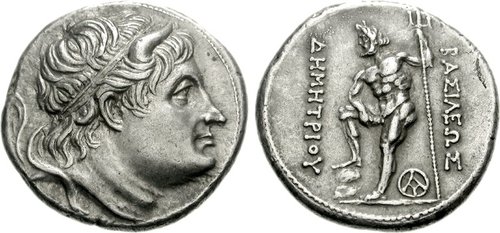
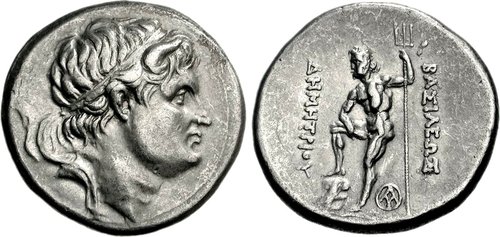
- I can't find a match for the type on the FORVM fake database. For that matter, I can't find a match with this same A-in-circle monogram on any coin database, fake or genuine.
Overall, I'm still inclined to trust my first instincts and assume it is indeed fake. But does anyone have any other observations to make about this piece?
Don't say "infinitely" when you mean "very"; otherwise, you'll have no word left when you want to talk about something really infinite. - C. S. Lewis










 Posted 10/21/2013 06:50 am





