First Page
 Previous Page


 Posted 03/21/2014 04:40 am


Prussia 2 Pfenninge:
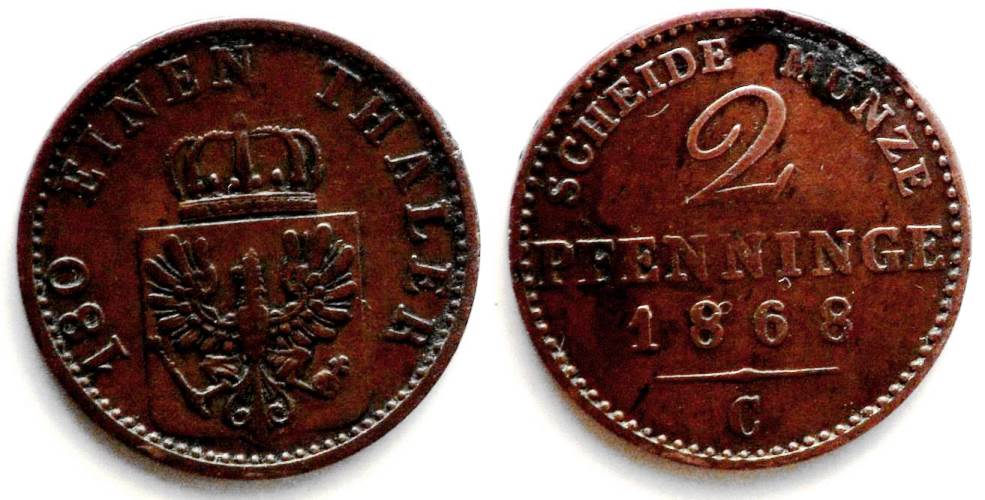
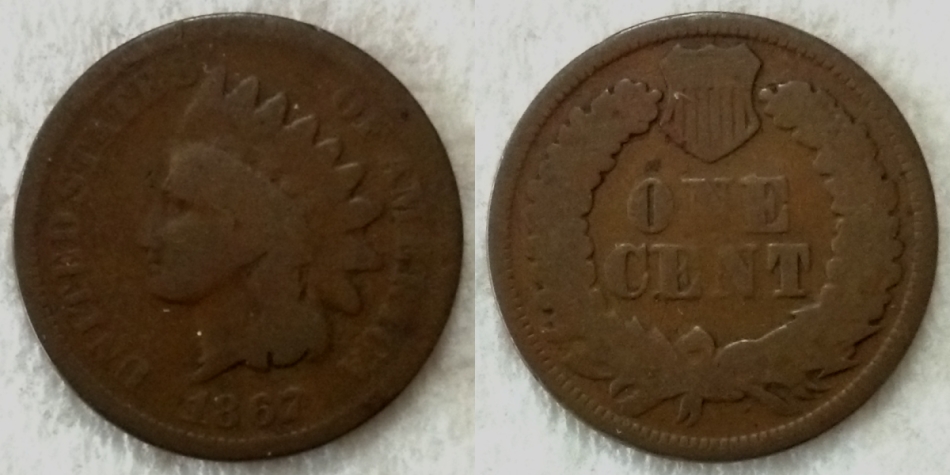
The coin mentions "Scheide Münze", meaning that the metal value was significantly below its face value. While this was the case for almost all copper coins from the 2nd half of the 19th century (the smaller US Cents just being another example), it is only made more explicit on german coinage. I think it's innate to the german culture and language to be over-explicit: use very long words and subsequently abbreviate them, making it harder for foreigners to grasp the meaning.
The 1860's and 70's also was the period when the Thaler coins of the various German states were gradually replaced by Marks. The 2 Pf has the double currency indication:
the fractional "180 einen Thaler", making the Prussian Thaler equivalent to 3.60 Mark.
The coin mentions "Scheide Münze", meaning that the metal value was significantly below its face value. While this was the case for almost all copper coins from the 2nd half of the 19th century (the smaller US Cents just being another example), it is only made more explicit on german coinage. I think it's innate to the german culture and language to be over-explicit: use very long words and subsequently abbreviate them, making it harder for foreigners to grasp the meaning.
The 1860's and 70's also was the period when the Thaler coins of the various German states were gradually replaced by Marks. The 2 Pf has the double currency indication:
the fractional "180 einen Thaler", making the Prussian Thaler equivalent to 3.60 Mark.