| Author |
 Replies: 3,989 / Views: 392,834 Replies: 3,989 / Views: 392,834 |
|
|
|
Moderator
 United States
14463 Posts |
|
|
Moderator
United States
14463 Posts |
|
|
Pillar of the Community
United States
6009 Posts |
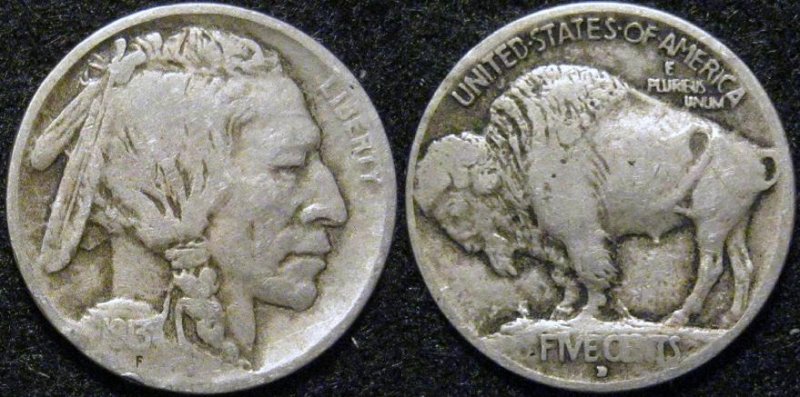
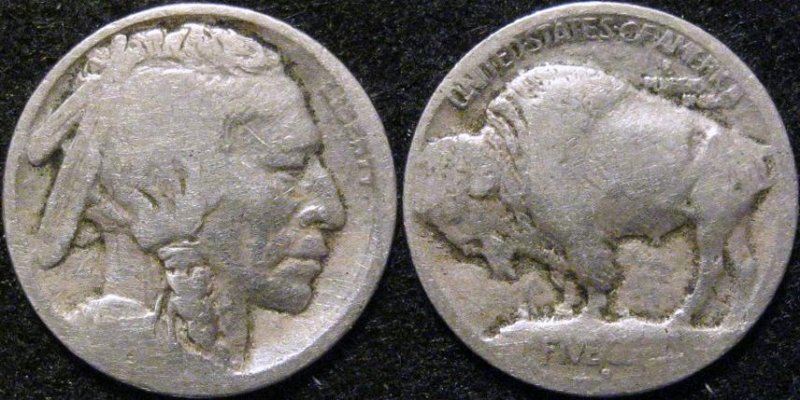
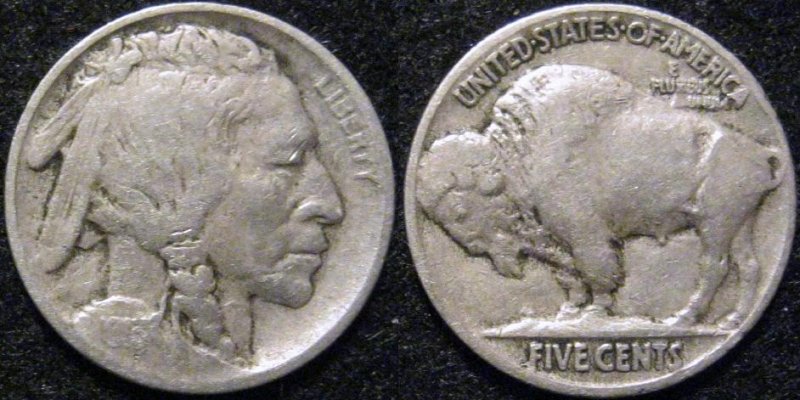
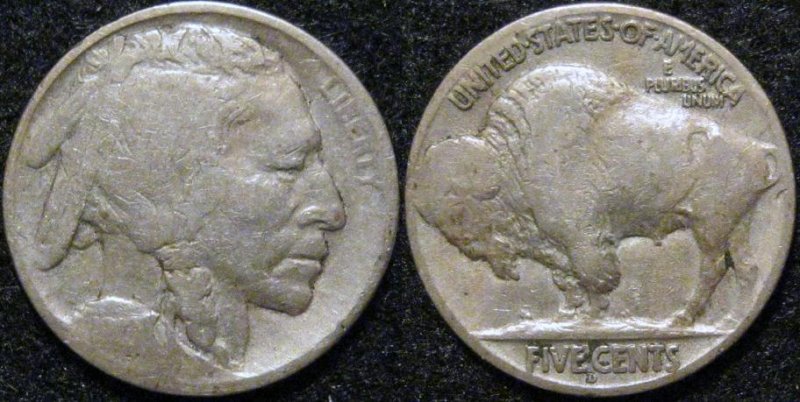
1913: 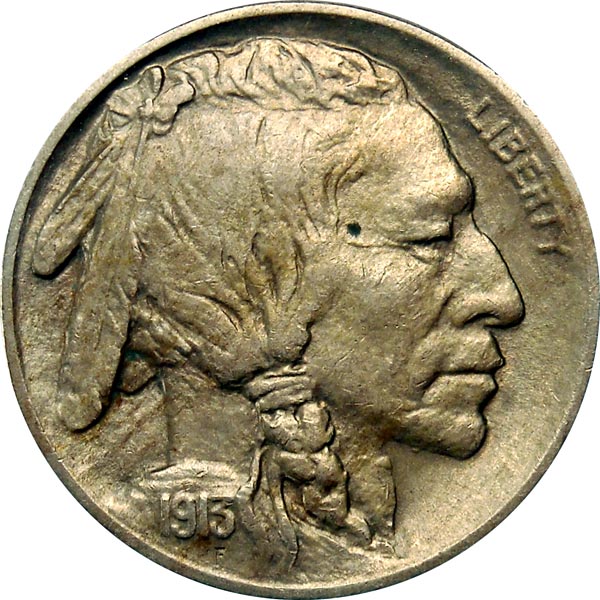 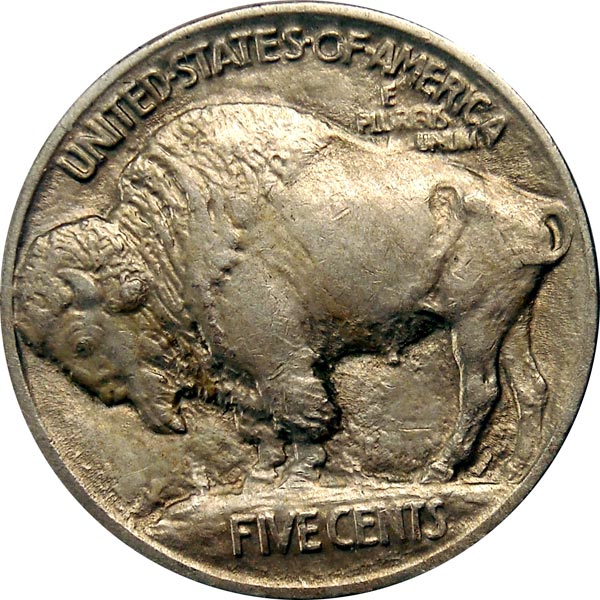
|
|
Pillar of the Community
United States
6009 Posts |
Oh -- and just to add to WheatBack's post from last night, here is the $100 bill in that series: 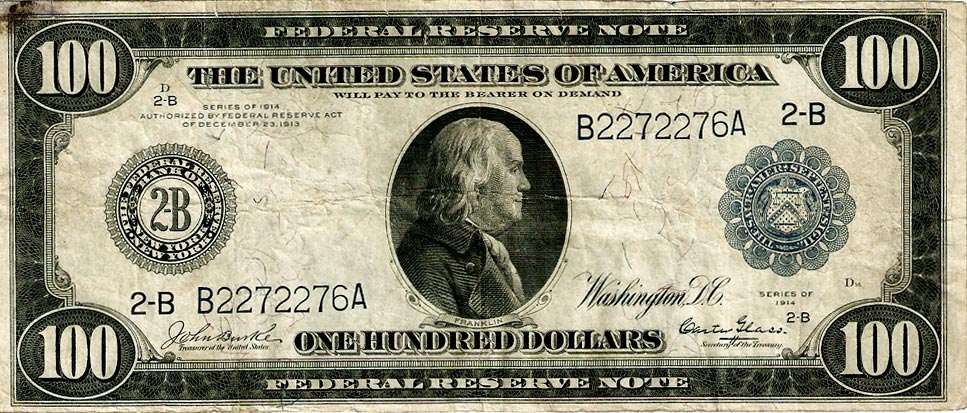  |
|
Pillar of the Community
United States
3544 Posts |
|
|
Moderator
United States
14463 Posts |
|
|
Pillar of the Community
United States
1944 Posts |
received in change from a local target store 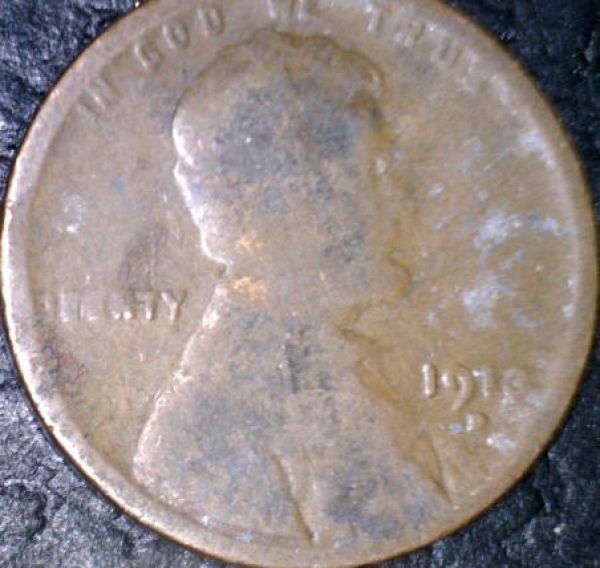 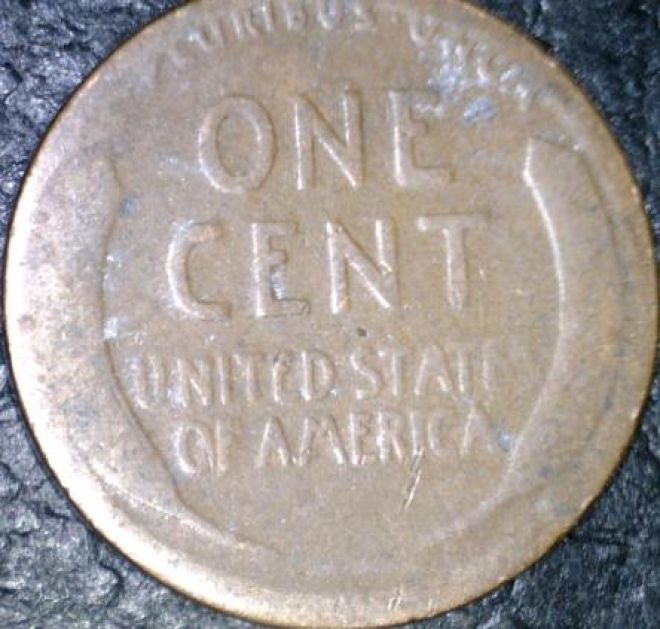 |
|
Moderator
United States
14463 Posts |
|
|
Moderator
United States
14463 Posts |
|
|
Pillar of the Community
United States
7303 Posts |
Fuzzy, looks like 1913 is your year (nice eagle). 1913 s Lincoln Cent  This is my second 1913 s cent. The first was found as a boy in circulation and was traded to my 6th grade teacher for 20 different dated Indian Head cents. They still are in my Indian Head cent folder. |
|
Pillar of the Community
Australia
9796 Posts |
|
|
Moderator
 United States
195559 Posts |
|
|
Valued Member
United States
103 Posts |
One of my favorite German coins from Hamburg.  |
|
Pillar of the Community
United States
1431 Posts |
|
|
Pillar of the Community
 United States
1908 Posts |
Another study in contrast between the light (BU) and the dark (AU-toned): 1913 PRUSSIA 2 & 3 MARK; 0.900 silver; 28mm/33mm; mintage= 1.5 mil./3 mil. : 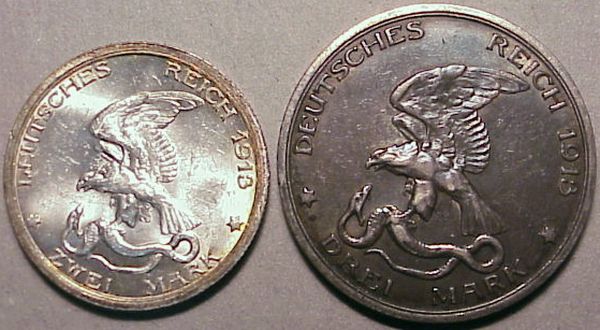 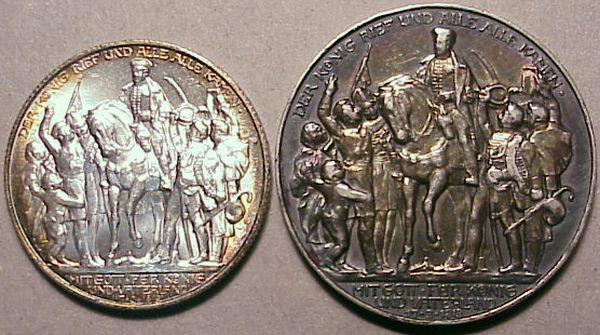 These two coins commemorating the 100th. anniversary of the defeat of Napoleon are a complete set of a one-year type. Quote:
"During the early 19th Century Napoleon's armies moved across Europe with devastating affect. But, all would change in 1812 with Napoleon's invasion of Russia. The severe Russian winter had devastated Napoleon's experienced and feared Grande Armée (an experienced fighting force of more than 600,000) forcing what remained of his armies into retreat out of Russia.
Napoleon's loss became Europe's gain. Not allowing the French nation to re-build its war machine, European nations united and began launching counter-offensives. In the land of the Rhine, the final battle was known as the Battle of Leipzig or Battle of the Nations. By October of 1813, Allied forces were victorious and Napoleon's forces retreated permanently from the Rhine." |
| |
Replies: 3,989 / Views: 392,834 |






 First Page
 Previous Page



 Posted 02/04/2014 06:13 am








_USA_Lincoln_Cent.jpg)