| Author |
 Replies: 9 / Views: 3,589 Replies: 9 / Views: 3,589 |
|
|
Pillar of the Community
Netherlands
1204 Posts |
I saw this denarius of Caligula for sale, what do you think, is it genuine? If so, its a very rare coin. Biddings are already up above 100 euro but I'm not sure, like there are casting bubbles on the obverse tnx! 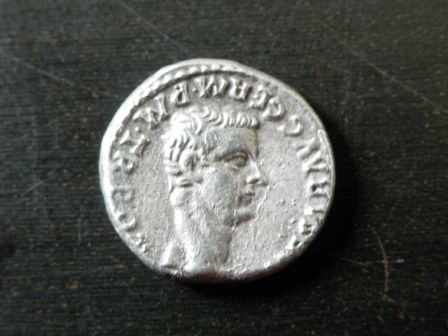 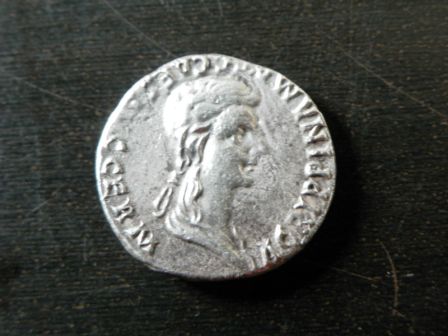 |
|
|
|
Pillar of the Community
United States
2480 Posts |
Looks cast to me. And the portraits aren't right, especially Agrippina.
Edited by ThisIsFun
11/16/2013 06:43 am
|
|
Pillar of the Community
United Kingdom
3626 Posts |
Looks cast to me also. Are those pearls?
|
|
Pillar of the Community
 Netherlands
1204 Posts |
Sold for 240 euros,I hope its real for the seller....
|
|
Moderator
 United States
23731 Posts |
Doesn't look right to me.
|
|
Valued Member
384 Posts |
|
|
Pillar of the Community
United States
5155 Posts |
|
|
Pillar of the Community
Canada
937 Posts |
Your instincts were right on, Dutch. I hope the buyer can get his money back. It's not even a good fake.
|
|
Valued Member
384 Posts |
Its not just the casting bubbles and lines which give this coin away...its also the untoned freshly 'minted' silver. Almost, all silver coins have at least some toning.
|
|
Bedrock of the Community
Australia
21793 Posts |
I have seen some extremely good fake Greek die struck silver come up for auction, albeit described as fake in the lot.
These coins had a fresh made looks about them.
However it must be borne in mind that some freshly recovered from burial silver coins may require acid treatment to remove the inorganic gunk that may have accumulated. Such coins are usually cleaned by professionals in museums, and who know what they are doing.
These also have a fresh silver appearance, and it may take a century or more to develop a nice patination.
One of the easiest ways to distinguish such coins from modern fakes is to look for silver crystallization, which can be present in ancient genuine silver coins.
I agree that this piece looks to be cast, and for the reasons mentioned. I would believe that close examination, looking for silver crystallization, would show this coin to be of modern manufacture.
Things to look for when examining a a suspect fake silver coin:
1. Weight.
2. Style. It should be noted that cast fakes tend to be more accurate in style, because the information to produce the coin has been taken directly from a genuine coin. This is the way with lost wax investment casting.
3. Presence of edge joins, either for electrotype joined halves or for edges of moulding.
4. Edge splits. Important for what you may find INSIDE the split. With a struck coin (real or fake), there should be evidence of tensile failure inside the split. Lack of rough detail inside the split can be a dead giveaway for a cast coin.
5. Character of the patination. This can help confirm or not if the coin is of modern manufacture or not.
6. Fuzziness of the detail. This can trigger suspicion in a coin made from laser optically scammed models used to make spark eroded dies. To remove some of this fuzziness expert tooling is often done on the dies and also on the fake coins produced by them. Close examination with a USB microscope can often reveal this tooling. Dies can also be made by very skilled hand or mechanical cutting.
7. Impossible die combinations.
8. Provenance and pedigree of a coin, and the reputation of who is selling it.
9. Exact copies of two coins. Such examples to prove fake can be revealed by a search in the Internet. This has already been done successfully by quite a few times by CCF members.
10. Presence of file marks or fine polishing on the edge of a coin to remove evidence of joins.
Quite often, suspicions can arise on the close examination of any coin for grading.
Hope this helps.
|
| |
Replies: 9 / Views: 3,589 |
|




 Posted 11/16/2013 06:43 am





