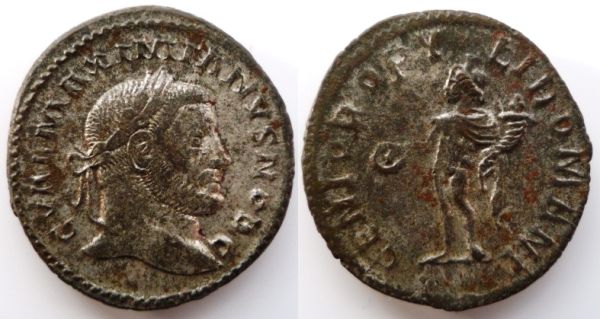
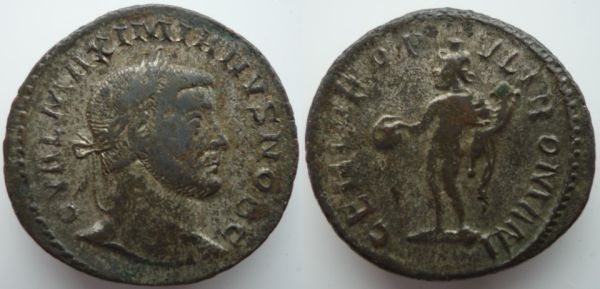
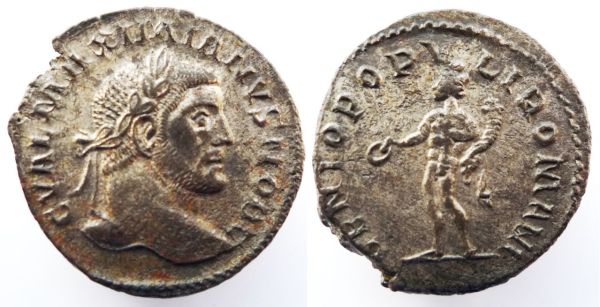
The Best of Billon.
Ah billon, the debased alloy of choice for countless centuries. Billon is often described as an alloy of bronze and silver. Although throughout history billon has contained many metals, zinc, nickle, lead,tin and copper. Debasing coins has been a common practice performed by nearly all empires in one form or another. Alloying metal served to make new denominations and stretch the silver and gold supply to fund sate projects and campaigns. It has also been material for thieves and cheap skates to "skim off the top." Billon or debased coins are rarly pretty after standing the test of time but one this is certain, the all ooze histroy.
For those that are new the Smackdown, acts a contest (with no prize) or a venue to showcase coins from around the Ancient and Medieval world with stated or attribute commonality. Everyone is encourage to attempt and entry, and even those who cannot enter can and should vote, for your top 3 favorites.
Here are the rules
** 5 extra points ***
a) Include the dimensions and a few sentences about each entry.
1) A maximum of three (3) coins per Member.
2) Entries must be debased silver to qualify.
3) Coins after 1650 AD are not allowed.
4) Voting: vote for 3 contestants in order of preference, Gold (3pts), Silver (2pts), Bronze (1pt).
5) Host announces the winner. Winner chooses next Smackdown Subject and is host.
6) You do not have to enter a coin to vote but please do try to enter something.
7) Base your votes on an criteria you like, eye appeal, rarity, quality, anything you like.
8) Final decision if two coins have the same score and the same number of golds and will be the hosts choice.
9) Enjoy.
Entries Begin Immediately and Submission Ends @ 21:00hrs EST
Friday , Voting will begin. Scores will be tabulated and announced on Sunday Jan. 5, 2014 @ 21:00hrs EST.
EXAMPLE:
Rare
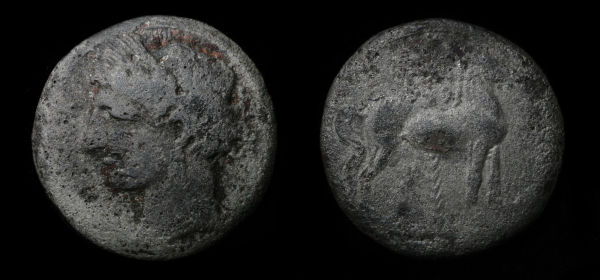
Billon Tridrachm of Hannibal Second Punic War
North Africa, Zeugitana, Carthage
Hannibal Barca s. 210-205 BC
Billon Tri-drachm 25.6mm x 10.54g
Obverse: Bust of Tanit Left.
Reverse: Horse Standing right, Palm tree behind.
ref. Lorber-168
"Coin Hoards Vol. IX
2002 Punic "Horse & Palm" Billon Tridrachms" by C. Lorber
Ar example of a Punic Billon Tridrachm issued under the authority of Hannibal Barca during the second war with the Roman Republic. Precious metal had become extremely rare in The Carthaginian domain at this time. Money was stretched so thin the ladies of Carthage would have their jewelry confiscated and mixed with various metals to produce coins for mercenaries and general commerce.
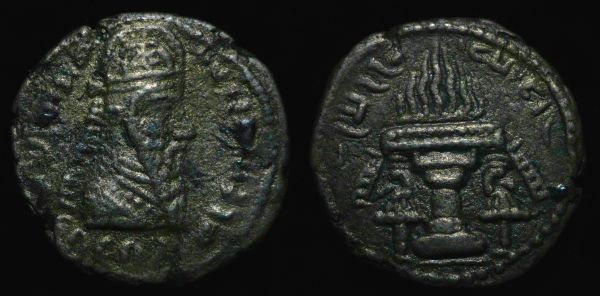
Ardashir I was the first Sassanid King of Persia and he for a time minted debased silver tetradrachms as the Parthian's did for nearly 2 centuries. This coin would be short lived and be replaced by the thin fine silver drachm for all subsequent kings. The coin is of relaticly low silver content but still twinkles in the right light.
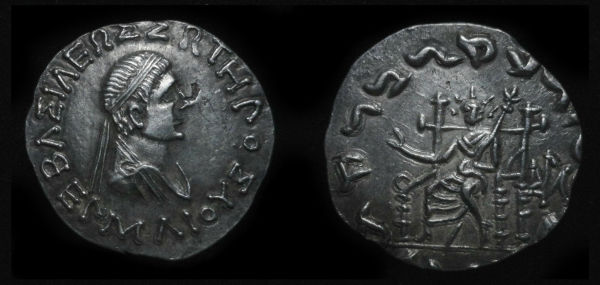
The last Billon coin I will show you is a posthumous tetradrachm of Hermaios. An earlier issue and possibly a late lifetime issue, with a relativly high silver content. During the reign of Hermaios the Greek kings lost control of the silver mines of Afghanistan and would soon fall to the Yue chi nomads, who would become the Kushan Empire. (who only minted gold and bronze)
Greek Kingdom of Bactria
Hermaios 80-75 BC - Afghanistan - Kabul Mint.
AR Tetradrachm 26.8 mm, (9.44g)
Obv: Diademed Bust of Hermaios Greek Legend- EPMAIOY BASILWS SWTHPOS (King Hermaios the Savior)
Rev: Zeus Enthroned with Scepter with arm outstretched; monogram right; Kharoshti legend- I believe the reverse legend reads the same or similar to the obverse. Appealing to the non-Greek speaking populous of the Hindu Kush.
Ref:Bop 10F
Let the Games Begin!








 Posted 12/29/2013 5:54 pm