| Author |
 Replies: 50 / Views: 5,093 Replies: 50 / Views: 5,093 |
|
|
|
Pillar of the Community
United States
7123 Posts |
Hi Prethern I have to tell you to a large degree I am opposed to cleaning or as some would like to call it conserving coins ,, but the fact remains that sometimes it is a choice between losing the coin to damage from corrosive elements which are on them and removing those elements . case in point !! 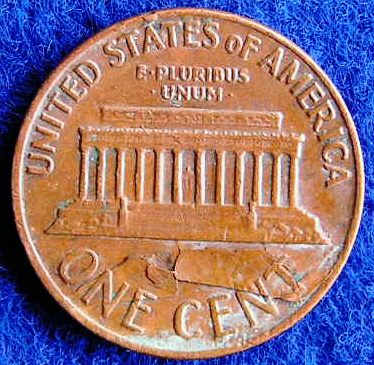 Now I'm a true died in the wool Lincoln man ,, and to find one with such a prominent lamination error makes my day ,, but this coin has problems and if they are not dealt with it will soon be lost to them . I have a process which I use ,, and it works well on most coins ,,I will not go into detail on that process ,,it is really quite volitile and the coin can be easily damaged from it if done improperly . This picture was taken after the initial treatment ,, it is at this point that a decision is made to either retreat the coin or if enough has been removed to satisfy the need of preservation . I decided not to proceed with this coin any further than I have but I will monitor it in its new environment ,,so far it appears stable and that was my desire . 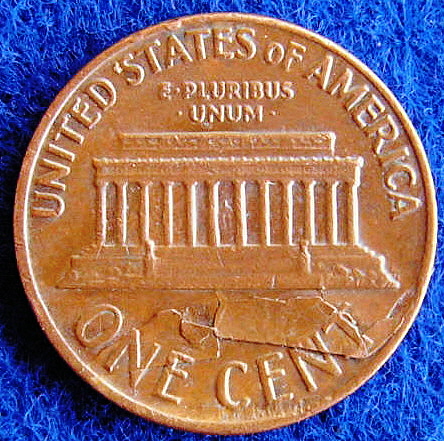 the actual question is not if the coin has value ,, but if not doing something will actually result in the loss of the coin itself .or in this case the loss of something that is really unique although not exactly a retirement coin by any stretch of the imagination . Metalman |
|
Bedrock of the Community
United States
12437 Posts |
quote:
I am opposed to cleaning or as some would like to call it conserving coins
"Cleaning" should NEVER be equated with proper conservation of a coin as they are two completely different processes. Cleaning in the traditional sense involves removing metal from the surface of the coin- either through dipping, polishing, wiping, etc. The important point is that metal is removed and irreparable harm is done to the coin. Conservation is and should be accepted through all fields of antiques including numismatics. Proper conservation should only remove surface contaminates from the coin and nothing else. This process prevents further possible damaging action on a coin without harming the coin itself. The problem is amateurs giving conservation a bad name by messing with it up and ruining a coin  |
|
Pillar of the Community
United States
7123 Posts |
Bio
Your right ,,there should be a definte line drawn between the two activities .
I don't mind being an amateur ,, I certianly could not be called an expert since I have not made conservation a formal area of study .
You think this coin is messed up you should have seen all of the coins I experimented on over the last three or four years to get the process I used down to about a 2 minute project.
Metalman
|
|
Bedrock of the Community
United States
20753 Posts |
Carl: Is there any way you'd recommend to possibly neutralize a coins surface from continuing to corrode, especially if this corrosive green stuff was removed? After removal, is there a procedure you would do immediately to help prevent further corrosion?
Naturally if you read me chemical reaction post of substances that effect Copper or Silver and even Gold, it should be apparent that the best method of protection is isolation. What I mean the best thing to do is preventing a gas or liquid to come in contact with any coin. Note that although people think Gold is immune to tarnishing, it will react with Sulfur type compounds. This would be a Br/Bk discoloration called Ag2S or Gold Sulfite.
Back to preservation. Note that on copper the first sings of exposure to the elements is darkening caused by the first Oxydation process. This is normal. However, if removed or the greenish patina is removed it is like polishing Silver utinsils where you must do it all the time or it turns black.
I've cleaned coins and then left them on a kitchen window sill to darken a bit. However, then into a Whitman Album or 2x2 folder. All my Albums are placed in freezer type bags with most of the possible air pushed out. My 2x2's are usually just stapled on 3 sides but if the coin is valueable the sides are taped with a clear tape in addition to the staples. Note air carries with it all the things you do not want coming into contact with coins. Some areas it is Sulfur compounds. Near pools that are chemically treated there is Chlorine in the air. Then there is that horrible stuff called exhaled breaths from people and animals. Now that is the stuff we must stop.
If you must clean a coin or just want to preserve any coin, just find ways to keep it from the air.
|
|
Valued Member
United States
63 Posts |
I still think you should never clean a coin under any circumstance.... that is just me.
|
|
Pillar of the Community
United States
2600 Posts |
First, I would give a ride on my new Harley Road King for a copy of your formula, Rick. Seems that I remember you in a pic with a Harley posted here on the forum. Thought maybe I could tempt you.  Regarding cleaning, I tend to agree that almost no coin should be cleaned, however, conservation done properly cannot be bad. In some instances though, cleaning becomes a last resort. I went to an auction a few months ago and bought a lot of copper large cents and other copper coins that were beyond recognition. Most were worn smooth. A couple had enough detail that they are in 2 x 2s and two of them looked like they had dried bubbles all over them. No detail was visible on either side, they were obvious metal detector finds. Before putting them in the jar for the nephews and nieces I decided to put them in olive oil first. Now, after about 4 months, they are both coming along nicely and I will post pics in about a month when I end the process. One of them is now 90% legible and is a 1864 Two Cent coin and the other is an 1829 Half Cent. It is simply amazing what olive oil has done for these coins. They have gone from being old discarded pieces of bubble gum to coins that I will be proud to show. Now tell me, how can cleaning off years of crude been wrong on these coins.I only wish I had taken before pics, but they were so bad I just never expected these kinds of results. Jim Hmmm, this thread got me thinking and I just checked the book. It would seem I need to go and see if the 1864 is a small motto. Darn it, Large Motto.  Edited by Jim1953
07/15/2007 9:44 pm
|
|
Pillar of the Community
Czech Republic
803 Posts |
How do you guys feel about reversing the toning, using chemical reaction to convert the silver sulfide back into silver? I've tried this and it appears to be a non-damaging way to "brighten-up" or remove toning, depending on how dark it is. This does not remove any of the silver. It's based on the fact that aluminum reacts with silver sulfide (toning) and in this reaction, sulfur atoms are transferred from silver to aluminum, freeing the silver metal and forming aluminum sulfide.
It's easily done with some hot water, aluminum foil and baking soda.
Let me see if I can find some before and after pictures from my experiments...
~Roman
|
|
Pillar of the Community
Czech Republic
803 Posts |
A-ha! Here's an 8 Reales piece from Lima, which is displaying some unusual characteristics. I wanted to see the damage, as well as surface characteristics under all that toning and used the above mentioned method to get the following results:   ~Roman |
|
Pillar of the Community
United States
2600 Posts |
Two, tell me more about this. Jim  |
|
Pillar of the Community
Czech Republic
803 Posts |
|
|
Bedrock of the Community
United States
20753 Posts |
How do you guys feel about reversing the toning, using chemical reaction to convert the silver sulfide back into silver? I've tried this and it appears to be a non-damaging way to "brighten-up" or remove toning, depending on how dark it is. This does not remove any of the silver. It's based on the fact that aluminum reacts with silver sulfide (toning) and in this reaction, sulfur atoms are transferred from silver to aluminum, freeing the silver metal and forming aluminum sulfide.
It's easily done with some hot water, aluminum foil and baking soda.
Let me see if I can find some before and after pictures from my experiments...
~Roman
Your partially correct. However, that reaction does not replace the Silver in the same places it came from. It just deposits it back to the coin but anywhere at all. This process will naturally make the coin look shinny but as usual, it can be detected and would be considered cleaned. Any process that is used for cleaning can and is detectable be the grading services. As long as a person doesn't care about attempting to sell such coins, probably doesn't matter what you do with it. This is the same pricipal of completely modifying an antique to look pretty. For example you can take a few hundred year old chair and sand it down, put new varnish or paint on it, but it is now ruined as an antique. True it could still be sold for something, but the most massive value is gone.
|
|
Pillar of the Community
Czech Republic
803 Posts |
Carl, at 20x I saw nothing additional deposited on the surface of the coin. The only thing pointed to this procedure were a couple microscopic blueish "burn" spots where aluminum was in contact with silver during this electrochemical reaction. In any case, it served my purpose and I simply suggested it as an alternative to dipping (if one feels necessary to do so in the first place).
Myself, I appreciate a nice, "crusty", coin for my primary collection. I use acetone to remove organic surface contaminants from all my silver coins. When I worked in IT a few years back, we used pure acetone to clean glass strands for fiber optics, which was proven to leave no residue after evaporating.
~Roman
|
|
Pillar of the Community
United States
1173 Posts |
Antiques of all sorts that have been damaged in any of many ways can be and should be restored/conserved to prevent further deterioration and loss of value. Value, as a matter of fact, is often enhanced by the conservation/restoration efforts. Such activities are best undertaken by experts, and should focus on maintaining the fundamental integrity of the piece. Of course, buyers should be made aware of the conservation efforts.
The flag that inspired the Star Spangled Banner is currently being restored by the Smithsonian. I guess if it was a coin, we'd just let it corrode away to nothing and pat ourselves on the backs for our lack of effort.
I am NOT endorsing wholesale cleaning of coins...but coins that are being slowly but surely destroyed by corrosion are prime candidates for conservation. Maybe that is nothing more than sealing them in airtight holders if that is sufficient to prevent further corrosion. If something more drastic needs be done, so be it. If such coins are put on the market at some later date, the seller needs to be perfectly honest with potential buyers about the history of the coin.
|
|
Pillar of the Community
United States
2600 Posts |
Roman, when you say pure acetone, is this the what is available commercially to the avg Joe? And, if not, where can you find it?
Jim
|
|
Pillar of the Community
Czech Republic
803 Posts |
Jim, we used Reagent-Grade Acetone, but as long as it's pure, it should be safe to use on coins. You can pick-up pure acetone in any major hardware store.
|
| |
Replies: 50 / Views: 5,093 |








 First Page
 Previous Page


 Posted 07/11/2007 2:37 pm


