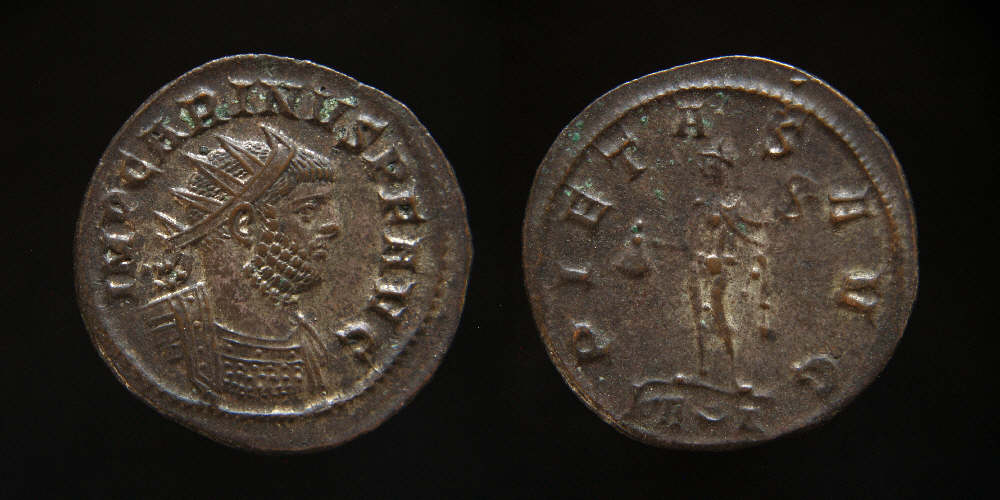
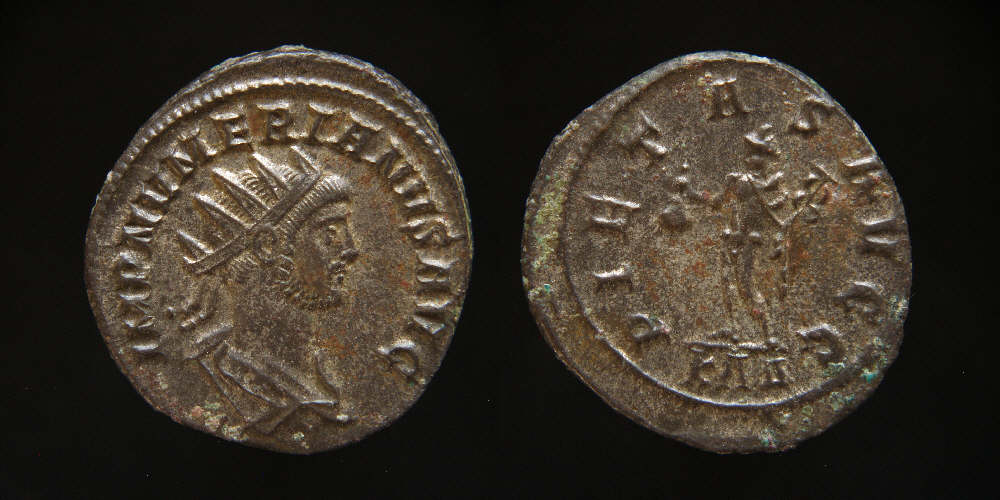
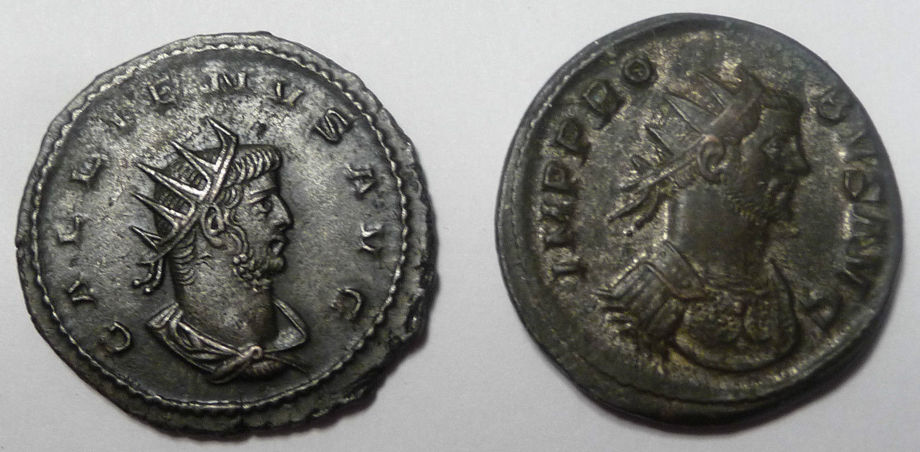
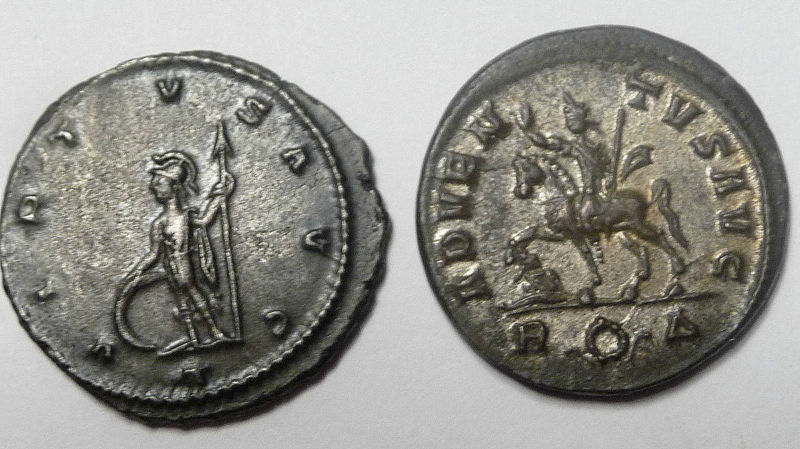
Well, if you follow the trends in silver coinage at the time it's almost a logical progression.
Denarii started out as basically totally silver. When mined from the ground silver has some impurities, and these remained, but besides that (and the occasional unscrupulous mint worker who threw in some bronze and stole some silver) they were about as close as they could get. In times of war they would sometimes debase the silver, and the denarii made then would end up getting traded much longer than normal, because it made less sense to melt it back down when you could spend it as a regular denarius even with the lower silver content. This is one of the reasons that the really cool Marc Antony denarii are usually in terrible shape; there is evidence that some were circulated for over 200 years.
So then people started figuring something out: if I'm running short on silver, all I have to do is put a little less silver in a coin and I can make more of them! And they look practically the same, so it's basically free money! (Inflation was not well understood in the ancient world.) Nero was the first to make a policy of debased money in Rome, going from 4g of silver to 3.8g (64 AD). By the time of Septimius Severus (190s AD) it was down to 1.82g.
Around that time people started wondering if maybe this was a problem and Septimius' son and successor Caracalla decided to make a new type of coin, the double denarius (commonly known as the Antoninianus, based on one of Caracalla's real names.) The reason it isn't commonly known as the much easier to spell double denarius is that it wasn't actually the silver weight of two denarii; it was the equivalent of 1.5. People realized this quickly and hoarded the denarii, but the denarii ceased to be minted after a while.
The antoninianus was also debased, being reduced to 40% silver by 240 AD (still looks about right), to 30% silver by the 250s (wait a minute, why is this so much less shiny than my old coins?), 20% silver by the 260s (why'd you put silver in this bronze coin?) all the way to the 'who's leg are you trying to pull here' level of less than 5% silver in the 270s. This was an era of great trouble for the empire, and it must have been blindingly obvious, particularly on pay day.
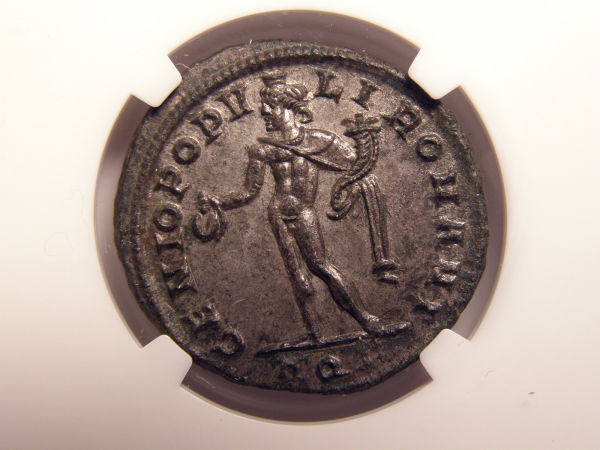
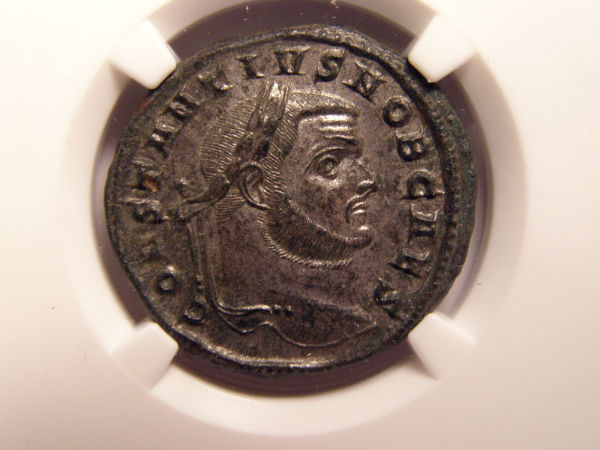
So along comes Diocletian who decided, like he did for most things in the Empire, that the currency system had to change. He declared that there would be a pure gold coin (the Solidus, which was wildly successful), a pure silver coin (the Argenteus, which was not successful), a 5% silver coin (the Follis, which was somewhat successful), and a couple other smaller bronze coins that didn't really take off. Do note that those names, other than the Solidus, were given to the coins by historians. Somehow we don't know what they actually called them.
To get to the end of a long story, the follis, and some later double denarii from just before this period, were silvered. The method isn't exactly pinned down but it was very likely what I described earlier, where the <5% silver blank was soaked in an acid that attacked the bronze but left the silver, leaving it coated in porous silver. Once the blank was struck the silver was smoothed out and the coin looked basically silver. It was really the only way to make it clear that there was any silver at all in the coin. Whether this was a purely psychological ploy and everyone knew it was a thin layer or it was done to take advantage of those that didn't know I don't know, but it didn't seem to work that well in either case, and the western empire would experience massive inflation issues for the rest of its existence.
Here are some examples of the degradation of the fineness of the silver coins during the crisis of the third century:
http://en.wikipedia.org/wiki/File:D...ninianus.jpg







 First Page
 Previous Page


 Posted 05/19/2014 7:46 pm