I can solve part of the mystery for you - you don't have a 1790 CC, you have a 1790 AP - a variety not listed in Krause.
Here's what a 1790 CC looks like. I couldn't find an example of the 1790 AP on CoinArchives.
This of course, answers one riddle but creates a new one: Does it's absence from Krause mean anything significant? And we still haven't answered your original question, what does AP stand for?
I can't really answer either of those questions. "AP" should be the mintmaster's initials, but Krause inexplicably stops it's list of mintmaster's marks in the 1750's. Maybe nobody knows? Whoever he was, AP continued his mark on Neapolitan coins until 1803, but the 1800's Krause doesn't list the mint officials at all for this state.
The non-listing of a 1790 AP 1 grana in Krause could simply be an accidental omission, and the coin is common enough. The 1600's and to a lesser extent the 1700's Krauses do have several errors and omissions, particularly in the minor denominations.
It could, of course, be non-listed because it's a super-rarity that Krause has never heard of. We'd need an expert in the Italian series to tell for sure.
Don't say "infinitely" when you mean "very"; otherwise, you'll have no word left when you want to talk about something really infinite. - C. S. Lewis










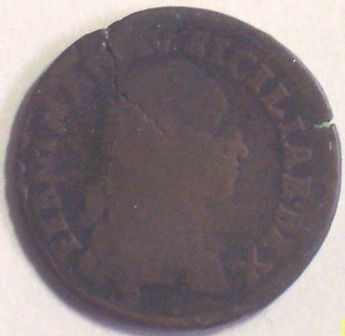 1 Grano 1790cc 001.jpg
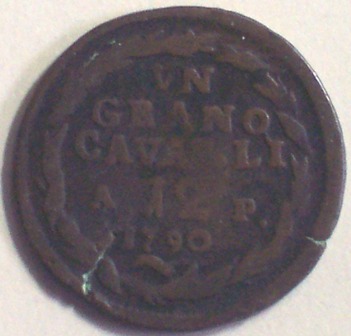 1 Grano 1790cc 002.jpg


 Posted 07/24/2007 08:04 am


