

 Posted 04/27/2014 7:45 pm


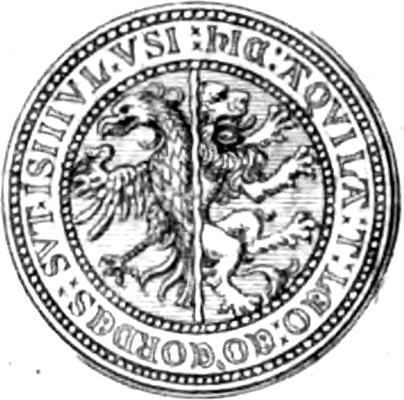
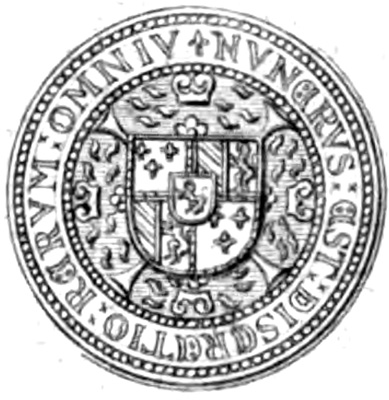
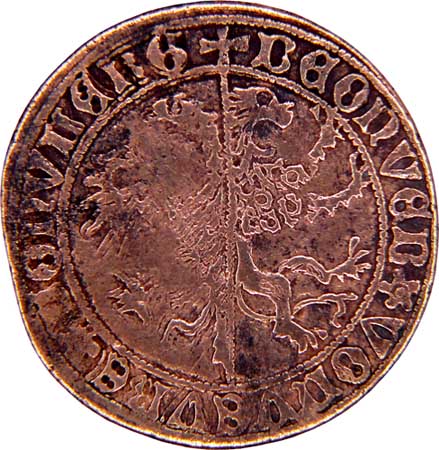
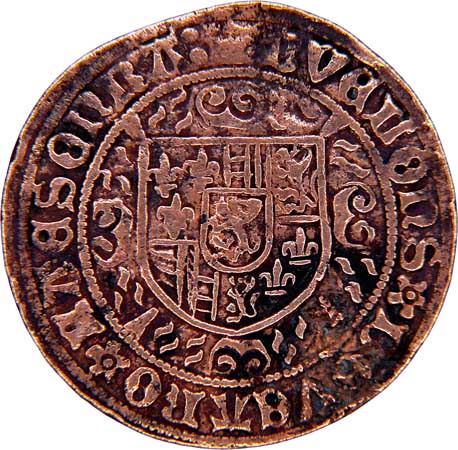
The shield on the reverse carries a crude representation of the arms of Burgundy. In this form, the arms were borne by Philip the Good and Charles the Bold, but the left half of the obverse figure would appear to be half of the Habsburg double-headed eagle. These two families were joined when Charles' daughter, Mary of Burgundy, married the Holy Roman Emperor Maximilian I. So it's Mary's arms on the reverse, and the obverse represents the union of the Habsburg eagle and the lion of Flanders. A Low Countries jeton of 1477 commemorates their marriage negotiations in this way:
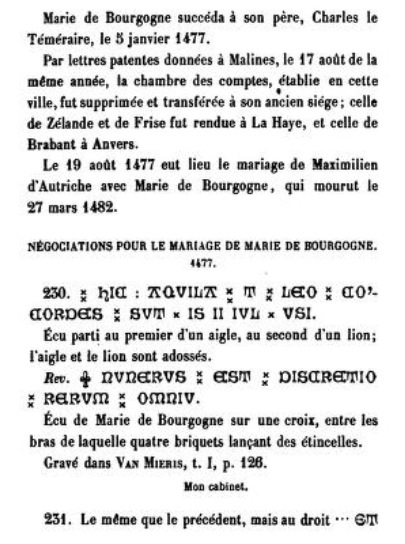
Your jeton's legends don't read this way, though. In fact, they don't read in any particular way at all. They appear to be "fictitious legends," typical of the Nuremberg jeton-makers of the late 15th and early 16th centuries. I found at least one Dutch forum thread referring to there being many of these copies of the original 1477 jeton, believed to have been made into the 1520s, with the fictitious legend suggesting a Nuremberg source.
Your jeton's legends don't read this way, though. In fact, they don't read in any particular way at all. They appear to be "fictitious legends," typical of the Nuremberg jeton-makers of the late 15th and early 16th centuries. I found at least one Dutch forum thread referring to there being many of these copies of the original 1477 jeton, believed to have been made into the 1520s, with the fictitious legend suggesting a Nuremberg source.