Quote:
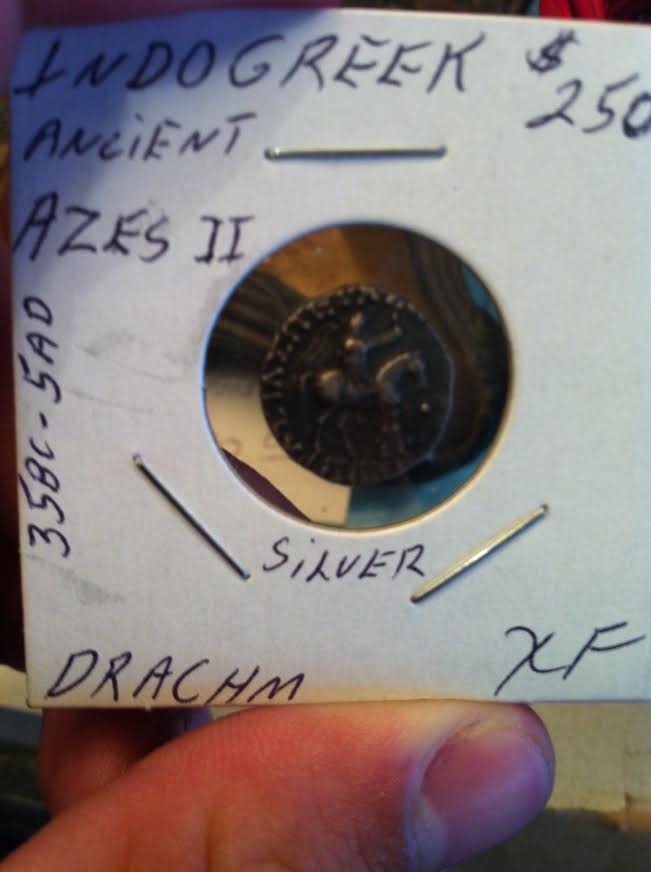
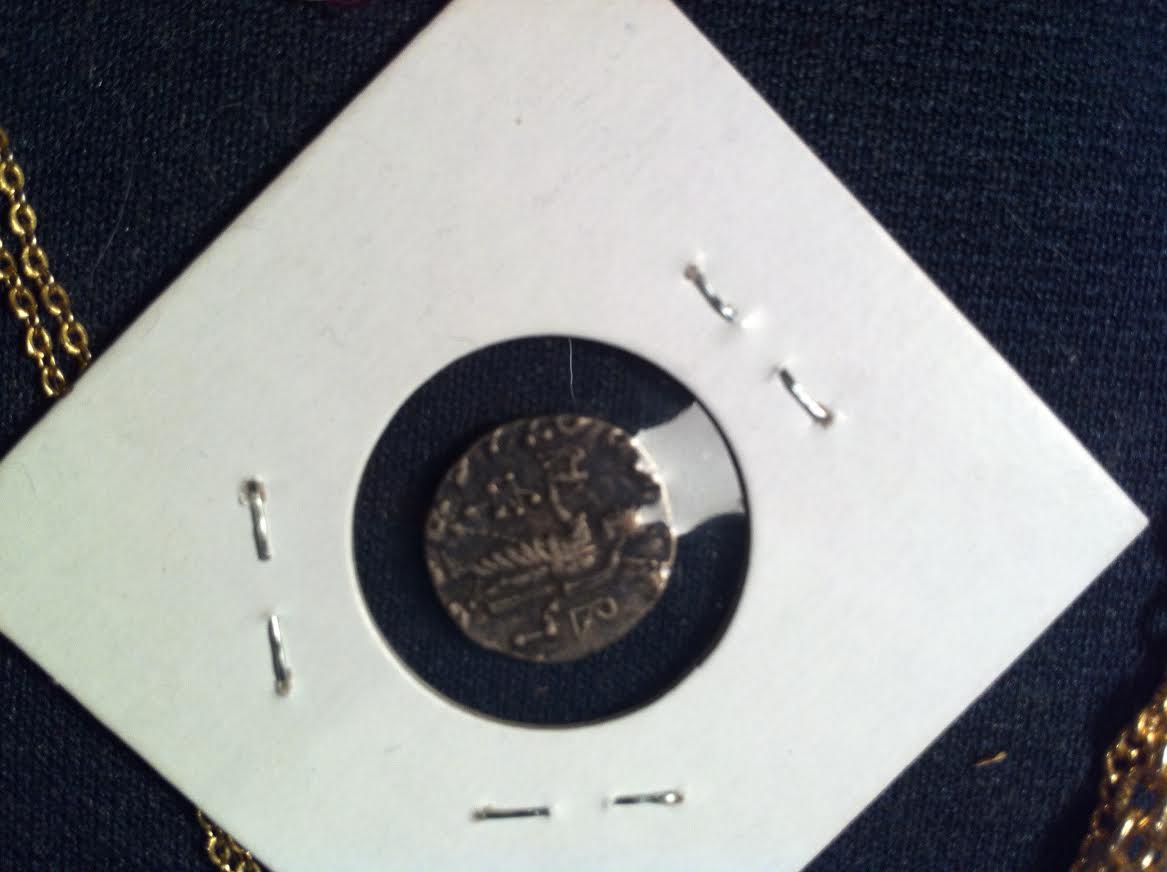
what is the history behind this coin and Mr Azes II .
This coin comes from the coinage series known as "Indo-Scythian", rather than the "Indo-Greek" written on the 2x2.
Alexander the Great conquered the territory we now call Pakistan and Afghanistan from the Persians sometime around 330-328 BC. The area was known as Bactria. After Alexander's death his empire was partitioned and the Seleucid kingdom based in Syria
inherited Bactria. In 225 BC, a local governor in Bactria seceded from the Seleucids and founded the Bactrian Kingdom. The Bactrians eventually annexed parts of what is now India, but their kingdom too soon fractured and split into numerous kingdoms and dynasties. This is the "Indo-Greek" period, roughly 230 to 130 BC.
Barbarian nomads, known as "Scythians" to the Greeks and "Sakas" to the Indians, slowly moved south during this same time, taking over some of the weaker kingdoms and eventually assimilating them all. This was the "Indo-Scythian" period.
The Indo-Scythians, being barbarian in nature, kept few records of themselves. In most cases, the coins themselves are just about the only evidence we have for the existence of the kings named on them.
In the case of your king, Azes II, even this is in doubt. There was certainly an Indo-Scythian king named Azes, (
Azes I), who ruled roughly from 58 to 35 BC. A King named "Azilizes" ruled at about that same time, though whether he was a son, brother, joint ruler, heir, rival or usurper is unknown. A king named "Azes" also ruled around 35 BC to 12 BC, though it is unknown if this ruler (called "Azes II") is in fact a separate ruler or the same person known to history as "Azes I". There is a clear break in the coinage design at 35 BC, marking the boundary between "Azes I" and "Azes II" coins. Azes II coins are also typically more debased, so it is speculated that at least some of the Azes II coins was issued by other kings (who were not actually named Azes), who hoped to get their cheap debased coins accepted on par with finer Azes I coins.
Don't say "infinitely" when you mean "very"; otherwise, you'll have no word left when you want to talk about something really infinite. - C. S. Lewis









 Posted 05/17/2014 8:06 pm





