Okay. Six of those cost $6 each, three cost $4 each, for a total of $48.
Only eight coins listed below, because one coin I thought was a rarity turned out to be common and unidentifiable (sure, it has pretty decent details, but like 80% of the legend is off the flan, and the rest is enough to identify the type but not the mint or ruler). A lot of the others are also not what I thought, but not bad enough to discard

Photos might be incoming if I get lucky.
First, the certain Romans:
Valentinian II? [seller told III] AE4 (14x12mm)
[DN V]ALENTINIANVS PF AVG/SALVS [REIP]VBLICA[E]
Victory standing dragging something (I think)
Theodosius I AE4 (12mm)
[D]N THEODO-[SIVS PF AVG]/[GLORIA REI]PVBLICE
Campgate, 2 towers (and apparently 5 levels)
Julian II? [sold as Marcian] AE4 (12mm)
[...]IANV-[...]/unreadable, someone standing
A Tesorillo check of plausible rulers confirmed this is definitely not Marcian, and probably Julian II, type 117.
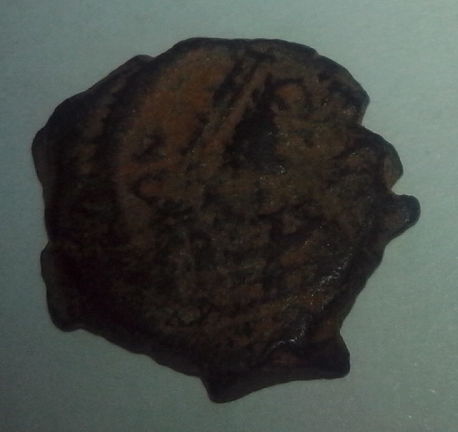
Leo I AE4 (10mm - that's the second smallest coin in my entire collection, after the Peter I kopek)
DN LEO[...]/monogram
Apparently, coins of this type showing any legend are highly uncommon... hope I'm indeed that lucky.
...and an AE3 (16x14mm) front-facer, apparently of the Constantinopolis type (Tesorillo 6), that has the legend with the specific name almost entirely off flan (I can just about see lower sides of three lines after DN, which means it's probably not Honorius, but Arcadius vs. Theodosius will require knowledge of spacing... my bet's on Arcadius).
Then the two Byzantines...
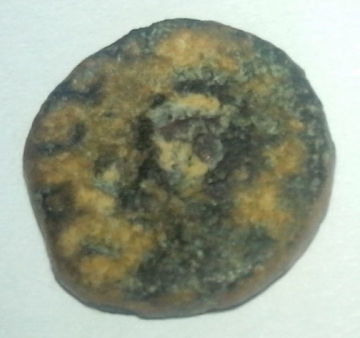
Justin I pentanummium (13x12mm)
DN IVSTINVS PP AV/Tyche? seated, reversed epsilon upper left
This is kind of an upgrade over my previous example, in terms of having basically a full and entirely readable legend (OTOH, there's less detail on Tyche - if apparently only because of too much patina).
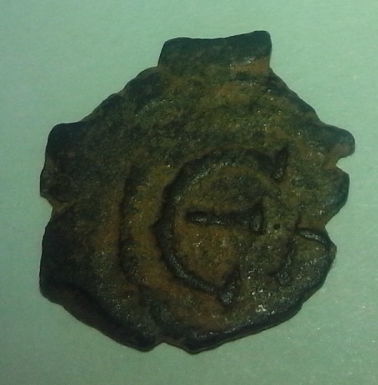
? pentanummium (16mm irregular)
DN... [rest obscured by patina]/epsilon, cross right, all in circle
No idea when is this one from (other than "Byzantine"). Can't find any images that even roughly fit this irregular 16mm monstrosity.
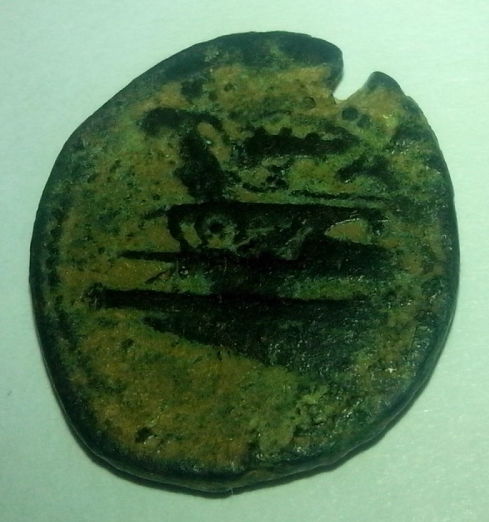
And the coin that is apparently neither:
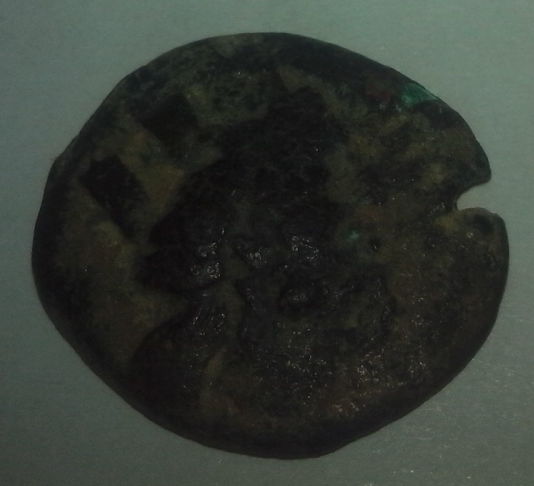
AE18 (18x17mm)
Bust? right in turreted crown/prow of galley
[This was sold as "2nd century antoninianus", which it clearly isn't for several reasons; some googling led me to "Arados, Phoenicia", which appears at least slightly more likely.]
...I know these descriptions are probably not enough; but any ideas whether I did well or badly?







 Posted 06/01/2014 11:33 am