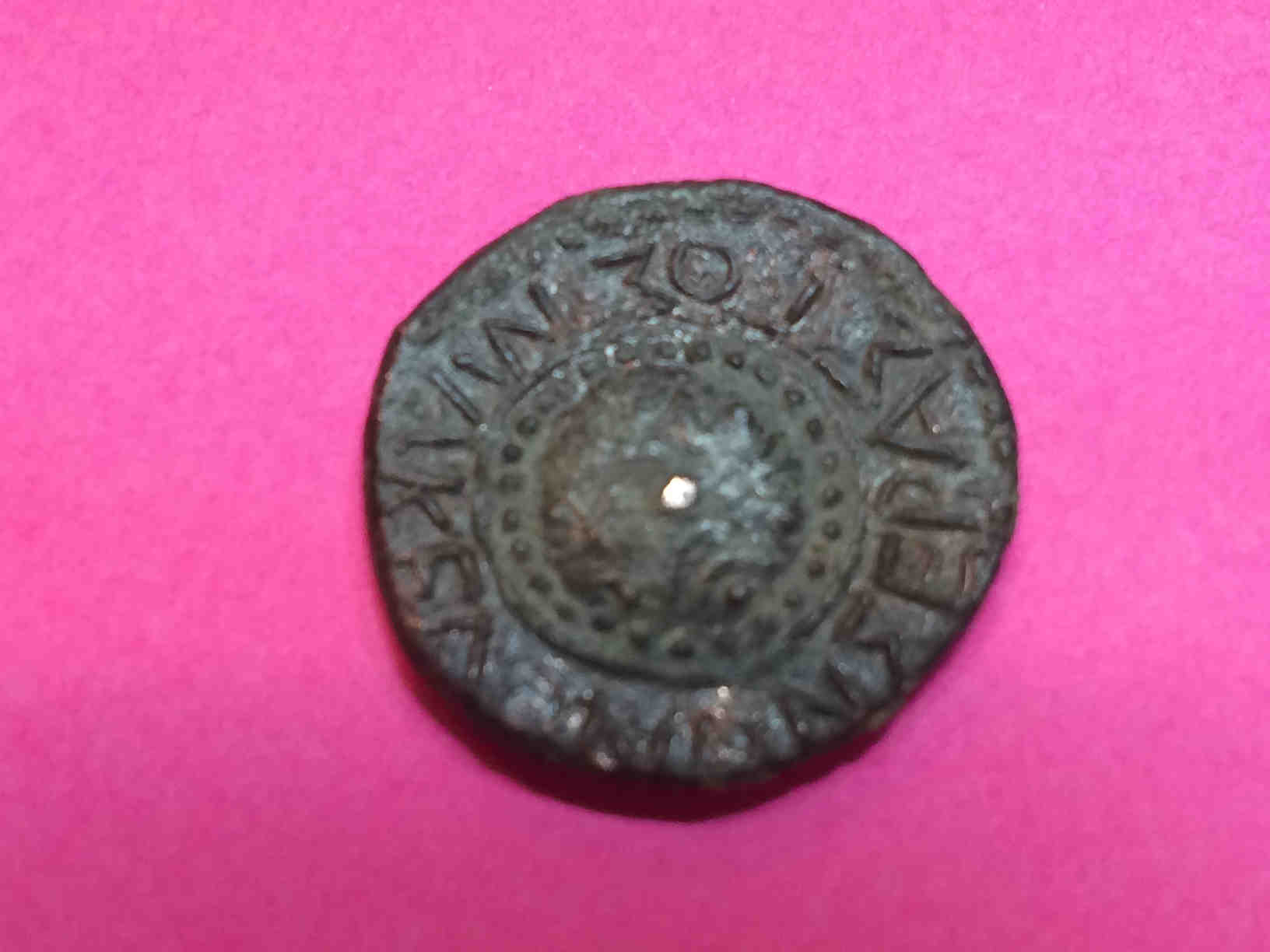
Concerning shield dimensions, there are different interpretations by scholars.[48] The most common decorative motifs depicted on shields (from coins, ceramics, reliefs and other sculptural monuments) are variations on solar symbols. Some scholars have noted that Asclepiodotus defined the Macedonian shield as being different from other Greek shields, in dimensions and construction. According to descriptions in Antique sources, relief depictions, and from several archaeological findings, it is known that the diameter of the Macedonian shield varied from 62 cm up to 74 cm. Ancient shields of this type (which were not restricted to the Macedonians, they were also used by the Illyrians) have been recently excavated near the village of Bonche, Prilep in the Republic of Macedonia, not far from a vaulted stone tomb of 'Macedonian' type which is dated to the late 4th century B.C.[49]
The Macedonian phalangite shield was circular and displayed a slight convexity; its outer surface was faced by thin bronze sheet. The inner face of the shield was of wood or a multilayered leather construction, with a band for the forearm fixed to the centre of the shield. Plutarch noted that the phalangites (phalanx soldiers) carried a small shield on their shoulder. This probably meant that, as both hands were needed to hold the sarissa, the shield was worn suspended by a shoulder strap and steadied by the left forearm passing through the armband. The left hand would project beyond the rim of the shield to grip the sarissa. Recent reconstructions of the sarissa and phalangite shield showed that the shoulder strap supporting the shield effectively helps to transfer some of the weight of the sarissa from the left arm to the shoulders when the sarissa is held horizontally in its fighting position.[50]
The lefthand figure shows the armband and grip on the inside of a hoplon or Argive shield - painted Corinthian krater c. 560BC.From pictorial sources, it is probable that the Hypaspists, elite members of the infantry, including the Agema of the King's personal foot guard, employed a shield of larger dimensions, the traditional Greek hoplite shield called the hoplon or aspis (ἀσπίς), it is also referred to as the 'Argive shield'. This shield, also circular, was larger than the phalangite shield, it had sheet-bronze facing over a wooden base; it was held with the left forearm passing through a central armband with a hand-grip set just inside the rim. This shield was more much convex than the phalangite shield and had a projecting rim, both features precluding its use with a double handed pike. The style of shield used by cavalry, if any, is less clear; the heavy cavalry of Alexander's time did not employ shields.[48]
Light infantry javelineers would have used a version of the pelte (Ancient Greek: πέλτη) shield, from whence their name, peltast, derived. This was a light shield made of leather-faced wicker. The shield was of Thracian origin and was originally shaped like a crescent, however, by the time of Macedonian greatness many depictions of peltai show them as being oval or round.
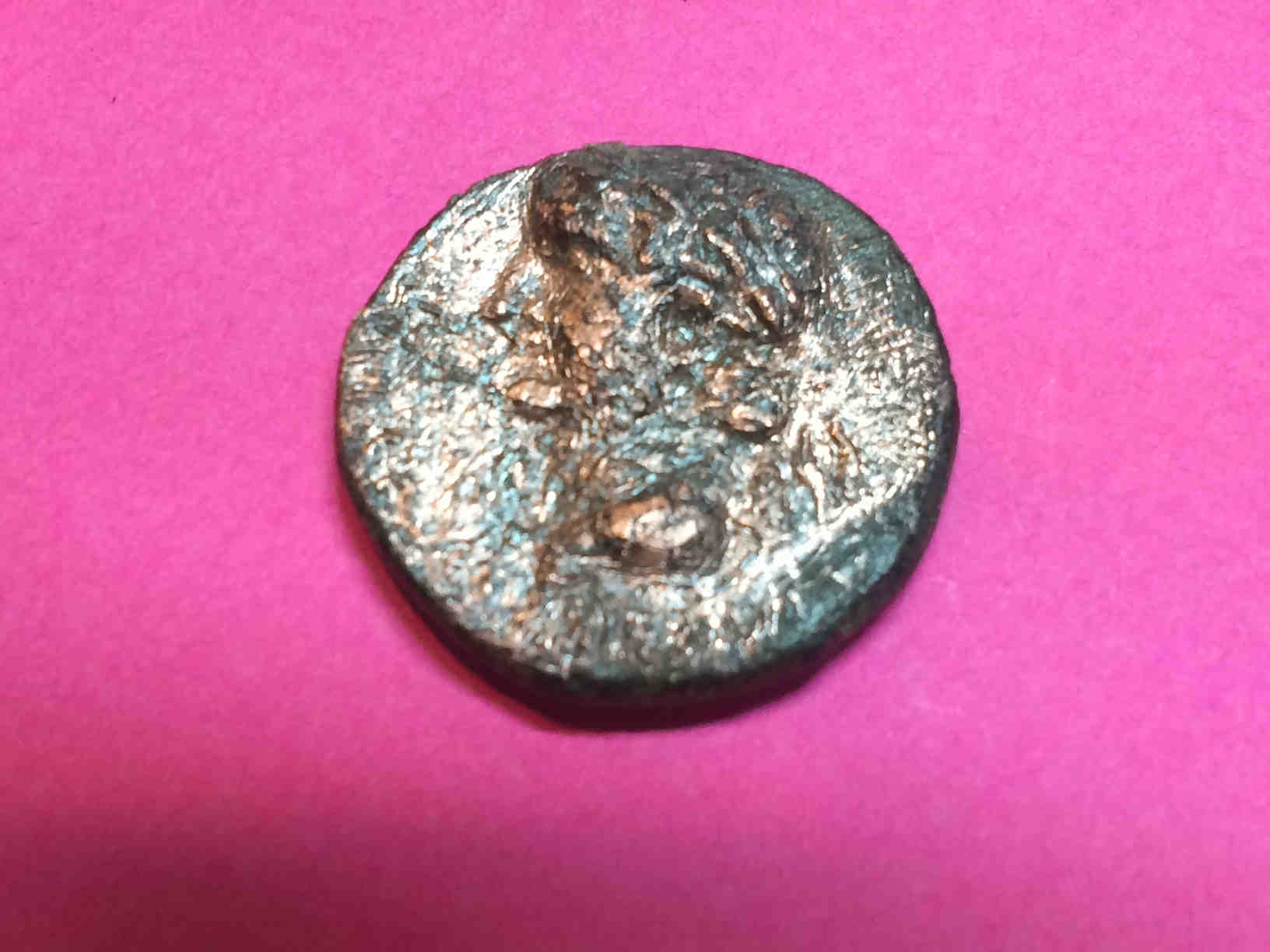
From wikipedia on the Macedonian Shield. I personally like the shield and makes up several coins in my collection.









 Posted 08/08/2014 5:15 pm





 to the community


