| Author |
 Replies: 14 / Views: 4,431 Replies: 14 / Views: 4,431 |
|
|
Valued Member
United States
214 Posts |
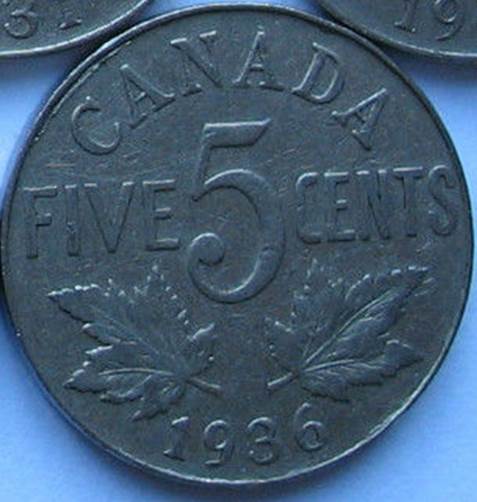
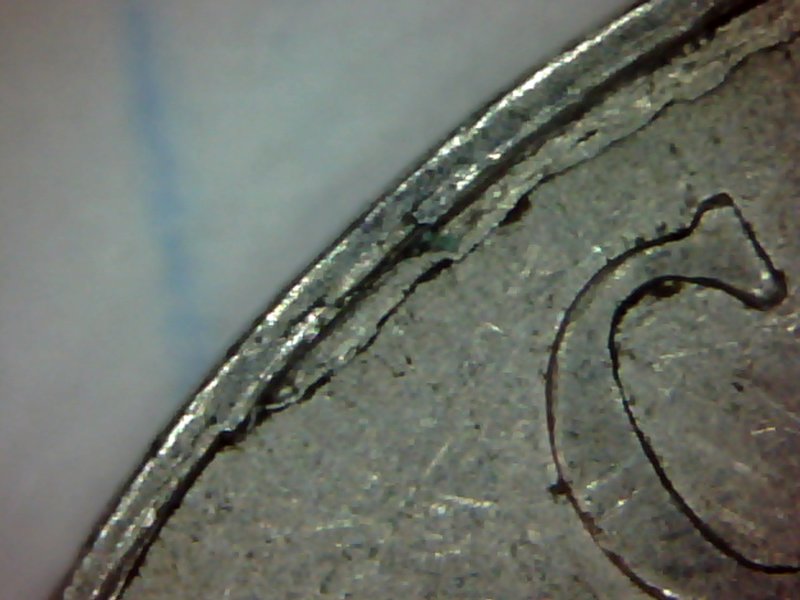
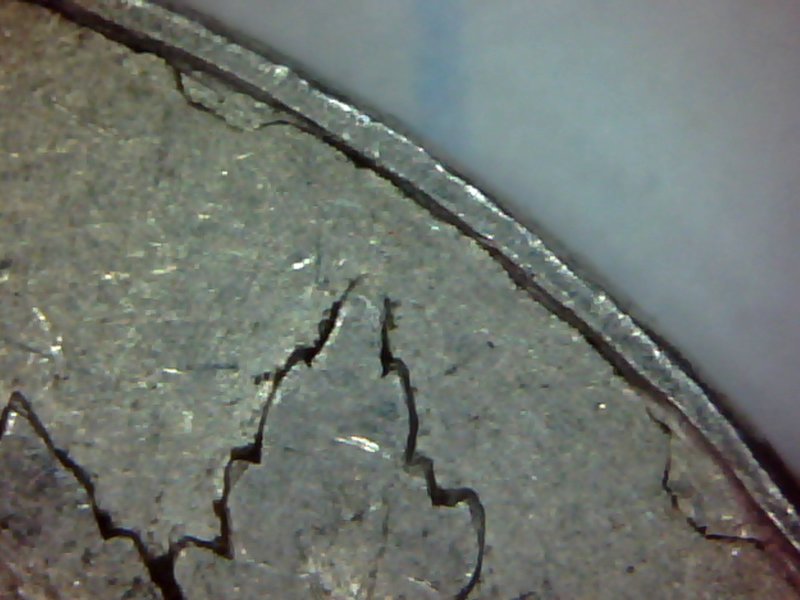
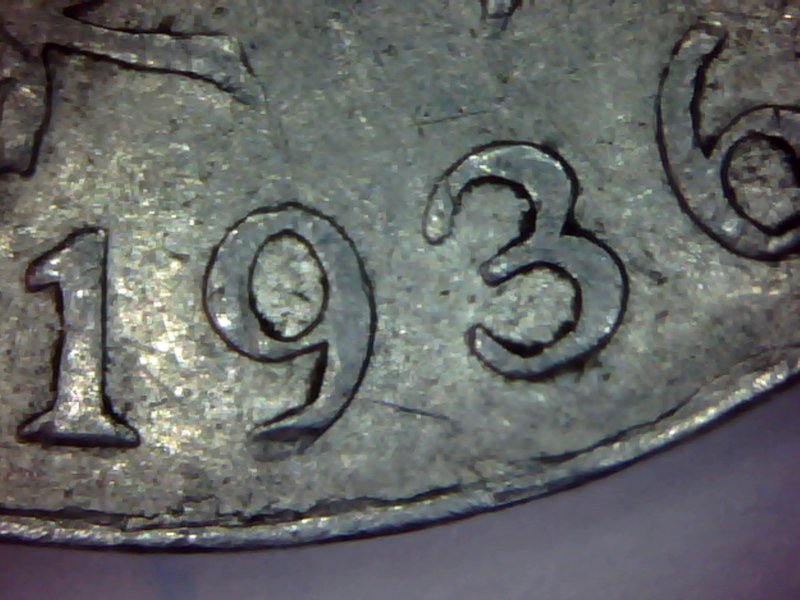
Can anyone help me learn more about how this "folded rim burr" occurred? From what I've read, some people think it is caused by the hammer die pushing the planchet (perhaps slightly too large of diameter) into the collar causing friction on the edge of the rim forcing a burr/finn to raise on the reverse side. I'm okay up to this point, but how does the burr/finn then get folded/struck into the reverse? Thoughts? Other ideas?  |
|
|
|
Valued Member
 United States
214 Posts |
|
|
Pillar of the Community
Canada
2303 Posts |
Probable issue with the rimming machine? Very nice!
|
|
Valued Member
Canada
71 Posts |
Could see the S in Cents showing under. Nice.
|
|
Valued Member
United States
214 Posts |
Did George V 5 cents go through a rimming machine given they have a smooth edge?
|
|
Valued Member
Canada
306 Posts |
|
|
Valued Member
United States
214 Posts |
Merci Castor! I especially liked the explanation of how a blank becomes a planchet -- (1. punching of blank, 2. burnishing, annealed, cleaned, dried 3. rimming/cordonnage). http://www.numicanada.com/forum/vie...7884&start=0I hadn't realized that George V 5 cents also went through a rimming step (before being struck). That helps explain how the burr formed during blanking is folded over. That said, I still don't full understand how the fold always ends up on the hammer side of Canadian coins? I would have thought the extra metal would fuse during the strike but I guess these examples are evidence that it doesn't. Does anyone think the 1933 example that I posted should get a premium valuation for this error or should it be considered a problem coin? |
|
Pillar of the Community
Canada
4911 Posts |
I hate to rain on your parade but what I'm seeing is just the plastic over the edge.
Feel free to call me Will.
|
|
Valued Member
Canada
488 Posts |
Gotta know,was it the plastic.
|
|
Pillar of the Community
Canada
2632 Posts |
Blanking burrs, rimming mill causes them to fold over then the striking die's finish the job. IMO
|
|
Pillar of the Community
Canada
2303 Posts |
|
|
Valued Member
United States
214 Posts |
The mint's production problem with folded rim burrs and George V 5 cents occurred in 1925 too.  |
|
Valued Member
United States
214 Posts |
I'm sad to report that thedollarman is correct that the apparent folded rim burr in the PCGS holders is a burr of plastic causing a shadow. I used an 8x loup and looked sideways in the slab and am sure it is plastic. I just couldn't find a similar problem (to the same 360 degree extent) in NGC slabbed or ICCS coins. So I double checked.  Another of life's learning experiences... |
|
Valued Member
Canada
488 Posts |
Sorry to hear that. I chuckle a bit but only cause its a mistake I would have made. We live and learn.
|
|
Pillar of the Community
United States
2752 Posts |
I strongly doubt that upsetting (rimming) has anything to do with the formation of a thin apron on planchets. Degree of upset certainly varies, but even the most strongly upset planchets fail to show an apron. All they show is an exaggerated proto-rim. The apron is most likely generated by some other mechanical device (goodness knows, the planchets pass through a lot of them on their way to the press). I've seen two other cents similar to the one in the Coin World article. So it's not a one-off event. Error coin writer and researcher.
|
| |
Replies: 14 / Views: 4,431 |
|







 Posted 09/29/2014 3:39 pm





