| Author |
 Replies: 11 / Views: 1,451 Replies: 11 / Views: 1,451 |
|
|
Moderator
 United States
23731 Posts |
You will notice a new change to the title of this section from Ancient Greek, Roman coins to Ancient Greek, Roman and Medieval Coins. To include coins up to 1600 AD.
There might be a little problem as to were early English hammered coins go, here or in the United Kingdom section. By leaving them in the UK section you might get a better response. Because those are coins specific to that country. But I guess either section would be OK, as long as you use one or the other and not repeat the same thread in both sections.
|
|
|
|
Pillar of the Community
United States
4778 Posts |
Maybe this should be a sticky? At least to keep that part about English hammered to the top.
|
|
Pillar of the Community
United Kingdom
1598 Posts |
I think that is a great idea. That way we can follow ancient coins all the way through and in terms of the UK we can go all the way from the Celtic coinage, through the Roman period, through the skeets of the 'dark ages', past the coinage from the Anglo Saxons right up to James I..... That should help fill in some of the gaps in history of coinage that I have! Brilliant!
You will never soar like an eagle if you hang around with turkeys.....
|
|
Pillar of the Community
Russian Federation
5186 Posts |
Would post-1600 Russian wire coins also go in this section?
The 1600 split-off date is kind of unnatural for this series (it splits the Boris Godunov reign in half), and in style the pieces in question are obviously medieval until the entire series is shut down (by Peter I in the late 1710s).
|
|
Moderator
 United States
23731 Posts |
Any date beyond 1600 should going into the World Coin section.
|
|
Pillar of the Community
United States
5155 Posts |
I doubt we will all agree on what is a good time frame to cut off the medieval period. Medieval from a text book point of view pertains to a Euro-centric chronology. AD 476-1400 If we choose to include the Renaissance we could push that date to about 1650. I think a good cut off would have the Age of Exploration. AD 1492 Columbus Voyage. I think the best numismatic cut off is Elizabeth I of England who pioneered milled coinage. 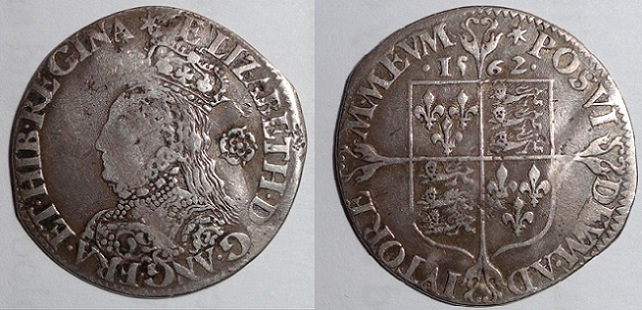 |
|
Pillar of the Community
Russian Federation
5186 Posts |
Quote:
Any date beyond 1600 should going into the World Coin section. IIRC, for some of the Godunov coins, it isn't even possible to say if it's before 1600 or after. |
|
Pillar of the Community
United States
993 Posts |
Quote:
Medieval from a text book point of view pertains to a Euro-centric chronology. AD 476-1400 That depends on the textbook. A lot of more modern scholarship has set the beginning of the Medieval period around Diocletian and Constantine. two examples- A History of Medieval Europe: From Constantine to Saint Louis Early Medieval Europe, 300-1000 1492 is a good possible cut-off date, not so much because of Columbus, but more importantly it was the year the Reconquista was finished, with the surrender of Granada. |
|
Pillar of the Community
Russian Federation
5186 Posts |
Quote:
1492 is a good possible cut-off date, not so much because of Columbus, but more importantly it was the year the Reconquista was finished, with the surrender of Granada. I've held for the last few years that the medieval period was 492-1492 - which happens to correspond exactly to the 7th millenium in the Byzantine (aka old Russian) calendar. A good way to define the Middle Ages in roughly-contemporary terms, and the ending date is (roughly) the same as the one most others use anyway. I wonder if someone out there had proposed the election of Rodrigo Borgia as pope for a fitting beginning to the Modern Age...  (it also happened in 1492) (it also happened in 1492)EDIT: Numismatically, of course, 1486 is a better choice, being the introduction of the thaler  Edited by january1may
10/07/2014 3:12 pm
|
|
Pillar of the Community
3772 Posts |
First a 'thank you' to 'echizento' to have achieved that change.
As mentioned in another topic, the cut-off point between medieval and the modern period is seen differently.
And as 'Ancientnoob' many of those are euro-centric. Where would the Chinese or the Indian see the cut-off point?
Just looking at India, what would be the right date? Would it be the replacement of the Sultans of Delhi with the Mughal Empire? Or would it be the arrival of the colonial powers?
Every country/region has it's own view on that.
Personally I learnt in school that the start of the Reformation (aka Luther) was the defining moment. But I have read quite a few other definitions.
From a coin technological point of view one could argue that the milling process created a new era but that would result in quite a variation, just thinking of the last cash issues from Vietnam last century.
Does one need to define a specific year?
Or does one need to list regional years?
It does not really matter that much in my opinion as long as there is a reasonable understanding (especially amongst the moderators), in conflict cases the topic can be moved to another forum.
This latest point triggers a question:
Shouldn't all requests for identification now be moved to the specific identification forum? Or should those for 'Ancient and Medieval Coins' stay here?
|
|
Moderator
United States
23731 Posts |
The 1600 date was a stretch to the Medieval period. It was done to give more range of coins that could be posted in this section. Beyond 1600 we start to move into the more modern period where coins now were no longer hand struck. Anoob's mentioned the era of Elizabeth's milled coins as a good break point, but I figured it's only a few more years to stretch the date to 1600.
In the past when an unidentified Ancient coin was posted in the Unidentified coin section, I would move it the the Ancient coin section where the people that knew about them hung out the most. Now that we have expended this section to include Medieval it would IMO be best just to post them here.
|
|
Pillar of the Community
United States
5010 Posts |
a welcome change and a good (as any) time to make the cut off, thanks ski!
|
| |
Replies: 11 / Views: 1,451 |
|







 Posted 10/07/2014 09:34 am


