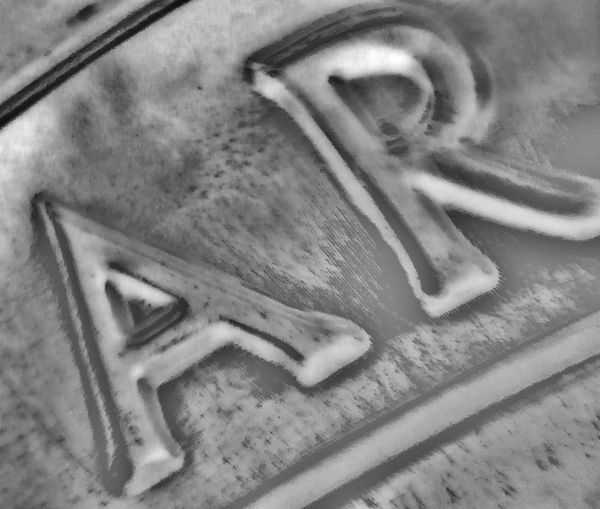
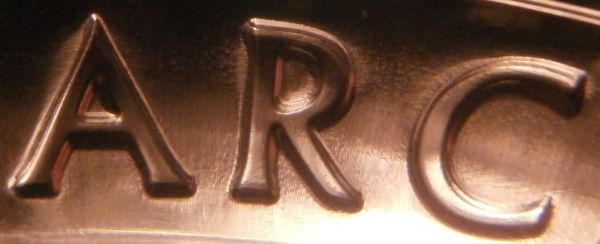
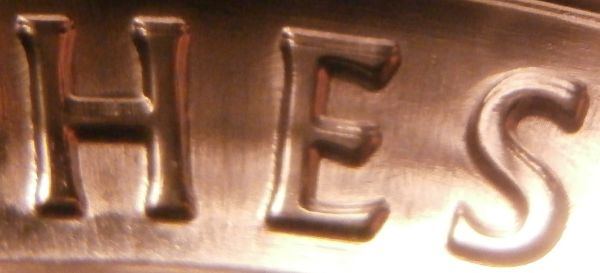
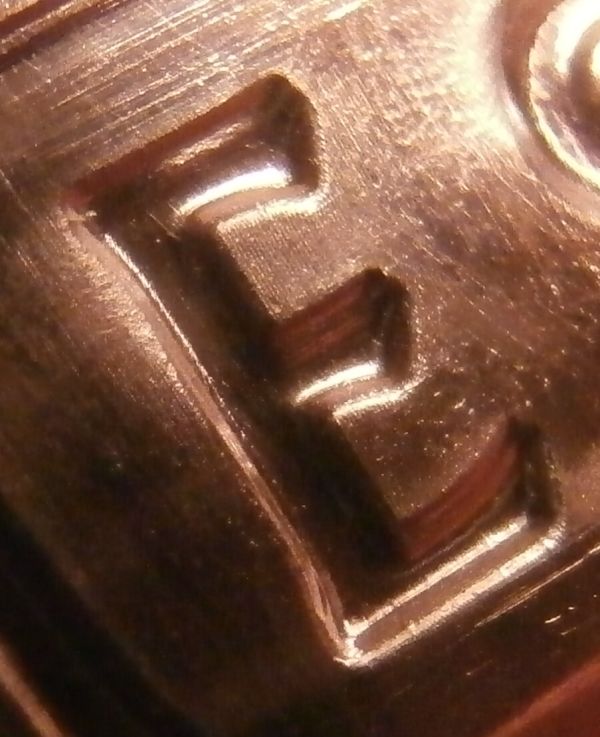
They are incused, but, with single squeeze pressing, and, technicalities of doubling far beyond my knowledge base, I'll let Wexler make the call. And, later to Dr. Wiles, as I will want his take also. Here's an opinion from a well known author of Coin Books who wrote:(and, as you can see, explantions most likely very complicated, not cut and dry, like older traditional double dies, like the 1955
Lincoln Cent)
"More than complex, still much not known. For example, every class of hub doubling created by mis-alignment between hubbings has been found in hyper modern coins whose working hubs were created by a single hubbing squeze or other single process. My take is this: subtle angulations between planchet and working hub can create images consistent with hub doubling: ditto with single hubbings. I also like my concept that during single squeeze or multi-squeeze hubbings any subtle lateral movement (sliding) of hubber on hubbee (and/or planchet on working hub) can create exactly the "minor" doubling pattern in your photos. Single squeeze hubbing is such a cataclysmic forceful operation, it seems to me there is no reason not to open the door to various slipping and sliding, including part of the softer hubbee absorbing the squeeze unevenly, creating functional angulation even when the initial angulation between hubber and hubbee is perfect initially and throughout the squeeze"
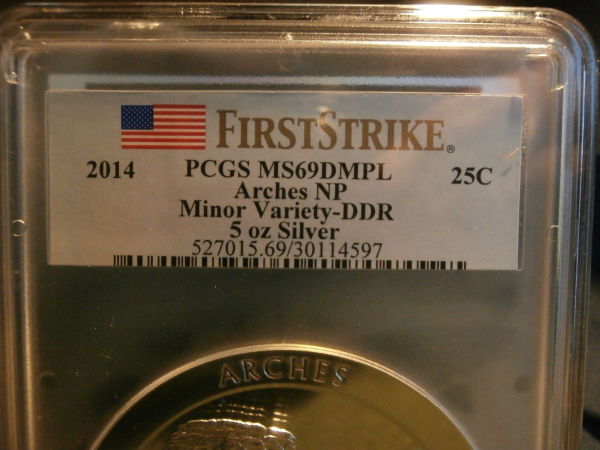
"IMHO PCGS was correct with their label tag. Wexler and Wiles, I think, are still categorizing doubling patterns by the classes first laid out by the now ultimately retired grand numismatist, Alan Herbert. This classification is a well thought out technical delineation of what could be expected with the known possible mis-alignments during multiple hub squeezings. Problem is, operational variations such as lateral sliding and subtle angulations, IMHO, make Herbert's hub doubling classification scheme an interesting guide and visualization help rather than an absolute scheme by which to understand exactlly how a given hub-doubled coin was produced."









 Posted 10/17/2014 11:40 pm





