| Author |
 Replies: 15 / Views: 1,498 Replies: 15 / Views: 1,498 |
|
|
Valued Member
United States
356 Posts |
What does it mean when a seller says there are traces of bronze core degeneration? Do I need do to anything? Should I avoid this coin?
|
|
|
|
Pillar of the Community
United Kingdom
3626 Posts |
It doesn't sound healthy. I am assuming that it has bronze disease and the coin is disintergrating from within. Yes avoid the coin unless you can get it for next to nothing, are prepared to treat it extensively possibly over years.
|
|
Moderator
 United States
23731 Posts |
I agree doesn't sound too good. But it could also mean that the coin is a fouree. Can you post a picture of it here?
|
|
Pillar of the Community
3772 Posts |
 & Interesting euphemism though: Quote:
traces of bronze core degeneration so definitely  |
|
Valued Member
 United States
356 Posts |
|
|
Moderator
United States
23731 Posts |
I would check the fake coin reports before I bought this one. I see two spots on the edge which may be what the seller is talking about. It's most likely a fouree.
|
|
Valued Member
United States
356 Posts |
Here is what CNG says about it....
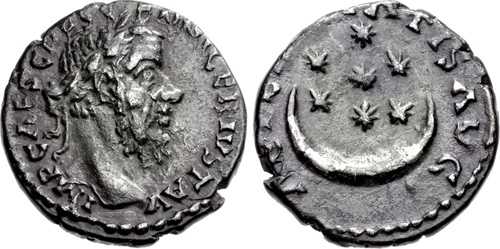
Pescennius Niger. AD 193-194. Fourrée Denarius (18mm, 1.85 g, 12h). Antioch mint. IMP CAES C PESCEN NIGER IVST ΛV, laureate head right / ΛETER[NIT]ΛTIS ΛVG, upturned crescent with seven stars above. Cf. RIC IV 1; cf. RSC 1; cf. BMCRE, p. 71, †; cf. CNG E-196, lot 300 (all refs. for type). Good VF, find patina, traces of bronze core degeneration. Extremely rare.
|
|
Pillar of the Community
1121 Posts |
5th word along - Definately a 'Fourree'
Not always a 'bad' thing but you need to know this going in. Sometimes a 'Fourree' is sold for about the same as a silver coin of the same type.
Edited by Topcat7
11/02/2014 04:38 am
|
|
Valued Member
United States
356 Posts |
So this is a contemporary fake? Rotting from the inside out?
|
|
Pillar of the Community
1121 Posts |
No! Unlikely to be a contemporary fake.
If you "Google" 'Fourree Coin' you will find a lot of information that will help you. (More than I can answer here.)
After 1500 - 2000 years some of the silver plating wears off.
Edited by Topcat7
11/02/2014 04:53 am
|
|
Pillar of the Community
3772 Posts |
Quote:
Here is what CNG says about it.... With CNG selling or rather having sold it as Fourree it is most likely a contemporary or at least old and recognised copy. |
|
Valued Member
United Kingdom
435 Posts |
Actually, I have a question that I haven't read the answer to elsewhere. I am used to using sesquicarbonate solutions (even if I still am not sure how to spell it without checking!) on bronze disease, but how does that process affect the silver coating of a fourėe, if at all?
|
|
Pillar of the Community
3772 Posts |
Quote:
but how does that process affect the silver coating of a fourėe Try it on a Christmas Pudding Coin.  |
|
Valued Member
United Kingdom
435 Posts |
Lol...OK. Does anyone still actually make their own Christmas puddings? I will try shoving a silver sixpence into my store bought one this year!
|
|
Moderator
Australia
17005 Posts |
Quote:
So this is a contemporary fake? Yes, if by "contemporary" you mean "ancient". Fourees are ancient fakes, made by making a "sandwich" of two pieces of silver foil folded around a base-metal core. The whole thing is then smashed together between two dies (either counterfeit dies or genuine dies "borrowed" from the mint); the silver plating is pressure-bonded onto the core, creating the illusion of a solid silver coin. It would even have tested positive for silver using the primitive chemical means available in ancient times, and you'd have needed to make a disfiguringly deep cut to punch through the silver layer and spot the fraud. Fourees are 2,000 year old ancient artefacts in their own right, and just as collectable in most cases as (and often even rarer than) genuine coins. Quote:
Rotting from the inside out? Correct again; this is what "core degeneration" is a euphemism for. American members will all no doubt be familiar with their modern copper-plated-zinc 1 cent coins. These modern coins are also prone to "core degradation", more commonly known as zinc rot. Because zinc is a far more chemically reactive metal than bronze and because the plating on them is much thinner, zincolns require far less time buried in the ground before "core degradation" becomes evident. Such core degradation usually results when a microscopic hole or crack in the plating allows water to contact the base-metal core, wheich then proceeds to corrode at that spot. The corrosion products are "fluffier" than the original metal, so the corrosion spot expands, pushing the uncorroded silver plating out like a bubble. In the case of this fouree coin, I suspect the "traces" of it mentioned are the small bumps, most visibly on the reverse below the moon after the G of AVG and inside the right horn of the moon. Don't say "infinitely" when you mean "very"; otherwise, you'll have no word left when you want to talk about something really infinite. - C. S. Lewis
|
|
Pillar of the Community
1121 Posts |
Quote:
No! Unlikely to be a contemporary fake. My answer of "No" was said according to the dictionary definition of 'Contemporary' which can be "belonging to or occurring in the present". Another definition of 'Contemporary' is "belonging to of occurring at the same time" which if used would illicit the answer of "Yes". I apologise for any confusion which may have occurred. |
| |
Replies: 15 / Views: 1,498 |
|







 Posted 11/02/2014 03:55 am