| Author |
 Replies: 14 / Views: 1,283 Replies: 14 / Views: 1,283 |
|
|
Pillar of the Community
United States
5155 Posts |
Mystery Coin of the Day...Scored for cheap but took a month to get to my door...still good! Material: Silver Diameter: 11 mm Weight: 2.32 grams Have fun... 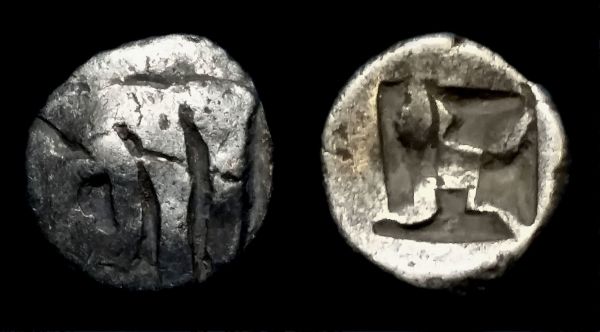 Edited by Ancientnoob
11/10/2014 3:48 pm
|
|
|
|
Moderator
 United States
23731 Posts |
My memory is going so I can't recall if we spoke about this one. But I believe it's from Southeast Asia. The obverse looks like and Elephant. The reverse also looks archaic Greek, but it's Greek.
|
|
Pillar of the Community
 United States
5155 Posts |
So close yet so far away. SE Asia is very warm but there is no elephant involved.
|
|
Moderator
United States
23731 Posts |
Sorry my mind is gone, I don't remember this one.
|
|
Pillar of the Community
United States
5155 Posts |
Hint: This coin type is unique to this empire.
Struck 778-782 AD.
not Indian.
|
|
Moderator
United States
23731 Posts |
Either Thailand or Burma. Other than that I'm drawing a blank.
|
|
Pillar of the Community
3772 Posts |
Quote:
no elephant Seems rather like a monkey - hanuman? Postscript - the reverse that is. Edited by Medieval
11/10/2014 6:54 pm
|
|
Pillar of the Community
United States
5155 Posts |
No, No and No.  Hint: This coin was NOT stuck on mainland Asia.  |
|
Pillar of the Community
3772 Posts |
|
|
Pillar of the Community
United States
5155 Posts |
|
|
Pillar of the Community
3772 Posts |
Was not much left, just Jave for that century. Here a nice resource for the history of South East Asia -> http://www.angkor-planet.com/UK/histo-SEA.htmlIn the end it boiled down to the Sailendras of Java (or a branch thereof) or the Srivijayas from Sumatra. |
|
Pillar of the Community
United States
5155 Posts |
I will be following up with some maps and other interesting information about the who, what and why?
|
|
Pillar of the Community
United States
5155 Posts |
First it appears that these coins are rather scarce, yet when found are ridiculously cheap. So I felt I had to hunt for one that that had all the devices in tact and can be attributed. Admittedly I have never seen this coin for sale in person and if I have it probably was unrecognizable.I looked up the type in my Robert Wicks and found it to be a fascinating example of independently developed struck coins in the East Archipelago The coin is fine silver struck in Central Java for an unknown reason.It have been an alm or a gift. In the 8th century the Masa was established.Robert Wicks notes that the weight of this issue is extremely regular 2.3 - 2.5 grams. With the 10th century examples being scyphate 13-14 mm and 2.1 - 2.4 grams. The coins are high purity silver. One one side in Early Nagari (MA) for Massa establishing its denomination. On the other side is a bit interesting. It is a Sandalwood flower seen from above. The flower is noted as being extremely irregular, all of these specimens appear to be of 4 general types and with an unknown amount of variations. These smaller diameter coins seem to be concentrated in an 8-9th century AD strata and concentrated mostly in Java which gives the assumption that this is island of manufacture. Between the two diameter sizes of like wake this coin type has a very long and widespread emission. Examples of this coin are found as far east as Papua New Guinea.The function of this coinage is still unknown and the exchange system is unattested. The dates of these earliest coins are precisely given in accordance with archaeological excavations placing them 778 AD and 782 AD at Kalasan and Kelurak respectively. Java, Bali and the Eastern Archipelago Kalasan or Kelurak (Empire of the Sailendra) AR Masa 11 mm x 2.32 grams Sruck 778-782 AD. Obverse:? MA (Massa) - Early Nagari Script Reverse: Irregular Sandalwood Flower place in Incuse square. Ref# Wicks 8.3, Class D. 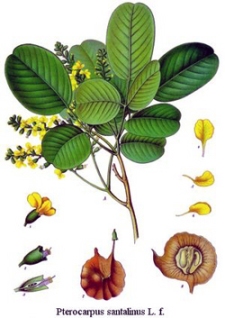 |
|
Pillar of the Community
United States
5155 Posts |
map.. 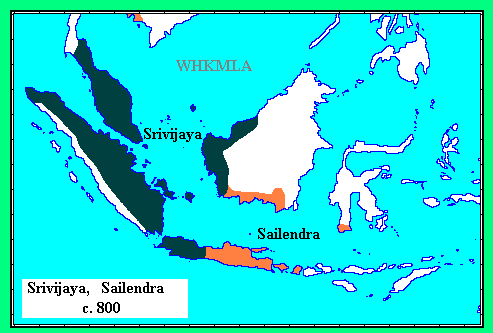 |
|
Pillar of the Community
United States
5010 Posts |
i'll be darned, I would have NEVER guessed that. what an interesting coin.
|
| |
Replies: 14 / Views: 1,283 |
|







 Posted 11/10/2014 4:36 pm




 YES SIR! You got it Medieval!


