











 Posted 01/04/2015 11:52 pm


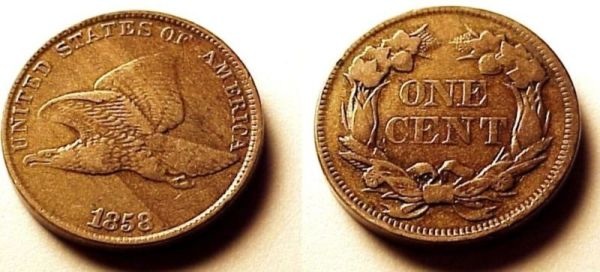
I don't pretend to be a FE Cent expert but in this case and in the case of any variety identification, it is necessary to provide close ups of the coin. Here, I believe high-resolution pictures would be required including close-ups of the date, as well as any other identifying markers.
If you have the coin in hand, I suggest you use these markers to identify whether or not it is a 1858/7 or not.

A little bit of info about the 1858/7 Overdate:
"The 1858/7 Flying Eagle cent is the only known overdate for the short lived series, and very popular as such. Only the earliest die states show clear remnants of the 7, making those the most valuable.
On lower grade examples or later die states, there are certain die markers which can be used to help identify the variety. These include a triangular chip in the field between the date and eagle and a broken wingtip on the eagle.
The grading services PCGS and NGC have certified around 350 examples of this variety, which would also include a number of resubmissions. Based on the certified population, this variety is scarcer than the much more well known 1856 pattern pieces."
Source: http://flyingeaglecent.com/18587-la...-eagle-cent/
Hope this helps.
-zx
If you have the coin in hand, I suggest you use these markers to identify whether or not it is a 1858/7 or not.
Quote:
This "ear" above the corner of the 8 is the only direct evidence of the original 7 on the die.
This "ear" above the corner of the 8 is the only direct evidence of the original 7 on the die.
A little bit of info about the 1858/7 Overdate:
"The 1858/7 Flying Eagle cent is the only known overdate for the short lived series, and very popular as such. Only the earliest die states show clear remnants of the 7, making those the most valuable.
On lower grade examples or later die states, there are certain die markers which can be used to help identify the variety. These include a triangular chip in the field between the date and eagle and a broken wingtip on the eagle.
The grading services PCGS and NGC have certified around 350 examples of this variety, which would also include a number of resubmissions. Based on the certified population, this variety is scarcer than the much more well known 1856 pattern pieces."
Source: http://flyingeaglecent.com/18587-la...-eagle-cent/
Hope this helps.
-zx
Edited by zxcccxz
01/05/2015 12:00 am
01/05/2015 12:00 am


