| Author |
 Replies: 11 / Views: 4,349 Replies: 11 / Views: 4,349 |
|
|
Valued Member
United States
214 Posts |
I was looking for die cracks on my King George V nickels again today and saw a 1932 with "corrosion" around the "D" in DEI on the obverse and "ADA" on CANADA on the reverse... 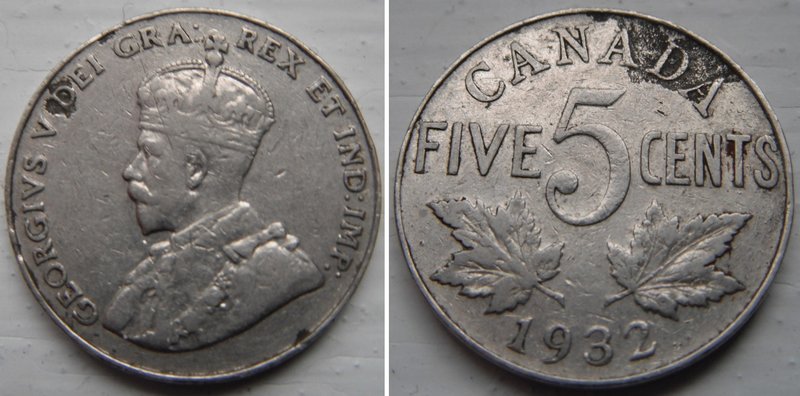 This made me remember a 1934 with "corrosion" over the date which the seller claimed as being a planchet error. I bought it but have always wonder whether it might be a garage job... 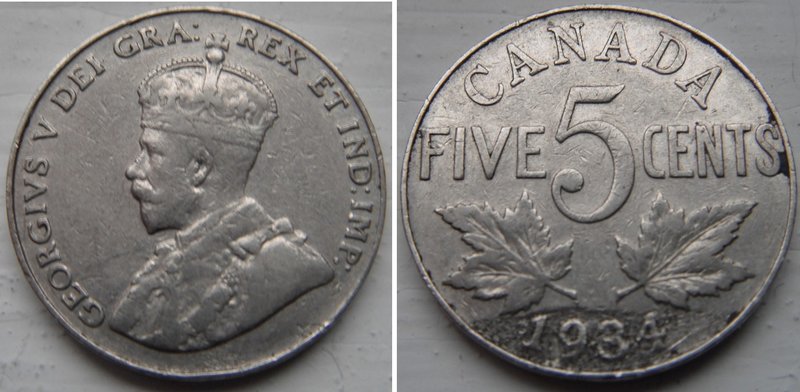 For those saying PMD, I have a 1928 in MS condition with what looks like a similar planchet issue which is strongest in the field in the front of the king on the obverse... 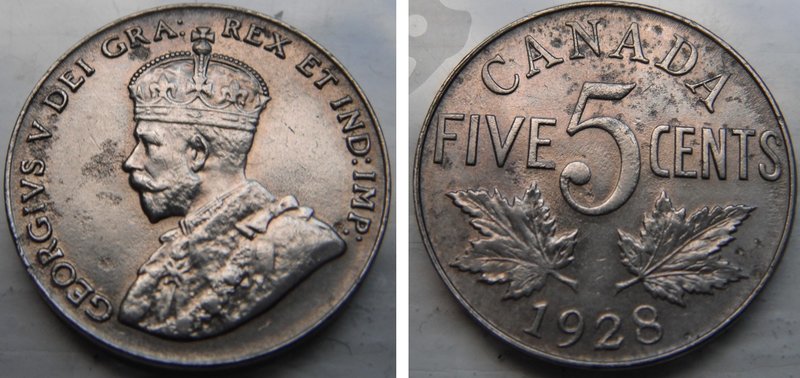 So with all this said, what do you think? |
|
|
|
Pillar of the Community
Canada
1747 Posts |
I once found a more modern nickel 60's or 70's from roll hunting, and first thing I noticed was the weight, it was about 50% of regular nickels, I looked and saw a hole and it looked like the entire inside of the nickel was gone. I spoke to a local shop owner and he said he had heard of this happening but rarely, I had never seen or heard of nickel rotting/corroding like this. The Owner said he that it was an error with the planchets, however its hard to argue, and some people sway too easily to the PMD side. I don't know, I put it in a 2x2 and stashed it away, maybe in a few years it will be recognized as an error, or maybe the entire nickel will be eaten away. |
|
Valued Member
Canada
270 Posts |
IMO, it appears all 3 coins have came in contact with some sort of oxidizer. Even in small amounts, Sulphur, Sodium, fluorine, nitrate, phospforus and a few other chemicals are in direct reaction with nickel alloys. Contact with these elements can cause localized pitting & surface corrosion. I'mcurious as to where abouts the U.S you are? Its possible environmental factors could be at play...
|
|
Pillar of the Community
Canada
2632 Posts |
Here's what I see. 1932 PMD1934 planchet flaw 1928 Possibly dirty die or planchet prior to strike IMO |
|
Valued Member
 United States
214 Posts |
Thanks everyone for your thoughts so far!
UncleLuc - I acquired these three coins in the past year from three different sellers in the conditions as pictured so it can't be related to environmental conditions where I live. PS - Good luck in your hunt for a 1932 Far 2!
Pennyman007 - What is your logic for the 1934 being a planchet flaw? Is it because the flaw is isolated in one place on the coin? What do think was actually wrong with the planchet? I never heard the term "dirty die" before but I like it as it is more descriptive IMO than "struck through dirt". That said, when I look at the edge of the 1928 (which I didn't take a picture of) one sees some "corrosion" spots/flaws there too which makes me think that there is more likely something wrong with the planchet itself.
Perhaps these coins are indicating that there was some impurity problems with the nickel being used that cause "isolated" highly reactive spots where we see corrosion problems (before or after) minting. Just thinking out loud. Please keep your comments coming. I'm thinking that I should go back through my coins (someday) and pull all the ones with (major) corrosion issues.
|
|
Pillar of the Community
Canada
2531 Posts |
aswag, if you can get bigger photos of the areas in question it would be helpful. I'm feeling rather hesitant to make a judgment.
|
|
Forum Kid
Canada
1074 Posts |
i agree with pennyman007.  |
|
Pillar of the Community
Canada
2632 Posts |
Better pics
Close ups of the areas in question would help.
|
|
Valued Member
United States
214 Posts |
I took some close-up photos this morning. One thing I noticed is that all three have issues on the rims too, not just the 1928. Here is the 1932... 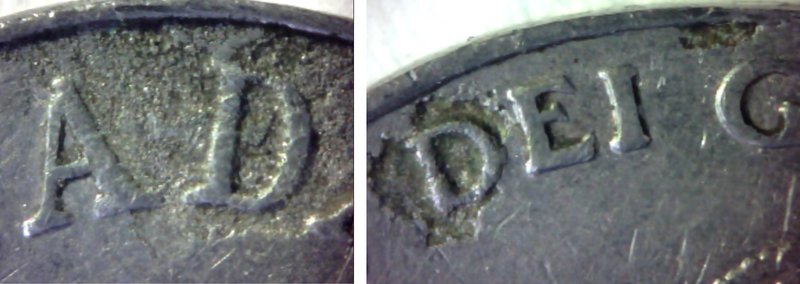 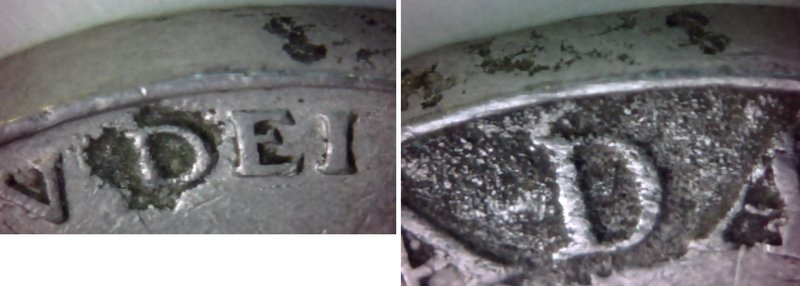 Here is the 1934... 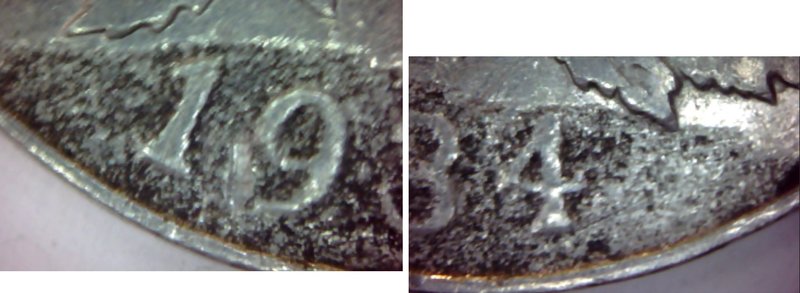 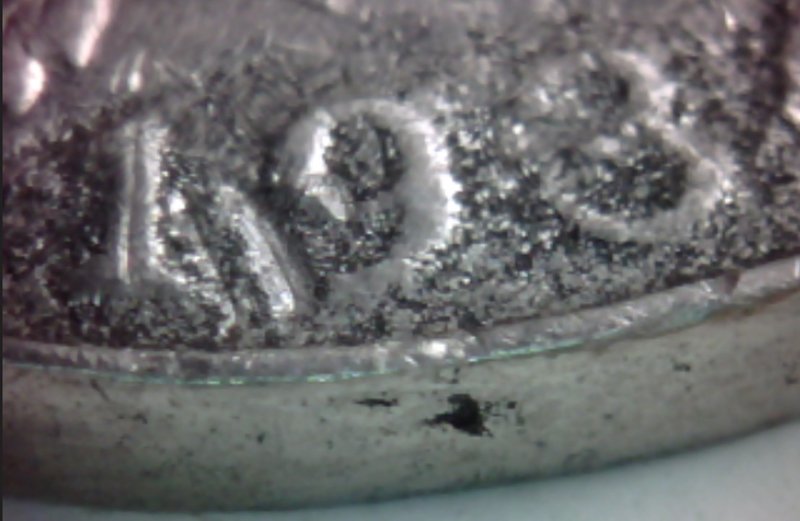 Here is the 1928 (apologies, photo of the edge isn't too clear)... 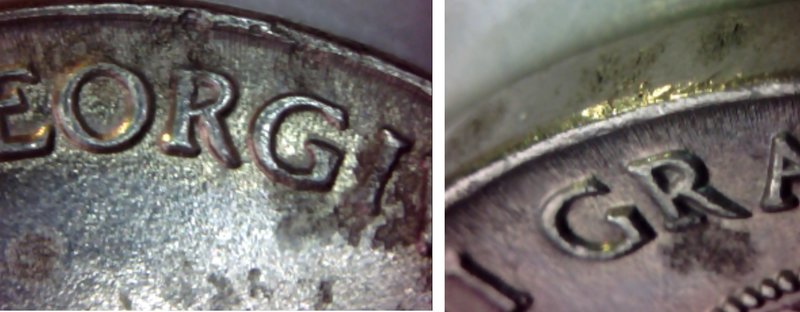 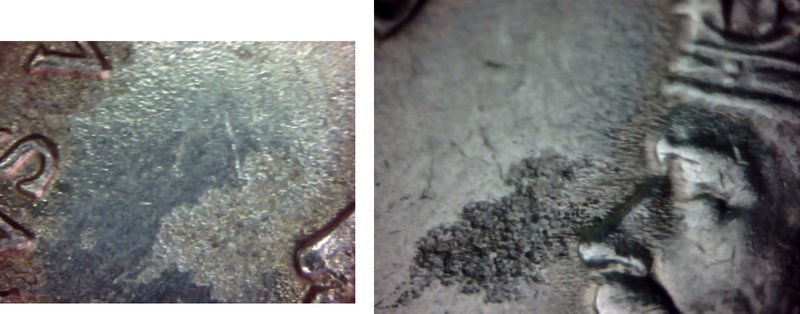 |
|
Pillar of the Community
Canada
2632 Posts |
With these close ups it all looks like PMD, I'mhesitant to say the 34 is a planchet flaw for sure. Perhaps someone who has seen tons of these nickels would have a better idea. Sorry aswag I cant say for sure. |
|
Pillar of the Community
Canada
2531 Posts |
The 1932 is corrosion The 1934 doesn't look like a planchet flaw or Struck Through Grease, too grainy and uneven, looks sort of eaten away. Maybe someone dropped a corrosive substance on the date. The 1928 has flow lines from a worn die. I'm not sure what's that in front of his nose though. |
|
Valued Member
United States
214 Posts |
Thank you for your opinions Pennyman007 & SlurExe97. I think I'll put this question on the back burner for awhile until I have some more evidence.
|
| |
Replies: 11 / Views: 4,349 |
|










 Posted 01/19/2015 6:58 pm


